Translate

jueves, 31 de marzo de 2022

St. Cyril of Jerusalem - San Cirilo de Jerusalén


ENGLISH:

Our father among the saints Cyril of Jerusalem (315-386) was a distinguished theologian and archbishop of Jerusalem in the early Church. He is celebrated by the Orthodox Church on March 18, and on May 7 for his role in the apparition of the cross over Jerusalem in 351.


Life and Character

Little is known of his life before he became bishop; the assignment of the year 315 for his birth rests on mere conjecture. He seems to have been ordained deacon by Bishop Macarius of Jerusalem about 335, and priest some ten years later by Maximus. Naturally inclined to peace and conciliation, he took at first a rather moderate position, distinctly averse from Arianism, but (like not a few of his undoubtedly orthodox contemporaries) by no means eager to accept the uncompromising term homoousios.

Separating from his metropolitan, Acacius of Caesarea, a partisan of Arius, Cyril took the side of the Eusebians, the "right wing" of the post-Nicene conciliation party, and thus got into difficulties with his superior, which were increased by Acacius's jealousy of the importance assigned to Cyril's see by the First Council of Nicea. A council held under Acacius's influence in 358 deposed Cyril and forced him to retire to Tarsus. At that time he was officially charged with selling church property to help the poor, although the actual motivation appears to be that Cyril was teaching Nicene and not Arian doctrine in his catechism. On the other hand, the conciliatory Council of Seleucia in the following year, at which Cyril was present, deposed Acacias.

In 360 the process was reversed through the metropolitan's court influence, and Cyril suffered another year's exile from Jerusalem, until Julian the Apostate's accession allowed him to return. The Arian emperor Valens banished him once more in 367, after which he remained undisturbed until his death, his jurisdiction being expressly confirmed by the First Council of Constantinople (381), at which he was present. At that council, he voted for acceptance of the term homoousios, having been finally convinced that there was no better alternative.
 

Theological Position

Though his theology was at first somewhat indefinite in phraseology, he undoubtedly gave a thorough adhesion to the Nicene orthodoxy. Even if he does avoid the debatable term homoousios, he expresses its sense in many passages, which exclude equally Patripassianism, Sabellianism, and the Arian formula "There was a time when the Son was not." In other points he takes the ordinary ground of the Eastern Fathers, as in the emphasis he lays on the freedom of the will, the autexousion, and his imperfect realization of the factor so much more strongly brought out in the West—sin. To him sin is the consequence of freedom, not a natural condition. The body is not the cause, but the instrument of sin. The remedy for it is repentance, on which he insists.

Like many of the Eastern Fathers, he has an essentially moralistic conception of Christianity. His doctrine of the Resurrection is not quite so realistic as that of other Fathers; but his conception of the Church is decidedly empirical—the existing Orthodox Church form is the true one, intended by Christ, the completion of the Church of the Old Testament. His doctrine on the Eucharist is noteworthy. If he sometimes seems to approach the symbolical view, at other times he comes very close to a strong realistic doctrine. The bread and wine are not mere elements, but the body and blood of Christ.
 

Catechetical lectures

His famous 23 catechetical lectures (in Greek, Katecheseis), which he delivered while still a presbyter in 347 or 348, contain instructions on the principal topics of Christian faith and practise, in a popular rather than scientific manner, full of a warm pastoral love and care for the catechumens to whom they were delivered. Each lecture is based upon a text of Scripture, and there is an abundance of Scriptural quotation throughout. After a general introduction, eighteen lectures follow for the competentes, and the remaining five are addressed to the newly baptized, in preparation for the reception of Holy Communion.

Parallel with the exposition of the creed as it was then received in the church of Jerusalem are vigorous polemics against pagan, Jewish, and heretical errors. They are of great importance for the light which they throw on the method of instruction usual in that age, as well as upon the liturgical practises of the period, of which they give the fullest account extant.
 

Quotations

"O strange and inconceivable thing! We did not really die, we were not really buried, we were not really crucified and raised again, but our imitation was but a figure, while our salvation is in reality. Christ was actually crucified, and actually buried, and truly rose again; and all these things have been vouchsafed to us, that we, by imitation communicating in His sufferings, might gain salvation in reality. O surpassing loving-kindness! Christ received the nails in His undefiled hands and feet, and endured anguish; while to me without suffering or toil, by the fellowship of His pain He vouchsafed salvation." —On the Christian Sacraments
 

Hymns

Troparion (Tone 8) You were seen in Zion clothed in a robe of godliness. As an illustrious pillar of the Apostles' faith.You became an heir to their grace,Setting forth their pious doctrinesAnd dispensing their talents of wisdom.O Cyril, our Father and hierarch, pray for us.

Kontakion (Tone 1) With your lips, O wise Cyril,And through divine inspirationYou enlightened your peopleTo the worship of the one Trinity,Undivided in essence, yet divided in Hypostases.Wherefore rejoicing, we celebrate your all-holy memory,Offering you as our intercessor before God.


------

ESPAÑOL: 

Nuestro padre entre los santos Cirilo de Jerusalén (315-386) fue un distinguido teólogo y arzobispo de Jerusalén en la Iglesia primitiva. La Iglesia ortodoxa lo celebra el 18 de marzo y el 7 de mayo por su papel en la aparición de la cruz sobre Jerusalén en 351. 


Vida y Carácter

Poco se sabe de su vida antes de convertirse en obispo; la asignación del año 315 para su nacimiento se basa en meras conjeturas. Parece haber sido ordenado diácono por el obispo Macario de Jerusalén alrededor del año 335, y sacerdote unos diez años después por Máximo. Naturalmente inclinado a la paz y la conciliación, tomó al principio una posición más bien moderada, claramente contrario al arrianismo, pero (como no pocos de sus contemporáneos indudablemente ortodoxos) de ninguna manera dispuesto a aceptar el término intransigente homoousios. 

Al separarse de su metropolitano, Acacio de Cesarea, partidario de Arrio, Cirilo se puso del lado de los eusebios, el "ala derecha" del partido de conciliación posterior a Nicea, y así tuvo dificultades con su superior, que se incrementaron por los celos de Acacio. de la importancia asignada a la sede de Cirilo por el Primer Concilio de Nicea. Un concilio celebrado bajo la influencia de Acacio en 358 depuso a Cirilo y lo obligó a retirarse a Tarso. En ese momento fue acusado oficialmente de vender la propiedad de la iglesia para ayudar a los pobres, aunque la motivación real parece ser que Cirilo estaba enseñando la doctrina de Nicea y no la de Arriano en su catecismo. Por otra parte, el Concilio conciliador de Seleucia del año siguiente, en el que estuvo presente Cirilo, depuso a Acacias. 

En 360, el proceso se invirtió por la influencia de la corte metropolitana, y Cirilo sufrió otro año de exilio de Jerusalén, hasta que la ascensión al trono de Julián el Apóstata le permitió regresar. El emperador arriano Valente lo desterró una vez más en 367, después de lo cual permaneció imperturbable hasta su muerte, siendo expresamente confirmada su jurisdicción por el Primer Concilio de Constantinopla (381), en el que estuvo presente. En ese consejo, votó a favor de la aceptación del término homoousios, habiéndose convencido finalmente de que no había mejor alternativa.


Posición Teológica 

Aunque su teología fue al principio algo indefinida en la fraseología, indudablemente se adhirió completamente a la ortodoxia de Nicea. Incluso si evita el discutible término homoousios, expresa su sentido en muchos pasajes, que excluyen igualmente el patripasianismo, el sabelianismo y la fórmula arriana "Hubo un tiempo en que el Hijo no existía". En otros puntos, toma el terreno ordinario de los Padres Orientales, como en el énfasis que pone en la libertad de la voluntad, la autexousion y su imperfecta comprensión del factor mucho más destacado en Occidente: el pecado. Para él el pecado es la consecuencia de la libertad, no una condición natural. El cuerpo no es la causa, sino el instrumento del pecado. El remedio es el arrepentimiento, en el que insiste. 

Como muchos de los Padres orientales, tiene una concepción esencialmente moralista del cristianismo. Su doctrina de la Resurrección no es tan realista como la de otros Padres; pero su concepción de la Iglesia es decididamente empírica: la forma existente de la Iglesia Ortodoxa es la verdadera, prevista por Cristo, la consumación de la Iglesia del Antiguo Testamento. Es de destacar su doctrina sobre la Eucaristía. Si a veces parece acercarse a la visión simbólica, otras veces se acerca mucho a una fuerte doctrina realista. El pan y el vino no son meros elementos, sino el cuerpo y la sangre de Cristo.


Conferencias Catequéticas 

Sus famosas 23 conferencias catequísticas (en griego, Katecheseis), que pronunció cuando aún era presbítero en 347 o 348, contienen instrucciones sobre los principales temas de la fe y la práctica cristianas, de una manera popular más que científica, llenas de un cálido amor pastoral. y cuidar de los catecúmenos a quienes fueron entregados. Cada conferencia se basa en un texto de las Escrituras, y hay una gran cantidad de citas bíblicas en todas partes. Después de una introducción general, siguen dieciocho conferencias para las competencias, y las cinco restantes están dirigidas a los recién bautizados, en preparación para la recepción de la Sagrada Comunión. 

Paralelamente a la exposición del credo tal como fue recibido entonces en la iglesia de Jerusalén, hay vigorosas polémicas contra los errores paganos, judíos y heréticos. Son de gran importancia por la luz que arrojan sobre el método de instrucción habitual en esa época, así como sobre las prácticas litúrgicas de la época, de las que dan cuenta de la forma más completa que existe.


Citas

"¡Oh cosa extraña e inconcebible! Realmente no morimos, no fuimos realmente sepultados, no fuimos realmente crucificados y resucitados, pero nuestra imitación fue solo una figura, mientras que nuestra salvación es en realidad. Cristo fue realmente crucificado, y realmente sepultado, y verdaderamente resucitó; y todas estas cosas nos han sido concedidas, para que nosotros, por imitación, comunicándonos en Sus sufrimientos, podamos alcanzar la salvación en la realidad. ¡Oh misericordia incomparable! Cristo recibió los clavos en Sus manos y pies inmaculados, y soportó la angustia; mientras que a mí, sin sufrimiento ni trabajo, por la comunión de su dolor me concedió la salvación". —Sobre los sacramentos cristianos 


Himnos 

Troparion (Tono 8) Fuiste visto en Sion vestido con un manto de piedad. Como ilustre pilar de la fe de los Apóstoles, te convertiste en heredero de su gracia, exponiendo sus piadosas doctrinas y dispensando sus talentos de sabiduría. Oh Cirilo, nuestro Padre y Jerarca, ruega por nosotros. 

Kontakion (Tono 1) Con tus labios, oh sabio Cirilo, y por inspiración divina iluminaste a tu pueblo al culto de la única Trinidad, indivisa en esencia, pero dividida en hipóstasis. nuestro intercesor ante Dios.


+++

lunes, 14 de marzo de 2022

Anathemas Against The Papists - Anatemas Contra los Papistas


ENGLISH:

Roman Catholics fall under the following anathemas, among others: 

To those who sometimes think and say that the light that shone from the Lord in his Divine Transfiguration is an apparition, something created, and a ghost that appears for an instant and then immediately disappears, and who other times think and say that this light is the very essence of God, and in this way, the insane get involved in completely contradictory and impossible positions; to such men who, on the one hand, are delirious with the madness of Arius, and divide the one Divinity and the one God into created and uncreated, and who, on the other hand, are entangled in the impiety of the Messalians, who affirm that the Divine essence is visible, and who, moreover, do not confess according to the divinely-inspired theologies of the saints and the pious understanding of The Church that teaches that the Supreme and Divine Light is not a creature, nor is it the essence of God, but, instead, it is the uncreated and natural grace, illumination, and energy that eternally and inseparably proceed from the very essence of God: 

Anathema! 

Again, those same men who think and say that all the natural powers and energies of the Trihypostatic Divinity are created, and thus are bound to believe that the very essence of God is also created, because they oppose the saints, who teach that created energy evidences a created nature, and take uncreated energy to designate an uncreated nature; to these men who, in consequence, are now in danger of falling into complete atheism, who have annexed to the pure and unsullied faith of the Christians, the mythology of the Greeks and the worship of creatures, and who do not confess accordingly with the divinely inspired theologies of the saints and the pious understanding of the Church, which teaches that all natural power and energy of Trihypostatic Divinity is uncreated: 

Anathema!

-----------------

 ESPAÑOL:

Los Católicos Romanos caen bajo los siguiente anatemas, entre otros:

A aquellos quiénes a veces piensan y dicen que la luz que resplandeció del Señor en su Divina Transfiguración es una aparición, algo creado, y un fantasma que aparece por un instante y luego inmediatamente desaparece, y quiénes otras veces piensan y dicen que esta luz es el misma esencia de Dios, y de esta manera, dementemente se involucran en posiciones completamente contradictorias e imposibles; a tales hombres quienes, por un lado deliran con la locura de Arrio, y dividen a la única Divinidad y al único Dios en creado e increado, y quiénes, por otro lado, se enredan en la impiedad de los Mesalianos, quienes afirman que la esencia Divina es visible, y quiénes, además no confiesan de acuerdo con las teologías divinamente-inspiradas de los santos y el piadoso entendimiento de La iglesia que enseña que la Suprema y Divina Luz no es una creatura, ni tampoco es la esencia de Dios, pero, en cambio, es la gracia increada y natural, la iluminación, y energía que eternamente e inseparablemente procede de la mismísima esencia de Dios:

¡Anatema!

Nuevamente, a aquellos mismos hombres que piensan y dicen que todos los poderes naturales y las energías de la Trihipostatica Divinidad son creadas, y de esta manera, estan sometidos a creer que la mismísima esencia de Dios también es creada, debido a que se oponen a los santos, quienes enseñan que la energía creada evidencia una naturaleza creada, y consideran que la energía increada designa una naturaleza increada; a estos hombres quienes, en consecuencia, están ahora en peligro de caer en el completo ateísmo, quienes han anexado a la pura e inmaculada fe de los cristianos, la mitología de los griegos y el culto a las criaturas, y quienes no confiesan de acuerdo con las teologías divinamente inspiradas de los santos y el piadoso entendimiento de la Iglesia, cual enseña que todo poder natural y energía de Trihipostatica Divinidad es increada:

¡Anatema!  

domingo, 20 de febrero de 2022

Sunday of the Prodigal Son - Domingo del Hijo Pródigo


ENGLISH:

The Sunday of the Prodigal Son is the second Sunday of pre-Lent, the weeks of preparation preceding Great Lent. It is the Sunday after the Sunday of the Publican and Pharisee and Sunday before Meatfare Sunday. This pre-Lent is the start of the Easter cycle of worship in the Orthodox Church.


On this Sunday in the preparation for Great Lent, Orthodox Christians are read Christ’s parable about God's loving forgiveness (Luke 15:11-24). They are to see themselves as being in a foreign country far from the Father's house and to make the movement of return to God, where we truly belong. The parable gives assurance that the Father will receive them with joy and gladness in their journey through Great Lent, their journey home. 

Kontakion (Tone 3) I have recklessly forgotten Your glory, O Father;And among sinners I have scattered the riches which You had given me.Therefore, I cry to You like the Prodigal:"I have sinned before You, O compassionate Father;Receive me a penitent and make me as one of Your hired servants."

--------

ESPAÑOL: 

El Domingo del Hijo Pródigo es el segundo domingo de pre-Cuaresma, las semanas de preparación que preceden a la Gran Cuaresma. Es el domingo posterior al domingo del publicano y fariseo y el domingo anterior al domingo de Meatfare. Esta pre-Cuaresma es el comienzo del ciclo de adoración de Pascua en la Iglesia Ortodoxa. Este domingo, en preparación para la Gran Cuaresma, se lee a los cristianos ortodoxos la parábola de Cristo sobre el perdón amoroso de Dios (Lc 15,11-24). Deben verse a sí mismos como en un país extranjero lejos de la casa del Padre y hacer el movimiento de regreso a Dios, donde verdaderamente pertenecemos. La parábola da seguridad de que el Padre los recibirá con gozo y alegría en su camino a través de la Gran Cuaresma, su camino a casa. 

Kontakion (Tono 3) He olvidado imprudentemente tu gloria, oh Padre; y he esparcido entre los pecadores las riquezas que me habías dado. Recíbeme como penitente y hazme como uno de tus jornaleros."


+++


domingo, 16 de enero de 2022

Holy Prophet Malachi - Santo Profeta Malaquías


ENGLISH:

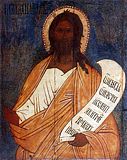
The Holy Prophet Malachi lived 400 years before the Birth of Christ, at the time of the return of the Jews from the Babylonian Captivity. Malachi was the last of the Old Testament prophets, therefore the holy Fathers call him “the seal of the prophets.”

Manifesting himself an image of spiritual goodness and piety, he astounded the nation and was called Malachi, i.e., an angel. His prophetic book is included in the Canon of the Old Testament. In it he upbraids the Jews, foretelling the coming of Jesus Christ and His Forerunner, and also the Last Judgment (Mal 3:1-5; 4:1-6).
 

Troparion — Tone 2

We celebrate the memory / of Your prophet Malachi, O Lord; / through him we entreat You, / save our souls.
 

Kontakion — Tone 4

(Podoben: “Today You have shown forth...”)
Endowed with the gift of prophecy, O Malachi, / you clearly proclaimed the saving coming of Christ to the world. / His brightness has brought light to the whole universe. 

---------

ESPAÑOL:

El Santo Profeta Malaquías vivió 400 años antes del Nacimiento de Cristo, en el momento del regreso de los judíos del cautiverio en Babilonia. Malaquías fue el último de los profetas del Antiguo Testamento, por lo que los Santos Padres lo llaman “el sello de los profetas."

Manifestándose imagen de bondad espiritual y piedad, asombró a la nación y fue llamado Malaquías, es decir, ángel. Su libro profético está incluido en el Canon del Antiguo Testamento. En él reprende a los judíos, prediciendo la venida de Jesucristo y Su Precursor, y también el Juicio Final (Mal 3,1-5; 4,1-6). 


Troparion — Tono 2 

Celebramos la memoria / de Tu profeta Malaquías, oh Señor; / por él te suplicamos, / salva nuestras almas. 

Kontakion — Tono 4 

 (Podoben: “Hoy has manifestado...”) Dotado del don de la profecía, oh Malaquías, / proclamaste con claridad la venida salvadora de Cristo al mundo. / Su brillo ha traído luz a todo el universo.

 
++++


sábado, 15 de enero de 2022

Святой пророк Малахия

Святой пророк Малахия жил за 4 века до Рождества Иисуса Христа, в дни, когда иудеи наконец вернулись из плена вавилонских царей. Малахия стал последним ветхозаветным пророком, за что святые отцы дали ему имя «печать пророков». Люди, удивлённые душевной добротой и невероятным в те печальные времена благочестием этого святого человека, называли его Малахией, что означает «Ангел». После возвращения из плена Божий народ в большинстве своём был разочарован во всём, духовность была в страшном упадке, истинных ревнителей Закона становилось всё меньше и меньше… В своей пророческой книге Малахия обличал иудеев в суетной жизни и отступлении от веры, а священников — в том, что служат они неискренне и бесславят Бога своими лукавыми жертвами. Он звал людей к покаянию. Ясно предсказывая пришествие Спасителя мира, а также и Его Предтечи и Крестителя Иоанна, пророк Малахия писал к сынам Израиля от лица Господа так: «Вот, Я посылаю Ангела Моего, и он приготовит путь предо Мною, и внезапно придёт в храм Свой Господь, Которого вы ищете, и Ангел завета, Которого вы желаете… И кто выдержит день пришествия Его…?» (Мал. 3, 1-2).

Источник: https://www.pravchelny.ru/all_publications/zhitie/?ID=7060
© PravChelny.ru

Святой пророк Малахия жил за 4 века до Рождества Иисуса Христа, в дни, когда иудеи наконец вернулись из плена вавилонских царей. Малахия стал последним ветхозаветным пророком, за что святые отцы дали ему имя «печать пророков». Люди, удивлённые душевной добротой и невероятным в те печальные времена благочестием этого святого человека, называли его Малахией, что означает «Ангел». После возвращения из плена Божий народ в большинстве своём был разочарован во всём, духовность была в страшном упадке, истинных ревнителей Закона становилось всё меньше и меньше… В своей пророческой книге Малахия обличал иудеев в суетной жизни и отступлении от веры, а священников — в том, что служат они неискренне и бесславят Бога своими лукавыми жертвами. Он звал людей к покаянию. Ясно предсказывая пришествие Спасителя мира, а также и Его Предтечи и Крестителя Иоанна, пророк Малахия писал к сынам Израиля от лица Господа так: «Вот, Я посылаю Ангела Моего, и он приготовит путь предо Мною, и внезапно придёт в храм Свой Господь, Которого вы ищете, и Ангел завета, Которого вы желаете… И кто выдержит день пришествия Его…?» (Мал. 3, 1-2).

Источник: https://www.pravchelny.ru/all_publications/zhitie/?ID=7060
© PravChelny.ru


День памяти: 3 января
Святой пророк Малахия

Святой пророк Малахия жил за 400 лет до Рождества Христова, во времена возвращения иудеев из плена Вавилонского. Малахия был последним из ветхозаветных пророков, поэтому святые отцы называют его "печатью пророков". Являясь образцом душевной доброты и благочестия, он приводил в удивление народ и был назван Малахией, то есть ангелом, или вестником. В канон Священных книг входит его пророческая книга, в которой он обличал иудеев, предсказывая пришествие Иисуса Христа и Его Предтечи и последний Суд (3, 1 - 5; 4, 1 - 6).


+++

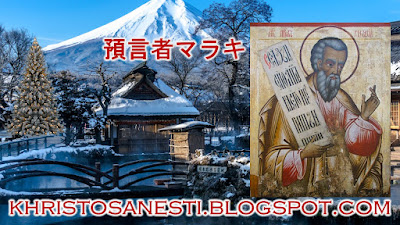
預言者マラキ


マラキは、旧約聖書のマラキ書を著した、北イスラエル王国の預言者。

祭司達への裁きの宣告と、民衆に向けての神を恐れる者達に有る報い(マラキ書 3章16節〜18節)、そして予言者エリヤの再来とされる人物の出現(マラキ書 4章5節)とを預言した。この内後者は、新約聖書の中では洗礼者ヨハネのイエス・キリストに対する関係を預言したと解釈されている。 

+++


viernes, 14 de enero de 2022

Happy New Year (Today is the True New Year) - Feliz Año Nuevo (Hoy es el Verdadero Año Nuevo)


С новым годом!
Щасливого Нового року!
Срећна Нова година!
An Nou Fericit!
明けましておめでとうございます!
新年快樂!
Happy New Year!
Felíz Año Nuevo!
 
 
ENGLISH:

As most of us know, the apostate Roman "Catholic Church" changed its calendar in 1582 for many Papist-controlled countries in Europe.

The Gregorian calendar is the calendar used in most of the world. It was introduced in October 1582 by the heretical Pope Gregory XIII as a modification of the Julian calendar, reducing the average year from 365.25 days to 365.2425 days, and adjusting for the drift in the 'tropical' or 'solar' year that the inaccuracy had caused during the intervening centuries. 

In the beginning few countries adopted this calendar, and many Protestant countries didn't adopt it until the 18th century. Meanwhile in the Orthodox Christian countries it was not adopted until recent years, but the Orthodox Church went on using the Orthodox Julian Calendar, as the Church had always did.


For further information read: 

С новым годом! Happy New Year! 

Anathemas Against the New Calendar  

The New Calendar Innovation and Its Fruits  

Today is The True Christmas Day 

 ----------

ESPAÑOL: 

Como la mayoría de nosotros sabemos, la "Iglesia Católica" romana apóstata cambió su calendario en 1582 para muchos países europeos controlados por los papistas. 

El calendario gregoriano es el calendario utilizado en la mayor parte del mundo. Fue introducido en octubre de 1582 por el papa hereje Gregorio XIII como una modificación del calendario juliano, reduciendo el año promedio de 365,25 días a 365,2425 días, y ajustando la deriva en el año 'tropical' o 'solar' que había tenido la inexactitud causado durante los siglos intermedios. 

Al principio, pocos países adoptaron este calendario y muchos países protestantes no lo adoptaron hasta el siglo XVIII. Mientras tanto, en los países cristianos ortodoxos no se adoptó hasta los últimos años, pero la Iglesia Ortodoxa siguió utilizando el Calendario Juliano Ortodoxo, como siempre lo había hecho. 


Para más información leer:

С новым годом! Happy New Year! 

Anatemas Contra el Nuevo Calendario 

El Nuevo Calendario y Sus Frutos  

Hoy es el Verdadero Día de Navidad


 +++


The Weeping For Tammuz

THE PAGANISM OF LENT AND WEEPING FOR TAMMUZ! Let me say right up front that if you already know the origins of ‘Shrove Tuesday’, Ash Wednes...