Translate

Mostrando entradas con la etiqueta Prelest. Mostrar todas las entradas

lunes, 12 de diciembre de 2022

The Guadalupan Myth


Versión en español: https://khristosanesti.blogspot.com/2020/12/el-mito-guadalupano.html

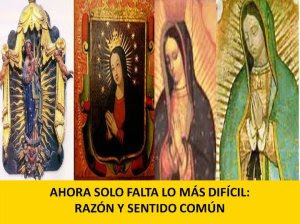
Although the "Virgin" of Guadalupe is best known as the patron saint of the Americas, the story of her "miraculous" appearance in Tepeyac, Mexico has its roots in the province of Extremadura, Spain. It was here that a Spaniard named Gil Cordero discovered a small Islamic image resembling the Virgin Mary on the bank of the Guadalupe River sometime in the mid-13th century. The wooden image had dark brown skin and was on top of a crescent moon, a symbol of Islam. In fact, the very name of the river "Guadalupe" had an Islamic influence, since it is derived from the Arabic word "guadale" which means "river," and "Lupo", which is Latin for Wolf. Both the image and the name of the river were the remains of the Moorish occupation of Spain. The discovery of the carved image was seen as a great sign from God, and in 1338, King Alfonso XI ordered a temple to be built on the spot where it was found. The image became known as "Our Lady of Guadalupe," and the temple was built in her honor. In order to help spread the veneration of "Our Lady," artists began painting replicas of the carving and they earned their money by selling copies of it.
In February 1495, Christopher Columbus started the transatlantic slave trade by sending 550 Native Tainos from the newly discovered American continent out of Spain. And since these strange and wild people were of the same complexion as the image of Our Lady, the King and Queen of Spain declared the Virgin "Protector of the Indians." In 1496, the native slaves were brought to the temple and baptized in honor of the Virgen del Río Lobo. The discovery of the Virgin was seen as proof that the expulsion of the Moors had been the will of the gods, and her temple quickly developed a loyal following. Among his devotees was a soldier named Hernán Cortes. Cortés was fanatically devoted to the worship of the Virgin, and carried an image of her on his flag, taking it with him wherever he went. In 1519, Cortés invaded Ana Wak, bringing the image of La Virgen with him to the New World. The Italian historian Lorenzo Boturini described the flag as follows: "A beautiful image of the Virgin Mary was painted on it. She wore a gold crown and was surrounded by 12 gold stars. She had her hands folded in prayer, asking his son to protect and give strength to the Spanish so they could conquer and Christianize the pagans." It was the flag of Cortés that served as the "official" flag of the Spanish until the first Spaniards began to arrive. How Cortés and his men carried out constructions in the Indigenous places of study, of papist churches on their ruins.

In 1520, the Spanish destroyed the Tonantzin temple in Tepeyac and in its place planted another temple glorifying the Virgin of Guadalupe - A reproduction of Cortés' banner was created and hung inside. The Spanish thought that they could easily replace the symbol of the earth (Tonantzin Koatlikwe) with the Mother of God.

On August 13, 1521 Mexico-Tenochtitlan fell to the invading forces. The genocide that followed was carried out under the pretext of religious conversion. The ancestors were given two choices: they could accept the new religion of the Spanish or face a death that went unnoticed for nearly a century, but when Father Sanchez's book came out, the story of the "miracle" spread rapidly and grew embedded. in the consciousness of Mexicans. The Church in Tepeyacac ​​would not be poor again. As the years passed, the Marcos Zipactli painting became badly deteriorated by mold and exposure to the elements. In 1751, Archbishop Rubio commissioned the famous painter Miguel Cabrera, a fanatical Catholic, to touch up the painting. In order to consolidate the idea that the image was a miracle, Cabrera published a book in 1756 entitled "American Marvel." But not everyone was convinced of Cabrera's lofty claims, and in 1787, José Ignacio Bartolache took it upon himself to examine the "miracle" of the image. Aided by a group of specialized painters, Bartolache discovered that the image had been "much retouched and covered in spots and that in some places it is crumbling due to the effect of fungus and humidity." In addition to this, the group came to the conclusion that the divine image was:

1. The work of more than one artist.

2. It was not made in maguey cloth, but in a blanket of fine palm

3. Glued to a wooden frame 4. Badly deteriorated

Bartolache was not the only one who doubted the divine origin of the image. In 1883, Joaquín García Icazbalceta was directed by Archbishop Labastida to investigate the matter. After an intense and meticulous examination of the tilma, Icazbalceta admitted that the image was actually a fraud. In his report to the Archbishop, Icazbalceta stated that "With all my heart, I hoped that this miracle which would prove to be a great honor for my country would turn out to be true, but it does not seem to me that it is. If we are forced to believe and proclaim the miracles that have occurred, we are also prohibited from publishing their falsehood." By the way, after Izcalbacet died, the Roman Church had a Jesuit historian write a book to refute what Izcalbacet had written. The result was the "Historical Album of the Virgin of Guadalupe", which had 25 worthless, unprovable and lengthy already discredited "proofs" of apparitions of the Virgin. Among the "evidence" presented in the album were different stories describing the event, and dates that do not match the events described. In 1895 the tilma was deteriorated beyond repair and Father Antonio Plancarte ordered it replaced with a new one. In Plancarte's statement can be read in the December 3, 1895 issue of El Universal. However, when the new image was put into place, the priests made a startling discovery - the artists had completely omitted the crown that rested on the head of "The Virgin"! In an attempt to cover up this mistake, the church declared that the crown had miraculously disappeared, and those faithful to the image actually believed it.


This total the sordid event was recorded in great detail in the book "Echoes of Oblivion", which was published in 1900 by Bishop Sánchez Camacho. In 1928 the new, crownless version of the image was examined by the great painter and Mexicanist Dr. Atl . Dr. Atl concluded that the image was definitely not made of maguey fiber as claimed, and went on to add that "The painting of Guadalupe is a parody of her image that is in Fuenterrabla Spain, which in turn is a parody of Byzantine images of decadence. The Virgin of Guadalupe is a purely decorative work, executed by a person with mediocre images." Despite all the historical documentation (not to mention common sense) that clearly illustrates how the Guadalupe hoax was removed, millions of devout Mexicans still pray to her image and dedicate themselves to her cult. But what possible evidence do they have that the image of the Virgin is authentic?


Well, the most often cited "evidence" of the Virgin's apparition is referred to as the "Valeriano Relation", or the Nikan Mopohua as it is often called. This document, supposedly written in Nahuatl by Antonio Valeriano in the mid-1500s, should serve as an official confirmation of the miracle at Tepeyacac. But let's take a look at the claims made by this piece of "evidence."

In the first place, the Nikan Mopohua begins by stating that Juan Diego was going to the parish in Tlatelolco to receive the sacraments and find a priest to confess his sick uncle before he died. It should be noted that sacraments, such as confession and communion, were not granted to indigenous people until the 1540s - since Mexicans were not thought to be human and possibly did not have souls. Not only that, but Tlatelolco did not have a parish until 1572! In fact, not even Father Sahagún's "Historia general de las cosas de la Nueva España", which was written starting from Tatelolco, makes any mention of the virgin apparitions! There is not a single written document available from 1531 to 1648 that has a single record of Juan Diego or the supposed miracle! Spaniards such as Bernal Díaz del Castillo, Diego de Durán, Bernardino de Sahagún, Bartolomé de las Casas, Hernán Cortés, and even Zumárraga himself never mention the apparition at Tepeyacac.


This sounds strange considering how important the apparition would have been to the Catholic invaders. Another error in the Nican Nican worth mentioning is that the document reports events that occurred long after Antonio Valeriano died in 1605. This makes it impossible for Valeriano to have written the things for which he has been credited. And if this wasn't bad enough, the original Nican Mapohua document has never been shown to have existed at all. The only "evidence" of the existing original documents is a supposed copy of the manuscript published in 1649 by Luis Lasso de la Vega. But this copy, the "Huey Tlanahuikoltika," is nothing less than a Nauatl translation of the book written by Father Miguel Sánchez in 1648 - another bona fide fraud! But despite the painfully obvious truth, "La Virgen de Guadalupe" remains one of the most recognizable and revered symbols of Mexico. Literally millions of our people converge on the Tepeyacac ​​Basilica to waste their time, energy, money and resources in the hope that "La Virgen" will grant them eternal peace. But not all Mexicans are quick to bow down to the false image, and even some high-ranking Catholic officials are questioning the divine origin of the tilma. In 1996, William Schulenberg was overthrown by the Vatican after serving as Abott of the Basilica for 33 years. Schulenberg believes that the creation of the myth of The Virgin was justified, since it won an entire nation for the Catholic religion. His real crime, however, was doubting the existence of Juan Diego, and knowing the truth behind "The Virgin."

Bibliography: Trial of Spain - Xokonoschtlet The Guadalupan Myth - Rius Nikan Mopohua Echoes of Olvido - Bishop Sánchez Camacho American Marvel - Miguel Cabrera – Original titled “The Myth of La Virgen de Guadalupe” – Translated for www.historiaYverdad.org – Guatemala, December 2010

The Virgin of Guadalupe is as divine as a Daffy Duck postcard stuck to a lunch box. This image, which has millions of people plunged into idolatry, is not immune to criticism, since the so-called "Guadalupan believers" are not very reserved when imposing their vision of the world on others. It is true that having criteria in a world of religion is difficult, except when the religious are largely tolerant, although I do not intend to offend anyone, I will show verifiable facts that are proof by themselves of the inconsistencies of the Guadalupano miracle. But let's cut the roll and show the tests: Test 1: The Virgin of Guadalupe was not called Guadalupe As we saw in the article: Virgin of Guadalupe: Two images that definitively deny "The Miracle", the Mexican Virgin of Guadalupe is actually a copy of the Virgen del Coro de Extremadura, part of the Spanish cult of the "Virgin of Guadalupe de Cáceres" in Extremadura, where we can see the statue on which the painting is based, much earlier than 1531.


The Virgin of Extremadura, which is usually represented as a "brown virgin", has its origins at the end of the Islamic invasion of Spain in the 7th century. This is the statue supposedly found in the 7th century:


The typical story of the appearance and the request for the construction of a church that allowed the expansion of the church's properties for two millennia, whose basic function was the sale of documents related to the forgiveness of sins, alms and other economic benefits that highly percentage filled the coffers of the Vatican.

The main goal of the appearances of the Virgin Mary throughout time was to replace the gods of conquered civilizations, the same premise pursued by the saints whose role has been to replace the polytheistic cult. The very origin of the Virgin Mary appears to replace the worship of the goddess Isis that spread throughout the Mediterranean and Anatolia, reaching Rome with force.

Story
It is supposed that it was donated by Pope Gregory I the Great, who was then Bishop of Seville, the figure was hidden at the beginning of the "Moorish" invasion of Spain in 711, being lost for hundreds of years and then being rescued by a humble shepherd who acted under “heavenly influence” in 1326, found near the Guadalupe River in the Spanish province of Cáceres.

Meaning of Guadalupe
The figure is a representation of the Virgin Mary, named Guadalupe in reference not to the name, but to the region where she was found, in this case, the banks of the Guadalupe River, whose name means Hidden River in Arabic.

Brown Skin
The brown skin of the virgin is apparently due to discoloration of the wood due to humidity or simply due to the coating on the wood that has discolored to a dark color over time. All I want is a chapel The shepherd named Gil Cordero related that while he was looking for a lost cow, a radiant Lady emerged from the bushes. After indicating the place to dig to unearth the treasure, she asked that a chapel be built for her... how original.

Exhibit 2: Christopher Columbus
On his second trip to what would later be defined as "The Americas", let us remember that the discovery was attributed to a fraudster named Américo Vespucio, in 1493, on November 14, the island that Columbus would name "Guadalupe" would be discovered, the name is in honor of the Virgin of Extremadura.
It is said that Christopher Columbus prayed in the sanctuary of Guadalupe before carrying out his historic expedition, and upon discovering Karukera Island on November 4, 1493, he changed the name to Guadalupe in honor of the patron saint of Cáceres. Since 1635, the Island of Guadalupe has been a French colony. As we can see, the concept of Guadalupe was already around even before arriving in Mexico, if such a virgin were a divine fact, why then, would she appear as in the European traditions and not in the indigenous ones or those typical of Israel of the 1st century?

Exhibit 3: The missing crown of the Virgin of Guadalupe; The priest Hidalgo and his banner This is the current conception of the Virgin of Guadalupe of Mexico, note that it is an artistic representation of the current one, which shows the vision of the people in our country, not the "divine" painting that has a rarity, technically speaking:

As you can see in the image above, the head of the Virgin of Guadalupe is covered by her cape and the top of her head is surrounded by rays. In the lower image, the upper segment of the painting, supposedly divine, until before 1980 is hidden by the frame that currently shows a great retouching, the tilma is supposed to measure 1.72 cm, why then only show less than 1.47 cm that occupies the painting?

Once it was restored in the 1990s, note that unlike the bright and worn part of the hood, the upper part is a solid-colored paste with a rectangular shape at the junction of the zones:

Here you can see better that the entire head cap has a rectangular pattern, which if you see in the previous image looks blurred, a problem caused because the retouching settled poorly in the paint and was absorbed as it would be with a water-based paint:

Notice the changes of color in the area:

The recent return of the banner of Ignacio Allende by Spain to Mexico and another on loan, shows us another reproduction of the authentic version of the Virgin of Guadalupe, wearing the crown:

Old paintings showing the same singularity, where we can appreciate the drop shape, as if it were a fruit:


Hidalgo's banner
On September 16, 1810, when the insurgents arrived in the town of Atotonilco, the priest Miguel Hidalgo y Costilla, who led them, took a replica of the image of the Virgin of Guadalupe that was in the sacristy of the sanctuary and placed it in hands of his improvised soldiers, to carry it as a banner in front of the people who followed him. The drawn virgin was a reproduction long before the time when part of the painting of the virgin was hidden, in which the original form could be seen, later Allende would make his own reproduction:


The Crown of the Seven Sorrows of the Virgin Mary
The crown is the proof that shows in an obvious way that the virgin is painted by human hands, which is why it had to be hidden. What did a European-style crown have to do in a Marian apparition to indigenous people?, when it was not a symbol of pre-Hispanic royalty? Worse still, what is a crown doing that refers to the popular Saint Brigida of Sweden from the 13th century, with her Crown of Seven Sorrows of the Virgin Mary?

The Roses
This section is wrong, it has been removed, because in the first edition there was a confusion that I did not edit and I deleted due to forgetfulness in the final revision, thanks for clarifying it Anonymous. Book: "Cistiana Rule" by Fray Juan de Zumarraga For 1547, a year before his death, Fray Juan de Zumarraga, finished one of his books: Regla Cristiana, where he asked an absurd question for someone who experienced a portentous miracle 16 years ago: Why don't miracles happen anymore? responding to himself: Because the Redeemer of the world thinks that they are no longer needed. purely European symbols An objective historian would have to doubt the strange presence of strongly European elements that have little to do with Mary, mother of Jesus, but a vision typical of fifteenth-century Europeans, with all the distortions that implies. Test 4: Juan Diego's height It is amazing, not to say ridiculous, that no one questions that a tilma measuring 172 cm by 103 cm wide, which represents the front of Juan Diego's clothing, could be worn by an indigenous person, which at that time was not likely. that he measured more than 1.60 meters, even now it is rare to see indigenous people who are over 1.70 meters. It was also too big for the width of his body, which should not have exceeded 50 cm. It is assumed that the smock that she wore as a dress in the "miracle story" was like a gown that covered the front and back, so there must have been a blank area corresponding to the back area, did they cut it out?


Conclusion
A 160 cm tall person could only wear a 1 meter high x 1 meter wide Ayate that would cover from the base of the neck to the ankles, although it should be much shorter, but it is likely that an indigenous person like Juan Diego was smaller and with a thin waist. If we add the missing 72 cm, Juan Diego's height would be in the order of 2.30 and 2.40 meters in height, unless he was a prodigious Nordic, that height would be unlikely, in addition to the fact that the width of his body would be between 100 cm representing the front.
Exhibit 5: This is linen, this Ayate Everyone says that the virgin was made in Ayate, according to the study ordered by Guillermo Schulenburg, former abbot of the Basilica of Guadalupe, it is made of materials more suitable for painting, such as linen. Schulenburg was thrown out the back door when he refused to recommend and opposed Juan Diego's beatification process in 1996. The former abbot, who died in 2009, stated "Diego is a symbol, not a reality." This is Ayate: It degrades quickly due to environmental agents, insects, bacteria and fungi that destroy its fibers. Although it is very strong, it is not suitable due to the separation of its fibers to paint over:

This is Linen: It lasts a long time, even hundreds of years and its fibers are very close:

The painting of the Virgin -the white base can clearly be seen- and the closed fabric


If you believe that my purpose in life is to take away your beliefs, you are very wrong, I doubt that any scientific, historical or logical proof can do it, because "Faith" is an irrational fact, a belief, an unfounded expectation. I only give simple samples of how easy it is to find arguments against, behind the supposed divine origins of many Marian apparitions, science and logic show the cruel and objective side of things. Reality is a bucket of cold water that is received naked, you decide whether to get wet or stay dirty, objectivity is incompatible with religion. But as Cipher would say in The Matrix: Ignorance is bliss. One of the most shameful frauds perpetrated by our most holy male leaders of the Mexican Catholic Church is that of the Virgin of Guadalupe. The fraud began a few years after the Spanish conquest, apparently as a way to substitute the worship of the goddess Tonantzin for that of the mother of the son of God. One of the shrines of said Mother Goddess was located on the Tepeyac hill, where the Indians came from distant regions. It is no coincidence that the chapel of the Virgin of Guadalupe and her image were erected right there, which for decades was considered only as a painting that worked miracles.
 
The most shameful thing begins about a hundred years after the supposed apparition, precisely with the spread of the legend of the apparition of the Virgin to the Indian Juan Diego and the miraculous formation of the image on his tilma. This was followed by various manipulations to the simple original painting to make it more glorious. Alterations that the Mexican Catholic Church recognizes today because they are falling apart. 
 
Many are those who participated in exalting the myth. Some collaborated in good faith, with their ignorance, their naivety, or their lack of rigor in demanding proof. Others participated with their silence knowing the monumental deception. Others, moved by pity and with the healthy desire to magnify the faith of an orphaned people, simply added details to the painting to perfect the forgery. And finally there are those who investigated and knowingly, instead of correcting the error or at least leaving it as it was, they finished cooking up the fraud, adding titles to the Virgin and canonizing the non-existent Indian Juan Diego. We must also acknowledge the few who dared to oppose and question the myth, sometimes at the cost of their reputation and position.
 
THE EXTRORDINARY SIMILARITY WITH THE SPANISH VIRGIN OF GUADALUPE
 - The original Virgin of Guadalupe is originally from Extremadura. Hernán Cortez and many of his soldiers were from Extremadura. One of them brought an image of the said virgin with everything and frame, which he had to leave in the field for being injured in the famous flight of the sad night. 
 
- The Spanish Virgin of Guadalupe supposedly appeared in the Sierra de Guadalupe just over two hundred years before the Mexican (1322). Curiously, the Spanish legend is extremely similar to the Mexican one. The Virgin appears on the hill to a humble shepherd and asks him to build a church right there. The pastor takes the request to the clergy, who ignore him. The apparition and the request are repeated. A son of the shepherd boy is resurrected after being left for dead. The clerics go to the place of the apparition with the shepherd and find a hidden sculpture of the virgin, "sculpted without human intervention". They build the sanctuary and the virgin is also known as "morenita de las Villuercas" (nearby town) because the wooden image is brown. The first document that recounts the legend of the apparition of the virgin and the sculpture is from 118 years after the supposed apparition (in 1440).
 
FRAY JUAN DE ZUMARRAGA DID NOT KNOW JUAN DIEGO 
- In his multiple accounts, archives and letters, the first bishop of Mexico - supposedly the main eyewitness of the miraculous appearance of the image of Guadalupe in Juan Diego's cloak - does not mention Juan Diego or the miracle or the miraculous virgin or He doesn't even give a hint that he's ever heard of them. 
- Curiously, there is a sermon by Zumarraga (after the supposed apparition) that speaks of the fact that there are no miracles in his time, nor are they necessary to believe in Christ.
 
THE IMAGE OF GUADALUPE WAS NOT CONSIDERED TO HAVE A MIRACULOUS ORIGIN 
- There are documents that prove that the image of Guadalupe and the chapel of Tepeyac existed since before 1556 and the Indians considered the image "miraculous", in the sense that it performed miracles. But there is no mention of the apparition, nor of the Indian Juan Diego, nor the supernatural representation of the image. 
 
 - Zumarraga's successor, Bishop Fray Alonso de Montufar in a sermon (1556) adds to the rumors that the Virgin performs miracles to attract greater devotion from the Indians towards her. Which brings him severe criticism from the Franciscans, enemies of idolatry. 
 
- Fray Antonio de Huete (1556) asks the archbishop to at least stop calling her Our Lady of Guadalupe, but Tepeaca (Tepeyac), since in Spain there was already a virgin with that name because of the place that was called that (Guadalupe ). 
 
- Fray Francisco de Bustamante (1556) says in a sermon that "to tell the natives that an image painted yesterday by the Indian named Marcos (Marcos Cipac de Aquino) worked miracles, was to sow great confusion". 
 
- Archbishop Montufar (1556) orders it to be said through paid witnesses: "that no reverence be made to the canvas, or paint, or sticks of the images, but to the images for what they represent", a curious way of calling the product so mighty miracle. - Fray Bernardino de Sahagún (1570) calls the adoration of the Virgin of Guadalupe a satanic invention to hide idolatry, which only disguises the adoration of the goddess Tonantzin, "as the Indians also call Our Lady of Guadalupe."
 
THE CONFLICT OVER ALMS
 - In 1574, an inspection of the monastery of Guadalupe de Extremadura falls on the hermitage for the matter of alms that the Guadalupana de México house had to deliver to the Matrix house in Extremadura. Something like the rights of use (royalties) of the original image.
 
A CENTURY LATER THE MIRACLE BEGINS 
- A century later, some documents begin to mention the Guadalupano miracle. Few give the date 1531 as the year of the miracle, several give the year 1555 and 1556. 
 
- In 1648 the preacher Miguel Sánchez published a book with the story that gives its current form to the Guadalupana legend. It is there where all the details that we now know are given. 
 
- The first person surprised by the story of Miguel Sánchez is the vicar of the Guadalupe chapel, Luis Lasso de la Vega, who is in charge of the chapel and the image of Guadalupe and was ignorant of everything about the portentous print of the Virgin of Tepeyac before to read Sánchez, as he himself writes. 
 
- The vicar Lasso in a pious outburst decides to adapt the difficult text to a simple language and translates it into Nahuatl. This story is known as "Nican mopohua..." and is considered by many to be the greatest evidence of the Guadalupano miracle.
 
HE CANNOT FIND DOCUMENTS AND DECIDED TO WRITE A BOOK 
- In 1675 Luis Becerra Tanco, who investigates the miracle, writes that he regrets not having found any document in the archives that speaks of such an outstanding prodigy. Therefore, he feels compelled to write a book that corrects the omission and avoids oblivion. With a stroke of the pen he passes Juan Diego from living in Cuautitlán and puts him to live in Tulpetlac so that on his way to Tlatelolco he will have Tepeyac on the way.
 
THE VIRGIN WOULD BE CROWNED AND A NEW MIRACLE 
- In the middle of the 18th century, Lorenzo Boturini tries to obtain authorization to crown the Virgin of Guadalupe. Does not achieve it. 
 
- At the end of the 19th century, everything seemed to indicate that the virgin would finally be crowned, but an obstacle arose. The virgin already had a crown. A crown with spikes and it could not be crowned if it had already been crowned by heaven itself. 
 
 - All the painters of the three previous centuries portray her with a crown. Historians and the Nican Mopohua also testify that the virgin did have a crown. 
 
- The crown miraculously disappeared on January 20, 1887. Rumor has it that the painter Pina and the abbot of the Basilica of Guadalupe had erased it. 
 
- The painters Gonzalo Carrasco and Bartolomé Pina certify in a notarial deed of 1895 that the image never had a crown. 
 
- In 1895 as a result of the festivities for the coronation of the Virgin, the Bishop of Tamaulipas, Monsignor Eduardo Sánchez, resigned from his diocese for considering the Guadalupan cult as an abuse against a credulous and ignorant people.
 
IT COSTS THE POSITION OF THE ABBOT OF THE BASILICA AND JUAN DIEGO IS CANONIZED 
 - At the end of the last century, Monsignor Guillermo Schulenburg, abbot of the Basilica of Guadalupe, denied the real existence of Juan Diego and cost him his position. 
 
- A few years later, Pope John Paul II canonized Blessed Juan Diego. Where is the dogma of the infallibility of the pope if he has canonized a man who only exists in popular imagination?
 
MIRACULOUS PRESERVATION OF THE IMAGE OF GUADALUPANA 
- Although it is in very poor condition and many pieces of the painting's details have fallen apart, there is talk of the miraculous preservation of the image. 
 
- Given the obvious damage that the image has suffered, the church was forced to acknowledge that the angel, the moon, the embroidery, the stars, the golden rays, the neck brooch, the black bow were added to the original image , the ermine of the sleeves and the orange clouds. "This is all human work, albeit pious," says Gonzalez de Alba. 
 
- Attention is drawn to the black moon in the waning quarter at the feet of the Virgin, a symbol of Islam. It was originally silver, but since they used silver nitrate it soon turned black. It is not known if the symbol is of integration with the Moorish culture or if the virgin is trampling on the moon of Islam as a symbol of superiority. And this common symbol for the Iberians of the time is completely alien to Mexicans. 
 
- The worst damage was to the hands: "The hands were retouched to shorten the fingers and convert the originally formed slender-fingered hands into shorter indigenous fingers." Other crude alterations are the angel with disproportionate hands, a meaningless black stripe coming out of the angel's left hand, the golden stars that sometimes invade the black border of the cloak, the embroidery that does not follow the folds of the tunic, the rays gold leaf and cloud background. Even an Aztec hieroglyph known as a "tilma fold" was added, used to indicate the tilmas of a tribute. 
 
- With the infrared photography taken with the permission of the church and thanks to the multiple errors of the inexperienced painters who altered the image, it was possible to know what was added and in what order. In infrared light, the crown of peaks obliterated a little over a century ago appeared partially.
 
BUT THE MIRACULOUS IMAGE IS THERE 
- Removing all the "small" additions, restorations and erasures that were made to it, the original Guadalupan image remains, this one of inexplicable origin: "the beautiful face of the Virgin, the pink tunic without the embroidery, the blue mantle without the stars and perhaps a primitive glow." 
 
- To all this it should be mentioned that the pigments that make up the original image have not been recognized. Not because of a lack of desire or technology, but because of a lack of authorization from the church authorities, who for more than 40 years have not allowed any investigator to touch it. 
 
- Another mystery is why such a coarse fabric was chosen to make the painting. González de Alba ventures to speculate on a possible explanation: the first image could have been made of flowers and supported on the coarse fabric. The image could well be that of the Extremaduran virgin of the conquerors. Images of flowers were common at that time. The flowers withered and left a stain like the flashes of moisture that appear today due to natural phenomena. A skilled painter, Marcos Cipac de Aquino, gave the details to the face, the hands, the pink tunic and the blue cloak, taking advantage of the beautiful stain formed. That would be the image of unexplained origin. The phenomenon of adding details was repeated several times over the years and centuries by less skilled hands and with less durable materials. All this happened by the will of God and for the benefit of the Indians and the Mexican nation.
 
AND THE EVIDENCE OF THE MIRACLE CONTINUES TO APPEAR 
 - The religious fervor of some believers and a faith that is proof of any evidence to the contrary has made them continue to meet and when not, fabricate new evidence of the Guadalupan miracle. 
 
- From a small drawing of the miracle, the virgin, Juan Diego and the Tilma, made with paper and ink of the time with the signature of Fray Bernardino de Sahagún, the most fervent enemy of Guadalupana idolatry that the believing "investigators" have used to redeem Fray Bernardino from his lack of faith. Forgery that would make the friar roll over in his grave. 
 
- The little white spots that can be seen in the magnified photo of the virgin's eyes, in which only very pious eyes full of blinding fervor can see human figures. In them they even recognize Fray Juan de Zumarraga. The photos can be seen in the same basilica in the corridor below the image of Guadalupana. 
 
- Not even to mention the badly drawn stars of the mantle of the virgin in which "astronomers" have recognized the stellar pattern exactly as it would be seen at the time of the apparition. 
 
- An email is circulating on the internet that ensures that the analysis of the image discovered that it is not in the tilma, but 4 millimeters in front of it, miraculously floating in the air. 
 
 - Images of the Virgin of Guadalupe continue to appear on the sidewalks, walls, griddles, fallen trees, on the marble of a subway station and even in the glow of used underpants.
 
 
Aztec Pagan Goddess Tonantzin - La Guadalupe
 
 
The 20 Guadalupan myths where the writer and historian Juan Miguel Zunzunegui (twitter @JMZunzu) tells us that "the miracle of Tepeyac" never existed, and it is duly documented and evidenced as the friars of New Spain confirm that this supposed apparition never existed and had the objective of manipulating the indigenous peoples in a political rather than religious way at that time when paganism and social-economic policy reigned in the ancient Aztec empire. 
 
1. Since before the arrival of Cortés, Tepeyac was already a pilgrimage center to venerate the goddess Tonantzin, mother of the gods. 
 
2. From the s. XIV already existed in Extremadura a Virgin of Guadalupe, of which Don Hernan Cortés was devoted, that is why he took her image to America. 
 
3. When Cortés took Tenochtitlan, he demolished the idols of the Templo Mayor and put up a cross and the image of the Virgin of Extremadura de Guadalupe. 
 
4. In 1531 Zumárraga was not in New Spain as he had to travel to Europe to be anointed bishop. He never had a temple built on Tepeyac. 
 
5. In all of Zumárraga's letters, memoirs, and writings, he never mentions Juan Diego, the apparitions, Tepeyac, or the Virgin. 
 
 6. NASA never investigated the image, it is a myth that the Basilica itself has helped propagate. NASA studies ASTROPHYSICS, not miracles. 
 
7. Schulenburg, abbot of the Basilica for 33 years, always made it clear that these NASA investigations were a myth and were never carried out. 
 
 8. In investigations made, from the s. XVII to the XX, the pigments of the paintings and the fiber of the canvas have been identified.

9. CHRONICLES OF THE TIME: BERNAL DÍAZ DEL CASTILLO, BERNARDINO DE SAHAGÚN, DIEGO DE DURÁN, NO ONE MENTIONS THEM THE APPARITIONS. CULTURAL DATA, in fact Bernadino de Sahagún said that Guadalupanism was satanic, because it was a cult of Tonantzin. 
 
10. THE APPARITIONS WERE NOT DISCUSSED UNTIL 1648, 117 YEARS LATER, IN A BOOK CALLED “IMAGE OF THE VIRGIN MARY” BY FATHER MIGUEL SANCHEZ. 
 
11. THE CURRENT PAINTING IS NOT THE ORIGINAL, AS IT WAS CHANGED IN THE 19TH CENTURY. THE ORIGINAL WAS PAINTED BY THE INDIAN MARCOS CIPACTLI. Now we go with some phrases, such as the declarations of Fray Francisco Bustamante, Franciscan prior in 1556. 
 
12. FRAY FCO. BUSTAMANTE: IF IT'S A TRY TO TAKE AWAY THE INDIANS FROM IDOLATRY, WHY ARE THEY FORCED TO WORSHIP THE VIRGIN PAINTED BY THE INDIAN MARCOS. 
 
13. BY 1895, THE POOR STATE OF THE PAINTING FORCED IT TO BE CHANGED. IN THE UNIVERSAL OF DECEMBER 3, 1895 THE SCANDAL IS TALKED ABOUT.
 
In this regard, the bishop of Tamaulipas spoke out against the apparitions..., here are some phrases. 
 
14. EDUARDO SÁNCHEZ, BISHOP OF TAMAULIPAS: IT IS FALSE THAT THE MOTHER OF CHRIST APPEARED IN THE TEPEYAC, THE APPARITION OF GUADALUPANA IS FALSE. 
 
15. EDUARDO SÁNCHEZ, BISHOP OF TAMPAULIPAS. THE PAINTING THAT WAS VENERATED THERE AS THE WORK OF THE ANGELS, HAS DISAPPEARED AND A NEW ONE IS IN ITS PLACE. 
 
16. EDUARDO SÁNCHEZ IS IT GLORY TO IMPOSE A FALSE BELIEF ON THE INDIANS AND MAKE THEM SPEND THEIR MISERABLE WAGE ON GOING TO WORSHIP AN OLD RAG? 
 
 17. EDUARDO SÁNCHEZ: I AM NEVER MORE SURE LIKE TODAY OF THE DECEPTION AND EXPLOITATION THAT MY PEOPLE SUFFER BECAUSE OF THE GUADALUPANA FARCE. and remember that there was a failed attempt to canonize Juan Diego in 1982, promoted by Corripio Ahumada, at the time the Vatican ANSWERED... 
 
 18. SANDRO CORRADINNI, RAPPORTEUR OF THE CONGREGATION FOR THE CAUSE OF THE SAINTS THE VIRGIN OF GUADALUPE IS A MYTH INVENTED TO EVANGELIZE MEXICO. 
 
19. THEY SAY THE PAINTING IS ON JUAN DIEGO'S TILMA; THE COMPLETE FRAME MEASURES 1.80, SO JUAN DIEGO MUST HAVE BEEN ABOUT 2.20 M. 
 
20. The legend of the apparitions to Juan Diego is identical to the legend of the apparitions of the Virgin in Extremadura. I also leave you 7 slides left by the writer and historian Juan Miguel Zunzunegui that tell us more about this millennial lie.

1.


2.

3.

4.

5.

6.

7.


+++


domingo, 21 de agosto de 2022

The Orthodox Prayer Rope Vs. The Papist Rosary - El Cordón de Oración Ortodoxo Vs. El Rosario Papista


ENGLISH:

Notes on the Prayer Rope and the Rosary 

Chotki or Komboskini (The Prayer Rope): Meditations of a monk of Holy Mount Athos 


Preface 

The prayer rope is not intended to be used only by monks, but can also be used by lay people and generally anyone who wants to pray to God. The prayer cord is not a type of amulet with magical or exorcizing powers, such as those given to simple-minded people by magicians or mediums, worn on the wrist or neck. On the contrary, it is a purely Orthodox sacred object used only for prayer and nothing else. We use the prayer cord to pray in secret. 

At this point, we need to note something very important: there are many books that refer to prayer. However, before we begin to follow any rule or prayer, we must necessarily seek advice, blessings and spiritual guidance from our spiritual father, that is, the priest to whom we confess our sins. This is what the Holy Fathers have taught us for centuries in order to avoid deception and thus not lose ourselves from the correct orthodox path.

There are two ways we can pray using the Prayer Rope: 

1. At any time of the day, when we have free time, without being seen by anyone, we secretly hold the prayer rope with our left or right hand and go from knot to knot with the thumb simultaneously whispering or meditating on the prayer: "Lord Jesus Christ, have mercy on me." 

2. At the time of our regular prayer, when we pray following the prayer rule that our spiritual father told us to follow, we hold the prayer rope with the left hand between the thumb and forefinger and move from knot to knot. At each knot, at the same time, we do two things: i) with our right hand, we make the sign of the cross over ourselves, and ii) we say the prayer "Lord Jesus Christ, have mercy on me." When we finish all the knots in the prayer rope, we continue to follow the same procedure as many times as our spiritual father sent us.


(Greek: κομποσκοίνι - komboskini; Russian: чётки - chotki)


Let's make a break for a moment just to look at a little prayer cord, like this one made from black wool on Mount Athos. It is a blessing from a holy place. Like many things we have in the Church, it is a blessing prepared and given to us by a brother or father in Christ, a living testimony of living tradition. It is black, the color of mourning and sadness, and it reminds us to be sober and serious in our lives. We are taught that repentant prayer, especially the Jesus Prayer, can bring us what the Holy Fathers call sorrowful joy, in the Greek "Harmolipi." 

We mourn our sins, our weaknesses and failures before God, our fellow men and ourselves; but in Christ, who pours out his mercy and forgiveness on all who call on his name, this pain becomes a source of joy and consolation. This prayer cord is made of wool, that is, it was taken from a sheep, a reminder that we are rational sheep of the Good Shepherd, Christ the Lord, and also a reminder of the Lamb of God who takes away the sins of the world (see John 1:29). And the cross also speaks to us of the sacrifice and victory of life over death, of humility over pride, of self-sacrifice over selfishness, of light over darkness. And the free one? Well, you can use it to wipe the tears from your eyes or, if there are no tears, to remind you to cry because you can't cry.

Furthermore, since Old Testament times, small tassels have been a decoration for sacred garments, a reminder of the sacred tradition we participate in when we wear the prayer rope. 

Prayer ropes are made according to a tradition whose origins are lost in antiquity. Perhaps one of the oldest ways would be to simply harvest little pebbles or seeds and move them from one place or container to another, when someone would say their prayer rule or do their little meth or prostration rule. It tells the story of a monk who decided to make knots with a rope, which he could use in the execution of his daily rule of prayer. But the devil continued to untie the knots he made in the rope, frustrating the efforts of the poor monk. Then an angel appeared and showed the monk a special kind of knot consisting of interlocking crosses, and these knots the devil could not undo.

Prayer ropes exist in a wide variety of shapes and sizes. Most prayer ropes have an interlocking cross or fang to mark the "end" and also have some sort of marker after every 10, 25, or 50 knots or beads. There are many forms of prayer cords, some made from wool or sea or other fancier or simpler materials. Others are made from beads or the dried flower of a plant called "Tears of the Theotokos." 

The prayer rope is one of the items given to an Orthodox Christian monk at the time of the pitch: it is given to him as his spiritual sword with which he, as a soldier of Christ, must fight against our spiritual enemy, the devil. This sword is handled by invoking the name of our Lord and God and Savior Jesus Christ, in a request that He have mercy on me, a sinner. This prayer can be said in a shorter way, such as: "Lord Jesus Christ, have mercy on me;" or in a longer way, such as: "By the prayers of the Most Holy Mother of God and of all the saints, the Lord Jesus Christ have mercy on me."

Other Short Prayers: The publican's prayer: "God have mercy on me a sinner" (see Luke 18:13), or other short prayers to the Guardian Angel, individual saints, or all saints may also be offered with the help of the prayer rope. A common form of such a prayer is: Holy Guardian Angel - or Holy (name) - pray to God for me. By changing the words of these short prayers and saying, "Have mercy on us" or "pray for us," or including the names or names of the people we want to pray for, we can also use the prayer rope for the prayers of intercession. This also applies to those who have already departed in this life: "Give rest, O Lord, the soul of Your servant (name)." 

When monks carry the prayer rope in their hands, it serves as a reminder of their obligation to pray unceasingly, following the command of the Holy Apostle Paul to "pray without ceasing." Anyone can keep a prayer cord in their pocket or some other inconspicuous place, where it can be easily worn inconspicuously when in situations where it is best to pray or remember the prayer secretly without attracting the attention of others. The prayer rope can also be placed at the head of the bed, in a car, with a small cross or icon, or in other appropriate places, as a reminder of prayer and a kind of blessing and holy and pious presence in our lives. lives.

But now, we will briefly discuss the main use for which this prayer rope was made. The whole purpose of the prayer rope is to help us offer our prayers before God and His saints. Besides serving as an external reminder and gift of blessing us, how can this little string help us pray? We can pray without a prayer cord, of course, and there are times when wearing a prayer cord can become a distraction for us in our attempts to focus on prayer. With this in mind, let's consider some ways the prayer cord can be helpful. 

There are times when our prayer is fervent and easy for us to pray. There are times when our thoughts are so distracted that it is practically impossible for us to concentrate on prayer. This is especially true when we try to keep a rule of prayer every day. Some days go great, but other times, if not most of the time? - our efforts seem almost in vain. But since we are "creatures of habit," as the saying goes, it is very profitable to set aside a special and regular day (or time) for prayer. The night before going to bed is a good time, as it is important to end the day with prayer. The morning, waking up from sleep, is also good, to start the new day with prayer. Or a person may find other times during the day when they can be quiet and focused.

We are trying to establish a prayer rule in our lives, not an exception, so we want to find a time every day where we can find a little bit of silence to focus and turn the eyes of our soul to God. 

We can read some prayers from a prayer book as part of this rule or offer prayers and find stillness in our souls in other ways, such as reading religious literature, reflecting on the events of the previous day - "Anaskopisis"[1] - and so on. . But one of the most effective ways to benefit from a prayer rule is to regularly say a set number of the Jesus Prayer every day. It doesn't have to be a big number, and it may only take fifteen minutes, but that will be the part of our days that belongs to God, the little grains of salt that will flavor our Christian lives. This practice is now recommended by many doctors for a person's physical health, especially for overcoming stress. Better yet, find little time at various times of the day and regularly fill them with the precious treasures of prayer, a treasure that no one can steal from you, which has been prepared for you in heaven (see: Matthew 6:20)

By keeping a consistent number of prayers as part of this daily rule, a prayer cord can be very helpful. With the prayer lanyard, you can offer a set number of prayers and focus on the prayer words as you offer them. After collecting your thoughts, take the cross on the prayer cord in your left hand, holding it lightly between your thumb and index finger. Then, silently making the sign of the cross, whisper the Jesus Prayer. As your thoughts become more focused, you may not need to continue making the sign of the cross or praying audibly. Other times, when concentration is difficult, use the sign of the cross and whisper as a means to help keep your mind in prayer. 

It is good to stand, with bowed head, in a humble position; some people like to raise their hands from time to time in their pleas for mercy. Others, however, find it more helpful to sit or kneel, with their heads down, to concentrate. It depends a lot on the individual and also on their health and training. The important thing is to be quiet and focus on the prayer words as you repeat them.

Obviously, a person has to fight the temptation to "hurry up." For this reason, some people use a watch instead of a prayer rope as an external measure for their prayer ruler. By wearing a watch, a person can spend a certain amount of time in prayer, although he cannot keep track of the exact number of prayers he says. But then again, electronic beeping clocks are a fairly recent development, and keeping a nerve-wracking clock loud with a loud alarm rarely proves to be of great benefit to prayer. 

The prayer rope is also a convenient way to keep track of the number of small metanoias or prostrations a person does during their prayer rule. Making the sign of the cross over yourself and then bending over and touching the ground with your fingertips, or kneeling and touching your forehead to the ground are very ancient ways of offering prayers to God and His saints. You can combine these short metanoias or prostrations with the Jesus Prayer or any of the short prayers mentioned above. The physical action of bowing or kneeling can add to the fervor of prayer and give expression to our supplication as we humble ourselves before God. This is one way we can fulfill the apostolic command to praise God, both in our souls and in our bodies. [2] Many people wear the prayer cord when they go to sleep. After blessing their bed by making the sign of the cross on it, they take their prayer rope, bless each other with the sign of the cross as they lie in bed, and pray silently with a prayer cord until they sleep.

And waking up with the prayer rope still on your fingers or next to you on the pillow helps you start the new day with prayer. But ending the day before with silent prayer is an even better way to prepare for the beginning of a new day's prayer, not to mention preparing for Eternal Day if we fall asleep that night in death. And others hold their prayer cord during down times such as while commuting or traveling. At any time of the day, as long as you remember to do this, you can put a small prayer string on your fingers, and the association of this action with the prayer you offer at other times will help you focus and offer a few prayers along the way. of the day, wherever you are, whatever you're doing. And this is an important step in keeping the commandment to pray without ceasing. 

The Holy Bishop Ignatius Brianchaninov mentions that the long services held in the Orthodox Church are also a good opportunity to pray with the prayer cord. There are often times when it is difficult to concentrate on the words being read or sung, and it is easier to silently focus on one's private prayers, whether they are extemporaneous prayers for some special need, repetitive prayers or psalms we know by heart, or repeat a short prayer, especially the Jesus Prayer, with the help of the prayer cord. In fact, this usually helps the person to focus better on the service itself, something mentioned by Saint Seraphim of Sarov. Obviously, when we are praying in services, our prayer joins that of the whole Church.

We are constantly occupied by all kinds of thoughts that pop into our heads, and it seems that we have barely started praying and have already caught ourselves thinking of something else. Once again, the physical presence of the prayer cord on our fingers can help us recover and return to our prayer task more quickly. Or, touching one of the markers or the cross on the prayer cord, while moving it around with our fingers, reminds us that we were led astray from the prayers we intended to offer. And immediately we can offer our prayers again, without being more wrapped up in our thoughts about how easy it is to get distracted from praying to God. 

Here we discuss the great science of prayer, what the Holy Fathers called the "art of arts." There is excellent and rich literature written by the great men of prayer of all time that can help guide us in learning, with God's help, this greatest and most beneficial of all sciences. Regular reading of the Holy Gospel, lives of the saints, and other devotional and spiritual publications can be of great help. Works such as Philokalia contain important and inspiring instructions and guidance for learning to pray as a Christian, which is an essential aspect of being a Christian. But, above all, the grace of God is necessary in the Church, especially in the communion of the Holy Mysteries.

These are just some introductory thoughts on how we can put a prayer cord to good use. But the important thing is to start praying. The prayer cord does not pray on its own, although some of them are so magnificent that they can give that impression. Here is an important and traditional help for offering prayers, and especially for a daily rule of prayer. But the important thing is to focus on the words of prayer, to offer sincere prayers to Jesus Christ, our Lord and God. 

If this little prayer cord helps you say a prayer or reminds you to pray or helps you in any way to be more prayerful, it will have served its purpose, it will have connected you more intimately with Christ our God, and it will also bring you closer to the Kingdom. of God, because "the Kingdom of God is within you". (see Luke 17:21)

 
Epilogue 
 
We must note, once again, that in relation to any prayer rule regarding prayer with the prayer cord or any other rule (fasting, etc.), the first and last words must be spoken by our spiritual father to avoid delusions. , as the Holy Fathers taught us. 
 
Some quotes about the Prayer "Lord Jesus Christ, have mercy on me" from our Holy Fathers.
 
In the first epistle to the Thessalonians, the apostle Paul says, "Pray without ceasing."
 
St. John Chrysostom, in his discourse on sobriety and prayer, says this: "Brothers, be always busy with intellectual prayer and do not turn away from God until you receive mercy and God's mercy. Never ask for anything but His infinite mercy, and that is enough for your salvation.When you ask for his mercy, cry out loud with a humble and contrite heart from morning to night and, if possible, all night long, saying incessantly: Lord Jesus Christ, Son of God, have mercy on us."
 
St. John Climacus says this: "Overcome the enemies in your mind with the name of God. You will not find any other weapon more effective than that! In the same way, you will be able to appease your passions within you and eliminate them with the help of prayer." 
 
St. Seraphim of Sarov says: "When the mind and the heart are united in prayer and the soul is totally focused on a single desire for God, then the heart warms up and the light of Christ begins to shine and fills the inner man with peace and joy. We must give thanks to the Lord for everything and surrender ourselves to his will; we must also offer him all our thoughts and words, and strive to make everything serve only his good will." 
 
St. Isichios writes about prayer: "Through the constant remembrance and invocation of Jesus Christ, a holy condition is created in our minds. This happens if we fervently turn to Jesus Christ, crying out loud for Him day and night, so that the Repetition leads to habit and habit becomes second nature!" 
 
Hieromartyr Saint Cosmas Aetolos (+1779) says: "I advise you to make a Komboskini, all of you, young and old, and hold it in your left hand and make the sign of the cross with your right hand and say: 'Lord Jesus Christ , have mercy on me'". "I advise all Christians to make crosses and komboskinis and pray to God to bless them, to keep them as amulets."
 
 
Notes
[1] Anaskopisis: in the paternal sense of examining each other, controlling each other, to feel remorse for our sins and to be better, but also to recognize God's beneficence. 
 
[2] 1 Corinthians 6:20: "Therefore glorify God in your body and in your spirit, which belong to God."


Orthodox vs. Heretical Prayer
 
There is a sort of private prayer, widely used in the West since the times of the Counter Reformation, which has never been a subject of orthodox spirituality, formal "Meditation" done according to a method, (the Inatian, the Sulpician, the Salesian, or any other). The Orthodox are encouraged to read the Scriptures or the Holy Fathers slowly and thoughtfully; but such an exercise, though considered excellent, is not considered to constitute a sentence, nor has it been systematized and reduced to a "Method." Each is asked to read in whatever way they find most useful. 
 
But although the Orthodox do not practice discursive meditation, there is another kind of personal prayer that for many centuries has played an extraordinarily important role in the life of Orthodoxy: the Prayer of the Heart: "Lord Jesus Christ, Son of the living God, have mercy on me, a sinner» As it is sometimes said that the Orthodox do not pay enough attention to the person of the incarnate Christ, it is important to draw attention to the fact that this prayer, surely the most classic of Orthodox prayers, is essentially Christocentric, and a prayer directed and concentrated on the Lord Jesus Christ.Those who are led into the tradition of the Prayer of the Heart are not set free to soon forget the Incarnate Christ.
 
As an aid in reciting this prayer, many Orthodox use a rosary, which differs in structure from the Western rosary; An Orthodox prayer cord is almost always made of wool, so, unlike beads, it does not make a noise. 
 
The Prayer of the Heart is a prayer of marvelous versatility. It is a prayer for beginners, but also a prayer that leads to the deepest mysteries of the contemplative life. It can be used by anyone, anytime, anywhere; waiting in lines, walking, riding buses or trains; at work; when you can't sleep at night; in moments of special anxiety when it is impossible to concentrate on another type of prayer. But while every Christian can logically use the prayer at odd times, it is a different matter to recite the prayer more or less continuously and to use the physical exercises that have been associated with it. Orthodox spiritual writers insist that those who use the Prayer of the Heart systematically should, whenever possible, place themselves under the guidance of an experienced counselor and do nothing on their own initiative.
 
For some there comes a time when the prayer of the Heart "enters the heart," so that it is no longer recited by deliberate effort, but is recited spontaneously, continuously, even when one is speaking or writing, present in dreams, waking us up in the morning. In the words of Saint Isaac the Syrian: 
 
"When the Spirit makes his abode in man, he does not stop praying, because the Spirit will constantly pray in him. Then, neither when he sleeps nor when he is awake, will prayer be removed from his soul; when he eats and when he drinks, when he lying down or when doing some work, even when immersed in sleep, the aromas of prayer will spontaneously waft into his heart" (Mystic Treatises, edited by Wensinck, pg. 174). 
 
The Orthodox believe that the power of God is present in the name of Jesus, so that the invocation of this Divine Name acts as an effective sign of God's action, as a kind of sacrament (a monk of the Church of the East, The Jesus Prayer, Chevetogne, 1952, pg.87). "The Name of Jesus, present in the human heart, communicates to it the power of deification... Shining through the heart, the light of the Name of Jesus illuminates the entire universe" (S. Bulgakov, The Orthodox Church, pg. 170-171).
 
Both for those who continually recite the Prayer and for those who occasionally use it, it proves to be a great source of security and joy. Quoting the Russian pilgrim: "And this is how I walk now, and repeating the prayer of the heart without ceasing, which is more precious and sweet to me than anything else in the world. Sometimes I walk something like 43 or 44 miles a day and I do not feel that I am walking. I am only aware of the fact that I am saying my prayer. When the bitter cold penetrates me, I begin to say my prayer more fervently, and quickly warm to the whole. When the hunger begins and I overwhelms me, I call on the Name of Jesus more often and forget my desire for food. When I get sick and have rheumatism in my back and legs, I fix my thoughts on prayer and do not listen to the pain. If someone offends me, I just have to think: "How sweet is the Prayer of the Heart!" and the insult and anger soon pass and I forget everything... I thank God because now I understand the meaning of the words that I heard in the Epistle: "Pray without to cease" (1 Thess5:17; A Pilgrim's Way, pg. 17-18).
 
 
The Roman Catholic Rosary 
"Once again based on the Holy Fathers, Fr. Seraphim Rose advised his spiritual children not to trust or be led by imagination, especially during prayer. Rel Alexey Young recalls how, when he was still a Roman Catholic preparing to convert in Orthodox, he received an important lesson from Father Seraphim: "I asked Fr. Seraphim on meditation, which my wife and I, still influenced by our Roman Catholic upbringing, made into our regular morning prayer routine. We had not yet realized that the orthodox understanding of meditation is quite different from the western Christian view. In a conversation, Fr. Seraphim explained that the use of the imagination in Western spiritual systems of meditation - that is, to pray the Rosary, the Stations of the Cross or to do the Spiritual Exercises of Ignatius of Loyola, etc. - was not compatible with orthodox spirituality and was prohibited because the imagination only came into use after the fall of Adam and Eve; it is one of the lower functions of the soul and the favorite playground of the devil, who can and does use the human imagination to deceive and mislead even well-meaning people." Rel Alexey Young, Letters from Fr. Seraphim, pp. 12- 13.
 
In the West, some Orthodox began to use the word rosary to refer to the prayer cord used by the Orthodox. However, it is important to note that the same term can mean two different things: 1) a tool used to accompany any prayer, making counting easier (there is nothing wrong with using it) 2) a Roman Catholic spiritual practice that emerged after of the cyst and is not spiritually healthy, in which Roman Catholics are encouraged to use their imaginations. Why is it not spiritually healthy? Because our intellect is fallen and through imagination the devil attacks us. God is in our hearts. This Roman Catholic practice does not focus on the heart, but on vivid explorations of the mind and this can make the one praying vulnerable to demonic visions. The goal of orthodox practice is to bring the mind (nous) to the heart. For the Orthodox, there is no practice of affective piety. Meditative "visualization" is discouraged. Imagination and emotions are fallen faculties and are not fit for devotion. Of course it is good to have emotions or imagination, but they should not be stimulated in prayer. Also, confusing emotions with pity is a mistake.
 
In general, in orthodoxy, to "lift our minds" is to strive to eliminate all thought, including mental images, by focusing on the words of prayer. When praying, we commonly wander into daydreams, outside distractions, invading thoughts (from our own imaginations or demons), etc. Pure prayer is a war that aims to deliberately keep our minds focused on prayer and the REAL invisible presence of our Lord. The use of imagination during prayer is a gateway to demonic influence leading to the state of spiritual delusion (prelest). It is important to note that the prohibition is against imaginings/visualizations during PRAYER, specifically during the Jesus Prayer. It is NOT a prohibition during liturgical worship, nor in times of contemplation, etc. After all, the very idea behind icons is that they lift our minds and hearts to higher spiritual things. In other words, there is a time for meditation and/or contemplation when it is perfectly good and advisable to remember saints, the Mother of God, Christ, angels, feasts, biblical or patristic narratives, etc. But the moment of prayer is a moment of prayer. It is a time to commune with God; do not participate in imaginations or daydreams. Essentially, the Rosary is not directly comparable to prayer without the hesicast image; it has more in common with the hours, the canons, and the akatistes. Strictly speaking, there is no "Orthodox Rosary," it is called a Chotki, Komboskini, or Prayer Cord. Calling it "Orthodox Rosary" is like calling the Rosary "Roman Komboskini," they are two completely different things.


We quote here an excerpt from the article The apparitions of Fatima and Orthodox Christianity 
 
In the sixth apparition the apparition is called "Lady of the Rosary." One of the methods repeatedly recommended by the apparition to obtain world peace is the daily use of the Rosary. Now the Rosary is a distinctly Roman Catholic devotion, which is foreign to Orthodox piety. The Rosary consists of fifteen "mysteries", or themes for meditation, p. the Annunciation, the Crucifixion, the Coronation of Mary as Queen of Heaven, etc.; as the Hail Mary is recited ten times for each mystery, one must try to visualize the event commemorated in this mystery. As with many Western Christian methods of meditation, this approach encourages the active use of the imagination, something the Holy Fathers teach us is a dangerous source of error and deception: when we begin to imagine events in the life of our Lord, we inevitably cover them on our own terms and present them in a way that is pleasing to ourselves; thus we become the measure of the events in His life and easily let go of those aspects with which we do not feel comfortable. The Holy Fathers teach us, on the contrary, to always be cautious with the imagination, to learn to control it, not to develop it. Furthermore, the use of the imagination when reciting the words of the Hail Mary means that one is not responding to the words of prayer. Instead of helping to focus on the words addressed to God and the saints in prayer, this method actually stimulates distraction and wandering thoughts, hiding them under the guise of "meditations" on the events of sacred history, those imagined by the person who prays Therefore, the Roman Catholic Rosary is very different with respect to use and intention compared to the Orthodox prayer cord from which it was developed, the purpose of which is to help the person praying to focus more intensely on the words of your prayer and keep your thoughts from wandering.


St. Seraphim of Sarov used the prayer rope called Lestovka


Saint Seraphim of Sarov and the Rosary 
 
It is common to hear "Saint Seraphim taught an orthodox version of the Roman Catholic Rosary." No, he did not do it. Attributing Saint Seratome of Sarov to Roman Catholic practice is a mistake. The repetition of the prayer "Rejoice, oh Virgin" is not the same. He recommended a special rule of prayer for diveevo nuns to follow, which involved going around their convent 3 times while praying with the prayer cord. The first round was the prayer to the Virgin, the second round, the Our Father, the last round was prayed for the living and those who rested. 
 
However, it was only for the Diveo nuns, not for the common layman. Saint Serafim prescribed another rule of prayer for the common layman... Our Father 3x, the hymn to Theotokos "O Theotokos and Virgo, rejoice..." 3x and finally the Symbol of Our Faith 1x.
 
Summary: it was: 
A] Significantly different (no meditations, mysteries, emotional practices) from the Roman Catholic Rosary 
B] It was a specific obedience to the nuns under her care; that is, not a devotion to be used by all the faithful. And
 
C] It was limited to a specific geographical location in the Diveevo women's monastery. 
 
 
Finally, we quote the following comment: 
1. Most of the sources that attribute the Rosary to Saint Seraphim cite themselves, and have not yet found a citation from a solid source. 
 
 2. I came across a suggestion that the Serafim associated with the Rosary may have been a different person, a new martyr (Bishop Serafim Zvezdinsky), and not Saint Seraphim of Sarov (which might explain the lack of a solid source related with Saint Seraphim of Sarov). 
 
3. No source indicates a more complex prayer rule than fifteen series of ten repetitions of "O Theotokos and Virgin rejoice...", with a short prayer before each series and some other short prayers after each series.

--------------

ESPAÑOL:


Notas sobre el cordón de oración y el Rosario


Chotki o Komboskini (el cordón de oración): Meditaciones de un monje del Santo Monte Athos


Prefacio

El cordón de oración no está destinado a ser utilizado solo por monjes, sino que también puede ser utilizado por laicos y, en general, por cualquier persona que quiera orar a Dios. El cordón de oración no es un tipo de amuleto con poderes mágicos o exorcizantes, como los que los magos o médiums dan a las personas de mente simple, que se usan en la muñeca o el cuello. Por el contrario, es un objeto sagrado puramente ortodoxo utilizado solo para orar y nada más. Usamos el cordón de oración para orar en secreto.

En este punto, necesitamos observar algo muy importante: hay muchos libros que se refieren a la oración. Sin embargo, antes de comenzar a seguir cualquier regla u oración, necesariamente debemos pedir consejo, bendiciones y guía espiritual de nuestro padre espiritual, es decir, el sacerdote a quien confesamos nuestros pecados. Esto es lo que los Santos Padres nos han enseñado durante siglos para evitar el engaño y así no perdernos del camino ortodoxo correcto.

Hay dos maneras en que podemos orar usando el cordón de oración:


1. En cualquier momento del día, cuando tenemos tiempo libre, sin ser vistos por nadie, sujetamos secretamente el cordón de oración con nuestra mano izquierda o derecha y vamos de nudo en nudo con el pulgar susurrando simultáneamente o meditando en la oración: "Señor Jesucristo ten piedad de mí."

2. En el momento de nuestra oración regular, cuando oramos siguiendo la regla de oración que nuestro padre espiritual nos dijo que siguiéramos, sostenemos el cordón de oración con la mano izquierda entre el pulgar y el dedo índice y nos movemos de nudo en nudo. En cada nudo, al mismo tiempo, hacemos dos cosas: i) con nuestra mano derecha, hacemos la señal de la cruz sobre nosotros mismos y ii) decimos la oración "Señor Jesucristo, ten piedad de mí." Cuando terminamos todos los nudos en el cordón de oración, continuamos siguiendo el mismo procedimiento tantas veces como nuestro padre espiritual nos envió.


(Griego: κομποσκοίνι - komboskini; Ruso: чётки - chotki)
 

Detengámonos un momento solo para mirar un pequeño cordón de oración, como este hecho de lana negra en el Monte Athos. Es una bendición de un lugar santo. Como muchas cosas que tenemos en la Iglesia, es una bendición preparada y dada a nosotros por un hermano o padre en Cristo, un testimonio vivo de la tradición viva. Es negro, el color del luto y la tristeza, y nos recuerda que debemos ser sobrios y serios en nuestras vidas. Se nos enseña que la oración arrepentida, especialmente la Oración de Jesús, puede traernos lo que los Santos Padres llaman alegría triste, en el griego "Harmolipi."

Lloramos nuestros pecados, nuestras debilidades y fracasos ante Dios, nuestros semejantes y nosotros mismos; pero en Cristo, que derrama su misericordia y perdón sobre todos los que invocan su nombre, este dolor se convierte en fuente de alegría y consuelo. Este cordón de oración está hecho de lana, es decir, fue tomado de una oveja, un recordatorio de que somos ovejas racionales del Buen Pastor, Cristo el Señor, y también un recordatorio del Cordero de Dios que quita los pecados del mundo (ver Juan 1:29). Y la cruz también nos habla del sacrificio y la victoria de la vida sobre la muerte, de la humildad sobre el orgullo, del autosacrificio sobre el egoísmo, de la luz sobre la oscuridad. ¿Y el gratuito? Bueno, puedes usarlo para limpiar las lágrimas de tus ojos o, si no hay lágrimas, para recordarte que llores porque no puedes llorar.

Además, desde los tiempos del Antiguo Testamento, las borlas pequeñas han sido una decoración para las prendas sagradas, un recordatorio de la tradición sagrada en la que participamos cuando usamos el cordón de oración.

Los cordones de oración se hacen de acuerdo con una tradición cuyo origen se pierde en la antigüedad. Tal vez una de las formas más antiguas sería simplemente cosechar pequeños guijarros o semillas y moverlos de un lugar o de un recipiente a otro, cuando alguien diría su regla de oración o haría su regla de pequeños metanos o postraciones. Cuenta la historia de un monje que decidió hacer nudos con una cuerda, que podía usar en la ejecución de su regla diaria de oración. Pero el diablo continuó desatando los nudos que hizo en la cuerda, frustrando los esfuerzos del pobre monje. Entonces apareció un ángel y le enseñó al monje un tipo especial de nudo que consistía en cruces entrelazadas, y estos nudos que el diablo no podía deshacer.

Los cordones de oración existen en una amplia variedad de formas y tamaños. La mayoría de las cuerdas de oración tienen una cruz o colmillo entrelazado para marcar el "final" y también tienen algún tipo de marcador después de cada 10, 25 o 50 nudos o cuentas. Hay muchas formas de cordones de oración, algunos hechos de lana o mar u otros materiales más elegantes o más simples. Otros están hechos de cuentas o la flor seca de una planta llamada "Lágrimas de la Theotokos."

El cordón de oración es uno de los elementos dados a un monje cristiano ortodoxo en el momento del tono: se le da como su espada espiritual con la que él, como soldado de Cristo, debe luchar contra nuestro enemigo espiritual, el diablo. Esta espada se maneja invocando el nombre de nuestro Señor y Dios y Salvador Jesucristo, en una petición de que Él tenga misericordia de mí, pecador. Esta oración se puede decir de una manera más corta, como: "Señor Jesucristo, ten misericordia de mí;" o de una manera más larga, como: "Por las oraciones de la Santísima Madre de Dios y de todos los santos, el Señor Jesucristo tiene misericordia de mí."

Otras oraciones breves: la oración del publicano: "Dios, ten piedad de mí, pecador" (ver Lucas 18:13), u otras oraciones breves al Ángel de la Guarda, santos individuales o todos los santos también se pueden ofrecer con la ayuda del cordón de oración. Una forma común de tal oración es: Santo Ángel de la Guarda - o Santo (nombre) - ruega a Dios por mí. Al cambiar las palabras de estas breves oraciones y decir: "Ten piedad de nosotros" o "ora por nosotros," o incluyendo los nombres o nombres de las personas por las que queremos orar, también podemos usar la cuerda de oración para las oraciones de intercesión. Esto también se aplica a aquellos que ya han partido en esta vida: "Da descanso, oh Señor, el alma de Tu siervo (nombre)."

Cuando los monjes llevan el cordón de oración en sus manos, sirve como un recordatorio de su obligación de orar incesantemente, siguiendo el mandato del Santo Apóstol Pablo de "orar sin cesar." Cualquiera puede guardar un cordón de oración en su bolsillo o en algún otro lugar discreto, donde puede usarse fácilmente desapercibido cuando en situaciones en las que es mejor orar o recordar la oración en secreto sin atraer la atención de los demás. El cordón de oración también se puede colocar en la cabecera de la cama, en un automóvil, con una pequeña cruz o icono, o en otros lugares apropiados, como un recordatorio de la oración y una especie de bendición y presencia santa y piadosa en nuestras vidas.

Pero ahora, discutiremos brevemente el uso principal para el cual se hizo este cordón de oración. Todo el propósito del cordón de oración es ayudarnos a ofrecer nuestras oraciones ante Dios y Sus santos. Además de servir como un recordatorio externo y un regalo de bendición con nosotros, ¿cómo puede este pequeño cordón ayudarnos a orar? Podemos orar sin un cordón de oración, por supuesto, y hay momentos en que el uso del cordón de oración puede convertirse en una distracción para nosotros en nuestros intentos de centrarnos en la oración. Con esto en mente, consideremos algunas maneras en que el cordón de oración puede ser útil.

Hay momentos en que nuestra oración es ferviente y fácil para nosotros orar. Hay momentos en que nuestros pensamientos están tan distraídos que nos resulta prácticamente imposible concentrarnos en la oración. Esto es especialmente cierto cuando tratamos de mantener una regla de oración todos los días. Algunos días van muy bien, pero otras veces, ¿si no la mayor parte del tiempo? - nuestros esfuerzos parecen casi en vano. Pero como somos "criaturas de hábito," como dice el refrán, es muy rentable reservar un día (o horario) especial y regular para la oración. La noche antes de acostarse es un buen momento, ya que es importante terminar el día con la oración. La mañana, al despertar del sueño, también es buena, para comenzar el nuevo día con la oración. O una persona puede encontrar otros momentos durante el día en los que puede estar tranquila y concentrarse.

Estamos tratando de establecer una regla de oración en nuestras vidas, no una excepción, por lo que queremos encontrar un momento en el que todos los días podamos encontrar un poco de silencio para enfocarnos y volver los ojos de nuestra alma a Dios.

Podemos leer algunas oraciones de un libro de oraciones como parte de esta regla u ofrecer oraciones y encontrar quietud en nuestras almas de otras maneras, como leer literatura religiosa, reflexionar sobre los eventos del día anterior - "Anaskopisis" [1] - y así sucesivamente. Pero una de las maneras más efectivas de obtener beneficios de una regla de oración es decir regularmente un número determinado de la Oración de Jesús todos los días. No tiene que ser un número grande, y puede tomar solo quince minutos, pero esa será la parte de nuestros días que pertenece a Dios, los pequeños granos de sal que darán sabor a nuestra vida cristiana. Esta práctica ahora es recomendada por muchos médicos para la salud física de una persona, especialmente para superar el estrés. Mejor aún, encuentra poco tiempo en varios momentos del día y llénalos regularmente con los preciosos tesoros de la oración, un tesoro que nadie puede robarte, que ha sido preparado para ti en el cielo (ver: Mateo 6:20)

Al mantener un número constante de oraciones como parte de esta regla diaria, un cordón de oración puede ser muy útil. Con el cordón de oración, puede ofrecer un número determinado de oraciones y concentrarse en las palabras de oración a medida que las ofrece. Después de recoger sus pensamientos, tome la cruz en el cordón de oración en su mano izquierda, sosteniéndola ligeramente entre el pulgar y el dedo índice. Luego, haciendo la señal de la cruz en silencio, susurra la Oración de Jesús. A medida que sus pensamientos se vuelven más enfocados, es posible que no necesite continuar haciendo la señal de la cruz u orando audiblemente. Otras veces, cuando la concentración es difícil, use la señal de la cruz y susurre como un medio para ayudar a mantener su mente en oración.

Es bueno estar de pie, con la cabeza inclinada, en una posición humilde; a algunas personas les gusta levantar la mano de vez en cuando en sus peticiones de misericordia. Otros, sin embargo, encuentran más útil sentarse o arrodillarse, con la cabeza gacha, para concentrarse. Depende mucho del individuo y también de su salud y entrenamiento. Lo importante es estar callado y enfocarte en las palabras de oración mientras las repites.

Obviamente, una persona tiene que luchar contra la tentación de "darse prisa." Por esta razón, algunas personas usan un reloj en lugar de una cuerda de oración como una medida externa para su regla de oración. Al usar un reloj, una persona puede dedicar una cierta cantidad de tiempo a la oración, aunque no puede seguir el número exacto de oraciones que dice. Pero una vez más, los relojes con pitidos electrónicos son un desarrollo bastante reciente, y mantener un reloj alto que sacude los nervios con una alarma fuerte rara vez resulta ser un gran beneficio para la oración.

El cordón de oración también es una forma conveniente de realizar un seguimiento de la cantidad de pequeñas metanoias o postraciones que una persona hace durante su regla de oración. Hacer la señal de la cruz sobre ti mismo y luego inclinarte y tocar el suelo con las yemas de los dedos, o arrodillarte y tocarte la frente en el suelo son formas muy antiguas de ofrecer oraciones a Dios y a Sus santos. Puedes combinar estas pequeñas metanoias o postraciones con la Oración de Jesús o cualquiera de las breves oraciones que mencionamos anteriormente. La acción física de inclinarse o arrodillarse puede contribuir al fervor de la oración y dar expresión a nuestra súplica mientras nos humillamos ante Dios. Esta es una manera en que podemos cumplir el mandamiento apostólico de alabar a Dios, tanto en nuestras almas como en nuestros cuerpos. [2] Muchas personas usan el cordón de oración cuando se acuestan a dormir. Después de bendecir su cama haciendo la señal de la cruz sobre ella, toman su cordón de oración, se bendicen unos a otros con la señal de la cruz mientras se acuestan en la cama, y oran en silencio con un cordón de oración hasta que se duermen.

Y despertarse con el cordón de oración todavía en los dedos o a su lado en la almohada le ayuda a comenzar el nuevo día con la oración. Pero terminar el día anterior con una oración silenciosa es una manera aún mejor de prepararse para el comienzo de la oración de un nuevo día, sin mencionar la preparación para el Día Eterno si nos quedamos dormidos esa noche en la muerte. Y otros sostienen su cordón de oración durante los momentos de inactividad, como durante el viaje o el viaje. En cualquier momento del día, siempre que te acuerdes de hacer esto, puedes poner un pequeño cordón de oración en tus dedos, y la asociación de esta acción con la oración que ofreces en otros momentos te ayudará a concentrarte y ofrecer algunas oraciones durante el transcurso del día, dondequiera que estés, lo que sea que estés haciendo. Y este es un paso importante para guardar el mandamiento de orar sin cesar.

El Santo Obispo Ignatius Brianchaninov menciona que los largos servicios realizados en la Iglesia Ortodoxa también son una buena oportunidad para orar con el cordón de oración. A menudo hay momentos en que es difícil concentrarse en las palabras que se leen o cantan, y es más fácil enfocarse en silencio en las propias oraciones privadas, ya sean oraciones extemporáneas para alguna necesidad especial, oraciones repetitivas o salmos que sabemos de memoria, o repetir alguna oración breve, especialmente la Oración de Jesús, con la ayuda del cordón de oración. De hecho, esto generalmente ayuda a la persona a centrarse mejor en el servicio en sí, algo mencionado por San Serafín de Sarov. Obviamente, cuando estamos orando en los servicios, nuestra oración se suma a la de toda la Iglesia.

Estamos constantemente ocupados por todo tipo de pensamientos que aparecen en nuestras cabezas, y parece que apenas hemos comenzado a orar y ya nos hemos sorprendido pensando en otra cosa. Una vez más, la presencia física del cordón de oración en nuestros dedos puede ayudarnos a recuperarnos y regresar a nuestra tarea de oración más rápidamente. O bien, tocar uno de los marcadores o la cruz en el cordón de oración, mientras lo movemos por los dedos, nos recuerda que fuimos desviados de las oraciones que pretendíamos ofrecer. E inmediatamente podemos ofrecer nuestras oraciones de nuevo, sin ser más enremables en nuestros pensamientos acerca de lo fácil que es distraerse en orar a Dios.

Aquí discutimos la gran ciencia de la oración, lo que los Santos Padres llamaron el "arte de las artes." Hay una excelente y rica literatura escrita por los grandes hombres de oración de todos los tiempos que puede ayudarnos a guiarnos en el aprendizaje, con la ayuda de Dios, de esta más grande y beneficiosa de todas las ciencias. La lectura regular del Santo Evangelio, la vida de los santos y otras publicaciones devocionales y espirituales pueden ser de gran ayuda. Obras como Filocalia contienen instrucciones y orientaciones importantes e inspiradoras para aprender a orar como cristiano, que es un aspecto esencial de ser cristiano. Pero, sobre todo, es necesaria la gracia de Dios en la Iglesia, especialmente en la comunión de los Santos Misterios.

Estos son solo algunos pensamientos introductorios sobre cómo podemos hacer un buen uso de un cordón de oración. Pero lo importante es empezar a orar. El cordón de oración no reza por sí solo, aunque algunos de ellos son tan magníficos que pueden dar esa impresión. Aquí hay una ayuda importante y tradicional para ofrecer oraciones, y especialmente para una regla diaria de oración. Pero lo importante es enfocarse en las palabras de oración, ofrecer oraciones sinceras a Jesucristo, nuestro Señor y Dios.

Si este pequeño cordón de oración te ayuda a decir una oración o te recuerda que debes orar o te ayuda de alguna manera a ser más orante, habrá cumplido su propósito, te habrá conectado más íntimamente con Cristo nuestro Dios, y también te acercará al Reino de Dios, porque "el Reino de Dios está dentro de ti". (véase Lucas 17:21)


Epílogo

Debemos observar, una vez más, que en relación con cualquier regla de oración sobre la oración con el cordón de oración o cualquier otra regla (ayuno, etc.), la primera y la última palabra deben ser pronunciadas por nuestro padre espiritual para evitar delirios, como nos enseñaron los Santos Padres.

Algunas citas sobre la Oración "Señor Jesucristo, ten misericordia de mí" de nuestros Santos Padres

En la primera epístola a los tesalonicenses, el apóstol Pablo dice: "Orad sin cesar."

San Juan Crisóstomo, en su discurso sobre la sobriedad y la oración, dice esto: "Hermanos, estén siempre ocupados con la oración intelectual y no se alejen de Dios hasta que reciban la misericordia y la misericordia de Dios. Nunca pidas nada más que Su infinita misericordia, y eso es suficiente para tu salvación. Cuando pida su misericordia, clame en voz alta con un corazón humilde y contrito de la mañana a la noche y, si es posible, durante toda la noche, diciendo incesantemente: Señor Jesucristo, Hijo de Dios, ten piedad de nosotros".

San Juan Climaco dice esto: "Vence a los enemigos en tu mente con el nombre de Dios. ¡No encontrarás ninguna otra arma más efectiva que esa! Del mismo modo, podrás apaciguar tus pasiones dentro de ti y eliminarlas con la ayuda de la oración."

San Serafín de Sarov dice: "Cuando la mente y el corazón están unidos en la oración y el alma está totalmente concentrada en un solo deseo de Dios, entonces el corazón se calienta y la luz de Cristo comienza a brillar y llena al hombre interior de paz y alegría. Debemos dar gracias al Señor por todo y entregarnos a su voluntad; también debemos ofrecerle todos nuestros pensamientos y palabras, y esforzarnos por hacer que todo sirva sólo a Su buena voluntad".

San Isichios escribe sobre la oración: "A través del recuerdo constante y la invocación a Jesucristo, se crea una condición santa en nuestras mentes. ¡Esto sucede si recurrimos fervientemente a Jesucristo, clamando en voz alta por Él día y noche, para que la repetición conduzca al hábito y el hábito se convierta en una segunda naturaleza!"

El hieromártir San Cosmas Aetolos (+1779) dice: "Os aconsejo que hagáis un Komboskini, todos vosotros, jóvenes y viejos, y lo sostengáis en vuestra mano izquierda y hagáis la señal de la cruz con vuestra mano derecha y digáis: 'Señor Jesucristo, ten piedad de mí'". "Aconsejo a todos los cristianos que hagan cruces y komboskinis y oren a Dios para que los bendiga, para que los guarden como amuletos."

Notas

[1] Anaskopisis: en el sentido paterno de examinarnos unos a otros, de controlarnos unos a otros, para sentir remordimiento por nuestros pecados y ser mejores, pero también para reconocer la beneficencia de Dios.

[2] 1 Corintios 6:20: "Por tanto, glorifica a Dios en tu cuerpo, y en tu espíritu, que pertenecen a Dios."


Oración Ortodoxa vs. Oración Herética

Hay un tipo de oración privada, ampliamente utilizada en Occidente desde los tiempos de la Contrarreforma, que nunca ha sido un tema de espiritualidad ortodoxa, "Meditación" formal hecha de acuerdo con un método, (el inaciano, el sulpicio, el salesiano, o algún otro). Se anima a los ortodoxos a leer las Escrituras o a los Santos Padres lenta y reflexivamente; pero tal ejercicio, aunque considerado como excelente, no se considera que constituya una oración, ni ha sido sistematizado y reducido a un "Método." A cada uno se le pide que lea de la manera que encuentre más útil.

Pero aunque los ortodoxos no practican la meditación discursiva, hay otro tipo de oración personal que durante muchos siglos ha desempeñado un papel extraordinariamente importante en la vida de la ortodoxia: la Oración del Corazón: "Señor Jesucristo, Hijo del Dios vivo, ten misericordia de mí, pecador» Como a veces se dice que los ortodoxos no prestan suficiente atención a la persona del Cristo encarnado, es importante llamar la atención sobre el hecho de que esta oración, seguramente la más clásica de las oraciones ortodoxas, es esencialmente cristocéntrica, y una oración dirigida y concentrada en el Señor Jesucristo. Aquellos que son guiados a la tradición de la Oración del Corazón no son liberados para olvidar en poco tiempo al Cristo Encarnado.

Como ayuda para recitar esta oración, muchos ortodoxos usan un rosario, que difiere en estructura del rosario occidental; Un cordón de oración ortodoxo casi siempre está hecho de lana, por lo que, a diferencia de las cuentas, no hace ruido.

La Oración del Corazón es una oración de maravillosa versatilidad. Es una oración para principiantes, pero también una oración que conduce a los misterios más profundos de la vida contemplativa. Puede ser utilizado por cualquier persona, en cualquier momento y en cualquier lugar; esperar en colas, caminar, viajar en autobuses o trenes; en el trabajo; cuando no puede dormir por la noche; en momentos de especial ansiedad cuando es imposible concentrarse en otro tipo de oración. Pero aunque lógicamente cada cristiano puede usar la oración en momentos extraños, es un asunto diferente recitar la oración más o menos continuamente y usar los ejercicios físicos que se han asociado con ella. Los escritores espirituales ortodoxos insisten en que aquellos que usan la Oración del Corazón sistemáticamente deben, siempre que sea posible, colocarse bajo la guía de un consejero experimentado y no hacer nada por su propia iniciativa.

Para algunos llega un momento en que la oración del Corazón "entra en el corazón," de modo que ya no se recita por un esfuerzo deliberado, sino que se recita espontáneamente, continuamente, incluso cuando uno está hablando o escribiendo, presente en sueños, despertándonos por la mañana. En palabras de San Isaac el Sirio:
 

"Cuando el Espíritu hace su morada en el hombre, no deja de orar, porque el Espíritu orará constantemente en él. Entonces, ni cuando duerma ni cuando esté despierto, la oración será removida de su alma; cuando come y cuando bebe, cuando se acuesta o cuando hace algún trabajo, incluso cuando está inmerso en el sueño, los aromas de la oración soplarán espontáneamente en su corazón" (Mystic Treatises, editado por Wensinck, pg.174).
 

Los ortodoxos creen que el poder de Dios está presente en el nombre de Jesús, de modo que la invocación de este Nombre Divino actúa como un signo efectivo de la acción de Dios, como un tipo de sacramento (un monje de la Iglesia de Oriente, La Oración de Jesús, Chevetogne, 1952, pg.87). "El Nombre de Jesús, presente en el corazón humano, le comunica el poder de la deificación... Brillando a través del corazón, la luz del Nombre de Jesús ilumina todo el universo" (S. Bulgakov, La Iglesia Ortodoxa, pg.170-171).

Tanto para aquellos que recitan continuamente la Oración como para aquellos que ocasionalmente la emplean, demuestra ser una gran fuente de seguridad y alegría. Citando al peregrino ruso: "Y así es como camino ahora, y repitiendo la oración del corazón sin cesar, que es más preciosa y dulce para mí que cualquier otra cosa en el mundo. A veces camino algo así como 43 o 44 millas al día, y no siento que estoy caminando. Solo soy consciente del hecho de que estoy diciendo mi oración. Cuando el frío amargo me penetra, empiezo a decir mi oración con más fervor, y rápidamente me calento en el todo. Cuando el hambre comienza y me abruma, llamo al Nombre de Jesús más a menudo y olvido mi deseo de comida. Cuando me enfermo y tengo reumatismo en la espalda y las piernas, fijo mis pensamientos en la oración y no escucho el dolor. Si alguien me ofende, solo tengo que pensar: "¡Qué dulce es la Oración del Corazón!" y la injuria y la ira pronto pasan y me olvido de todo... Doy gracias a Dios porque ahora entiendo el significado de las palabras que escuché en la Epístola: "Orad sin cesar" (1 Tes5:17; El Camino de un Peregrino, pg. 17-18).


El Rosario Católico Romano
"Una vez más basado en los Santos Padres, el Pbro. Serafín Rose aconsejó a sus hijos espirituales que no confiaran ni se dejaran llevar por la imaginación, especialmente durante la oración. Rel Alexey Young recuerda cómo, cuando todavía era católico romano preparándose para convertirse en ortodoxo, recibió una importante lección del p. Serafín: "Le pregunté al Pbro. Serafín sobre la meditación, que mi esposa y yo, todavía bajo la influencia de nuestra formación católica romana, hicimos en nuestra rutina regular de oración matutina. Todavía no nos habíamos dado cuenta de que la comprensión ortodoxa de la meditación es bastante diferente de la visión cristiana occidental. En una conversación, el Pbro. Serafim explicó que el uso de la imaginación en los sistemas espirituales occidentales de meditación - es decir, para rezar el Rosario, las Estaciones de la Cruz o para hacer los Ejercicios Espirituales de Ignacio de Loyola, etc. - no era compatible con la espiritualidad ortodoxa y estaba prohibido porque la imaginación sólo llegó a usarse después de la caída de Adán y Eva; es una de las funciones inferiores del alma y el patio de recreo favorito del diablo, que puede y utiliza la imaginación humana para engañar y desviar incluso a las personas bien intencionadas." Rel Alexey Young, Cartas del P. Serafín, pp. 12-13.
 

En Occidente, algunos ortodoxos comenzaron a usar la palabra rosario para referirse al cordón de oración utilizado por los ortodoxos. Sin embargo, es importante tener en cuenta que el mismo término puede significar dos cosas distintas: 1) una herramienta utilizada para acompañar cualquier oración, facilitando el conteo (no hay nada de malo en usarla) 2) una práctica espiritual católica romana que surgió después del quiste y no es espiritualmente saludable, en la que se alienta a los católicos romanos a hacer uso de la imaginación. ¿Por qué no es espiritualmente saludable? Porque nuestro intelecto está caído y a través de la imaginación el diablo nos ataca. Dios está en nuestros corazones. Esta práctica católica romana no se centra en el corazón, sino en las vívidas exploraciones de la mente y esto puede hacer que el que ora sea vulnerable a las visiones demoníacas. El objetivo de la práctica ortodoxa es llevar la mente (nous) al corazón. Para los ortodoxos, no hay práctica de piedad afectiva. La "visualización" meditativa no se fomenta. La imaginación y las emociones son facultades caídas y no son adecuadas para la devoción. Por supuesto que es bueno tener emociones o imaginación, pero no deben ser estimuladas en la oración. Además, confundir las emociones con la piedad es un error.

En general, en la ortodoxia, "levantar nuestras mentes" es esforzarse por eliminar todo pensamiento, incluidas las imágenes mentales, centrándose en las palabras de oración. Al orar, comúnmente vagamos en sueños despiertos, distracciones externas, pensamientos invasores (de nuestra propia imaginación o demonios), etc. La oración pura es una guerra que tiene como objetivo mantener deliberadamente nuestras mentes enfocadas en la oración y la presencia invisible REAL de nuestro Señor. El uso de la imaginación durante la oración es una puerta de entrada a la influencia demoníaca que conduce al estado de engaño espiritual (prelest). Es importante tener en cuenta que la prohibición está en contra de las imaginaciones / visualizaciones durante la ORACIÓN, específicamente durante la Oración de Jesús. NO es una prohibición durante el culto litúrgico, ni en tiempos de contemplación, etc. Después de todo, la idea misma detrás de los iconos es que elevan nuestras mentes y corazones a cosas espirituales superiores. En otras palabras, hay un tiempo para la meditación y / o contemplación en el que es perfectamente bueno y aconsejable recordar a los santos, la Madre de Dios, Cristo, los ángeles, las fiestas, las narraciones bíblicas o patrísticas, etc. Pero el momento de oración es un momento de oración. Es un tiempo para comulgar con Dios; no participar en imaginaciones o ensoñaciones. Esencialmente, el Rosario no es directamente comparable a la oración sin la imagen hesicast; tiene más en común con las horas, los cánones y los acatistes. Estrictamente hablando, no hay un "Rosario Ortodoxo," se llama Chotki, Komboskini o Cordón de Oración. Llamarlo "Rosario Ortodoxo" es como llamar al Rosario "Komboskini romano," son dos cosas completamente diferentes.


Citamos aquí un extracto del artículo Las apariciones de Fátima y el cristianismo ortodoxo 

En la sexta aparición la aparición se llama "Señora del Rosario." Uno de los métodos repetidamente recomendados por la aparición para obtener la paz mundial es el uso diario del Rosario. Ahora el Rosario es una devoción claramente católica romana, que es ajena a la piedad ortodoxa. El Rosario consta de quince "misterios", o temas para la meditación, p. la Anunciación, la Crucifixión, la Coronación de María como Reina del Cielo, etc.; como el Ave María se recita diez veces por cada misterio, uno debe tratar de visualizar el evento conmemorado en este misterio.
Al igual que con muchos métodos cristianos occidentales de meditación, este enfoque fomenta el uso activo de la imaginación, algo que los Santos Padres nos enseñan que es una fuente peligrosa de errores y engaños: cuando comenzamos a imaginar eventos en la vida de nuestro Señor, inevitablemente los cubrimos en nuestros propios términos y los presentamos de una manera que es agradable para nosotros mismos; así nos convertimos en la medida de los acontecimientos en Su vida y fácilmente dejamos de lado aquellos aspectos con los que no nos sentimos cómodos.
Los Santos Padres nos enseñan, por el contrario, a ser siempre cautelosos con la imaginación, a aprender a controlarla, no a desarrollarla. Además, el uso de la imaginación al recitar las palabras del Ave María significa que uno no está respondiendo a las palabras de oración. En lugar de ayudar a centrarse en las palabras dirigidas a Dios y a los santos en oración, este método en realidad estimula la distracción y los pensamientos errantes, ocultándolos bajo la apariencia de "meditaciones" sobre los eventos de la historia sagrada, aquellos imaginados por la persona que ora. Por lo tanto, el Rosario Católico Romano es muy diferente con respecto al uso y la intención en comparación con el cordón de oración ortodoxo a partir del cual se desarrolló, cuyo propósito es ayudar a la persona que ora a centrarse más intensamente en las palabras de su oración y evitar que sus pensamientos divaguen.


San Serafín de Sarov usó el cordón de oración llamado Lestovka


San Serafín de Sarov y  el Rosario

Es común escuchar "San Serafín enseñó una versión ortodoxa del Rosario Católico Romano." No, no lo hizo. Atribuir el San Seratome de Sarov a la práctica católica romana es un error. No es lo mismo la repetición de la oración "Alégrate, oh Virgen." Recomendó una regla especial de oración para que las monjas diveevo siguieran, que implicaba dar 3 vueltas alrededor de su convento mientras oraban con el cordón de oración. El primer turno fue la oración a la Virgen, la segunda ronda, el Padre Nuestro, la última vuelta se rezó por los vivos y los que descansaron.

Sin embargo, era solo para las monjas Diveo, no para el laico común. San Serafim prescribió otra regla de oración para el laico común... Padre Nuestro 3x, el himno a Theotokos "Oh Theotokos y Virgo, regocíjate..." 3x y, finalmente, el Símbolo de Nuestra Fe 1x.

En resumen, era:

A] Significativamente diferente (sin meditaciones, misterios, prácticas emocionales) del Rosario Católico Romano

B] Era una obediencia específica a las monjas bajo su cuidado; es decir, no una devoción para ser utilizada por todos los fieles. Y

C] Se limitó a una ubicación geográfica específica en el monasterio de mujeres de Diveevo.


Por último, citamos el siguiente comentario:
1. La mayoría de las fuentes que atribuyen el Rosario a San Serafín se citan a sí mismas, y aún no han encontrado una cita de una fuente sólida.
 

2. Me encontré con una sugerencia de que los Serafim asociados con el Rosario pueden haber sido una persona diferente, un nuevo mártir (el obispo Serafim Zvezdinsky), y no San Serafín de Sarov (lo que podría explicar la falta de una fuente sólida relacionada con San Serafín de Sarov).
 

3. Ninguna fuente indica una regla de oración más compleja que quince series de diez repeticiones de "Oh Theotokos y Virgen regocíjense...", con una breve oración antes de cada serie y algunas otras oraciones breves después de cada serie.


+++

El Origen Pagano del Día de San Patricio

English Version:  The Pagan Origin of St. Patrick's Day El Día de San Patricio se celebra en todo el mundo cada año el 17 de marzo. Est...