
ENGLISH:
On What Day did Jesus Die and When did He Resurrect?
What Day Did Jesus Die?
ESPAÑOL:
¿En Qué Día Murió Jesús y En Qué Día Resucitó?
--------------

ENGLISH:
On What Day did Jesus Die and When did He Resurrect?
ESPAÑOL:
¿En Qué Día Murió Jesús y En Qué Día Resucitó?


ENGLISH:
Fourth Sunday of Pascha: The Paralytic
The fourth Sunday is dedicated to Christ's healing of the paralytic, from the Gospel of St John (5). The man is healed by Christ while waiting to be put down into the pool of water.
The Church reminds the faithful that through baptism in the church we, too, are healed and saved by Christ for eternal life. Thus, in the church, we are told, together with the paralytic, to sin no more that nothing worse befall you" (John 5:14).
Behold, thou art made whole: sin no more, lest a worse thing come unto thee (Jn. 5:14).
This is the commandment the Lord gave to the paralytic whom He healed, as we heard today in the Gospels.
Beloved brethren! This commandment of the Lord has enormous importance for us. It teaches us that we are subjected to sickness and other catastrophes of this earthly life for our sins. When God delivers us from sickness or catastrophe but we return to a sinful life, we are again consigned to catastrophes that are more onerous than those which were our first punishments sent from God to bring us to our senses.
Sin is the cause of all man’s sorrows, both in time and in eternity. Sorrows are the natural consequence, the natural property of sin, just as sufferings, produced by physical illnesses, are the unavoidable property of these illnesses, and their characteristic effect. Sin in the broad sense of the word could also be called the fall of humankind, or its eternal death, and encompasses all people without exception. Some sins are the sad inheritance of whole human societies. Finally, each person has his own individual passions, his own particular sins he has committed, that belong to him exclusively. Sin, in all these various forms, serves as the beginning of all sorrows and catastrophes to which all mankind is subjected, to which human societies are subjected, and to which each person in particular is subjected.
The state of fallenness, the state of eternal death, by which all mankind is infected and stricken, is the source of all other human sins, both societal and personal. Our widespread sin-poisoned nature has acquired the ability to sin and an inclination toward sin, it has subjected itself to sin, and can neither remove sin from itself, nor do without it in any of its activities. A person who has not been renewed cannot help but sin, although he may not want to sin (Rom. 7:14–23).
There are three punishments determined by God’s righteous judgment upon all mankind for the sins it has committed. Two of them have already happened, and one is yet to happen. The first punishment was eternal death, to which all mankind was subjected at its root — its forefathers — for disobedience to God in paradise. The second punishment was the great flood, which occurred because mankind allowed the flesh to overcome the spirit, and lowered itself to the dignity of irrational beings. The final punishment will be the destruction and end of this visible world for apostasy from the Redeemer, for people’s ultimate deviation into communion with fallen angels.
Quite often, a particular kind of sin engulfs whole human societies and brings God’s punishment down upon them. Thus the Sodomites were consumed by fire that fell from the sky for their unlawful fleshly pleasure; thus the Israelites were given over more than once to alien tribes for worshiping idols; thus one stone was not left upon the other in magnificent Jerusalem, built of marvelous stones, and its inhabitants perished under the Roman sword for rejecting the Savior. Sin is infectious; it is hard for individuals to resist the sin that ensnares entire societies.
In the long sickness of the paralytic healed by the Lord we see an example of punishment for the sins of one individual, who was likewise punished individually by God.
Having said as much as need be known and as much as can now be said about the sinfulness of the entire human race and human societies, let us direct particular attention to the personal sinfulness that every person has of his own. This observation is essentially needed, and essentially useful to us. It can have a saving influence upon what we do, diverting us from the path of lawlessness, and directing us according to God’s will. Enlightened by God’s law, we learn that God in His unbounded mercy, Who is perfect in the righteousness of His judgment, will unfailingly render due punishment for a sinful life. This conviction incites us to apply all our strength towards freeing ourselves from the bondage to our own passions and the corrupt customs of society, and to deliver ourselves from temporary and eternal Divine punishments.
The holy fathers say that before the time of their redemption, all people were possessed by sin; they did the will of sin even against their own will. After the redemption of mankind by the God-Man, those who believe in Christ and were made new by holy Baptism are no longer forced by sin, but rather have freedom — freedom either to resist sin, or to follow its suggestions. Those who willingly submit themselves to sin again lose their freedom, and are forcibly overcome by sin. Those who, guided by the Word of God, conduct warfare against sin and resist it, will eventually conquer sinfulness completely. Victory over our own sinfulness is at the same time victory over eternal death. He who obtains it will easily resist the sinful attractions of society. We can see this in the lives of the holy martyrs: having conquered sin in themselves, they withstood the people’s error, rebuked it, and did not hesitate to seal their sacred testimony with their blood. A person who is attracted and blinded by his own sin cannot but be attracted by society’s sinful mode; he does not look at it clearly, does not understand it as he should, does not renounce it with self denial, and his heart belongs to it. The essence of ascetical striving against sin, the work which every Christian is obligated to do, consists in the struggle against sin, in breaking friendship with it, in the victory over it in one’s own soul, mind, and heart, to which the body is bound to be in sympathy. “Eternal death,” says St. Macarius the Great, “is hidden in the heart; a person is dead through it, though he outwardly lives. He who has gone from death to life in the secret recesses of his heart will live for ages, and will never die. Although the bodies of such people may depart for a time from their souls, they are sanctified, and will arise with glory. For this reason, we call the death of the saints “sleep.”
All the saints without exception (Heb. 12:8), regardless of their victory over eternal death and revelation of eternal life within themselves even during this temporal life, were subjected to many and difficult sorrows and temptations. Why is this? It is the nature of sinners to earn Divine punishment. Why then do God’s elect not escape the Divine rod, which strikes them as well? According to the teaching of Holy Scripture and the fathers, this question is resolved in the following way. Although sinfulness has been conquered in righteous people, although eternal death is destroyed by the presence of the Holy Spirit in them, they have not been given immutable goodness that would remain throughout the course of their earthly sojourn; the freedom to choose good or evil has not been taken away from them. Immutable goodness belongs to the future age. Earthly life up until its final hour is a field of voluntary and involuntary ascetical labors. The Great [Apostle] Paul says, But I keep under [in Slavonic, “mortify] my body, and bring it into subjection: lest that by any means, when I have preached to others, I myself should be a castaway (1 Cor. 9:27). The Apostle says this of a body salted and sanctified by Divine grace, a body uninjured by cruel venom, whose clothes produced healings. Even that body required enslavement and mortification, so that its mortified passions might not be revived and eternal death not be resurrected! Though he be a vessel of the Holy Spirit, eternal death can be resurrected in a Christian for as long as he wanders the earth, and sinfulness can again encompass his soul and body. But the podvig alone of the servants of God is not enough to mortify the fallennes which nests in a nature that continually strives to regain its dominion; they need help from God. God helps them with His grace and fatherly punishing rod according to each one’s grace. The great [Apostle] Paul was given, as he testifies, a thorn in the flesh, the messenger of Satan to buffet me, lest I should be exalted above measure (2 Cor. 12:7) — because of his exalted spiritual progress, because of the many Divine revelations granted to him, because of the many spiritual gifts that he had, and because of the many miracles that he performed. Our nature is so injured by sinful poison that the abundance of God’s grace itself in a person can serve as the cause of his pride and destruction. St. Paul met neither honor, nor glory, nor unquestioning obedience when he preached Christ to the universe, even proving the truth of his preaching through signs; an angel of Satan set his traps everywhere — resistance, humiliation, persecution, attacks, and death. Knowing that this all happens as God allows it to do, St. Paul exclaims, Therefore I take pleasure in infirmities, in reproaches, in necessities, in persecutions, in distresses for Christ's sake (2 Cor. 12:10). St. Paul found it necessary to mortify his body, so that from a relaxed body fleshly passions would not arise; while the eye of God’s Providence saw the need to guard his soul from pride through sorrows. The purest human nature has something of pride in it, as St. Macarius the Great noticed.For this reason, slaves of God subject themselves to voluntary deprivations and sorrows — at the same time, God’s Providence allows various sorrows and temptations to come upon them, supplementing the podvigs of His servants and preserving their podvig from the corruption of sin through sorrows. The path of earthly life has always been laborious, thorny, full of depravations, and laden with countless misfortunes. Some, says the Apostle Paul, were tortured, not accepting deliverance; that they might obtain a better resurrection: And others had trial of cruel mockings and scourgings, yea, moreover of bonds and imprisonment: They were stoned, they were sawn asunder, were tempted, were slain with the sword: they wandered about in sheepskins and goatskins; being destitute, afflicted, tormented; (Of whom the world was not worthy:) they wandered in deserts, and in mountains, and in dens and caves of the earth (Heb. 11:35–38).
Blessed Symeon Metaphrastes notes in the life of Great Martyr Eustathius: “It is not pleasing to God that His servants, for whom he has prepared eternal, permanent glory and honor in heaven, should abide as honored and glorified with vain and temporary honor in this transitory and unstable world.”Why is this? Because no man is able to abide at the heights of earthly magnificence and well-being without harm to his soul. Even one who is equal to the angels in his morality would be shaken. In us, in our souls, is planted through our fall the potential to revert. We cannot help but conform our spirit’s inclinations to our outward, material circumstances. My soul hath cleaved to the earth; (Ps. 118:25;) confesses the prophet to God for every fallen person. Thy right hand, he says, “Thy all-holy Word, and Thy all-holy Providence lifts me from the earth, wrenches me from it, and leads me to salvation, dissolving my temporary well-being with sorrows, but consoling me with grace-filled consolations that breathe into my heart a yearning for heaven. Without this help from God, with my wretched inclinations against which I cannot stand by my own powers alone, I would cling in mind and heart to the material world, and would terribly, fatally deceive myself, forgetting about eternity, about the blessedness prepared for me in it, irrevocably losing it.”
The true servants of God accepted with submissiveness to God, with thankfulness, and glorifying God, all the sorrows that God’s Providence allowed to befall them. They accepted it willingly, as the Apostle Paul says, and were well-disposed towards their sorrows. They found them profitable, needful, necessary for themselves; they considered them to be correctly allowed, and beneficial. They united the yearning of their own will to the manifestation of God’s will; in the exact sense, they were well-disposed toward punishments and correction sent to them from God.
From just such a disposition of heart, from this kind of thinking did the saints look upon the catastrophes that befell them. Spiritual consolation and rejoicing, renewal of spirit, and a perception of the future age were the results of the disposition inspired by humility of mind. What will we sinners say of the sorrows that greet us? What, first of all, is their initial cause? The initial cause of human suffering, as we see, is sin; and any sinner does well who quickly turns his inner gaze towards his own sins when sorrows befall him, and accuses his sins, accuses himself for his sins, and accepts the affliction as God’s just punishment. There is another reason for sorrows: the mercy of God toward feeble humans. By allowing sorrows to come upon sinners, God encourages them to come to their senses, to halt their uncontrollable longings, to remember eternity and their relationship to it, to remember God and their obligations to Him. Sorrows that are allowed to befall sinners serve as a sign that these sinners are not yet forgotten, not rejected by God, that their ability to repent, correct themselves, and find salvation is still being evaluated.
Sinners punished by God, take heart; For whom the Lord loveth he chasteneth, and scourgeth every son whom he receiveth (Heb. 12:6). Holy Scripture tells us this, instructing, consoling, and strengthening us. Lay hold of instruction, lest at any time the Lord be angry, and ye perish from the righteous way (Ps. 2:12); accept punishment with the awareness that you are deserving of punishment; accept punishment, glorifying the merciful God, Who is just in His righteous judgment; accept punishment with a dispassionate evaluation of the life you have lived, with confession of the sins you have committed, with cleansing of your sins by tears of repentance, and correction of your behavior. Often we need little outward correction, but very much correction secretly: correction of our kind of thinking, inclinations, motives, and intentions. You have diverged from the righteous path by your sins; do not lose it entirely by murmuring, by justifying yourself against your conscience before people, by hopelessness, despair, and blasphemy against God. Do not turn the means given to you, the means which the Lord Himself uses to redirect you to the path of piety, into a way to become completely undone, to wreak your own demise. Otherwise the Lord will be angry with you. He will turn His face from you as from something alien to Him; He will withhold sorrows from you as from one forgotten and rejected (cf. Heb. 12:8); He will allow you to spend your earthly life in the lusts of your sin-loving heart, and will command death to cut you down unexpected, and you will be like the tares which made themselves the property of the fires of gehenna by their own free will.
He who endures well all the temptations allowed by God comes closer to God, acquires boldness before Him, becomes familiar to Him, as the Apostle testifies: If ye endure chastening, God dealeth with you as with sons (Heb. 12:7). God fills with spiritual blessings the one who endures sorrows with humbleness of spirit, hears his heartfelt prayers, and often turns back the whip and rod of chastisement if it is no longer needed for greater spiritual progress. This is what happened at the healing of the paralytic, who lay for thirty-eight years at Solomon’s gate amongst a crowd of many other sick people who waited, like the paralytic, for the vivifying movement of the waters at the hand of the angel. Such a miserable condition is involuntary sickness and poverty! It is obvious that those sick people had no means to pay for doctors, and therefore they resolved to wait a long time for the miracle which occurred once a year, which brought sure and complete healing from any illness — but only to one sufferer. The sickness of the paralytic was punishment for sins, as is clear from the condition the Lord gave to the one He healed: Behold, thou art made whole: sin no more, lest a worse thing come unto thee (Jn. 5:14).
The Who Lord gave the paralytic this commandment, so that he would not fall again into the same sins for which he had been punished through illness, gave the same commandment to the sinful woman when He forgave her sins. Go, said the Savior of the world to a person whom the righteous of the earth had sentenced to stoning, and sin no more (Jn. 8:11). Healing of soul and healing of body is given by the merciful Lord under one condition — the same condition. The woman’s sin was a mortal sin; apparently the paralytic’s sin also belonged to the category of mortal sins. These are the kind sins that most often call down God’s punishment. The one who has sunk into the abyss of mortal sins needs particular help from God — this help is manifested openly in punishment, and secretly in the call to repentance. A person is called to repentance either by sickness, as was the paralytic, or by persecutions from people, as was David, or by some other method. No matter what form God’s chastisement takes, we should accept it with humility, and hasten to satisfy that Divine aim with which the punishment was sent: to have recourse to the cure which is repentance, having embraced within our souls the commandment to abstain from the sin for which the Lord’s hand chastises us. Our own conscience will assuredly point out that sin to us. Forgiveness of the sin and deliverance from the affliction by which we are punished for the sin is granted to us from God, only under the condition that we abandon the sin so destructive to us, and so hateful to God.
A return to the sin that brought God’s wrath down upon us, the sin that was healed and forgiven by God, is the cause of great catastrophes, most of which are eternal, beyond the grave. The paralytic languished thirty-eight years for his sin. It is a significant punishment! However, the Lord pronounces an even greater punishment for returning to sin. What punishment could be more onerous than the one which restrained the sick man all his life on his bed, amidst such depravations? Nothing other than the eternal torment in hell which awaits all unrepentant and incorrigible sinners. Amen.
St. Ignatius (Brianchaninov)
------------
ESPAÑOL:
Cuarto Domingo de Pascua: El Paralítico
El cuarto domingo está dedicado a la curación del paralítico por parte de Cristo, del Evangelio de San Juan (5). El hombre es sanado por Cristo mientras espera ser puesto en el estanque de agua.
La Iglesia recuerda a los fieles que a través del bautismo en la Iglesia nosotros también somos sanados y salvados por Cristo para vida eterna. Así, en la iglesia, se nos dice, juntamente con el paralítico, que no pequemos más, para que nada peor os suceda" (Juan 5:14).
He aquí, has sido sanado; no peques más, para que no te suceda algo peor (Jn. 5:14).
Este es el mandamiento que el Señor dio al paralítico a quien sanó, como lo escuchamos hoy en los Evangelios.
¡Amados hermanos! Este mandamiento del Señor tiene una enorme importancia para nosotros. Nos enseña que estamos sujetos a enfermedades y otras catástrofes de esta vida terrenal por nuestros pecados. Cuando Dios nos libra de la enfermedad o la catástrofe pero volvemos a una vida pecaminosa, estamos nuevamente consignados a catástrofes que son más onerosas que aquellas que fueron nuestros primeros castigos enviados por Dios para traernos a nuestros sentidos.
El pecado es la causa de todos los dolores del hombre, tanto en el tiempo como en la eternidad. Los dolores son la consecuencia natural, la propiedad natural del pecado, así como los sufrimientos, producidos por las enfermedades físicas, son la propiedad inevitable de estas enfermedades y su efecto característico. El pecado en el sentido amplio de la palabra también podría llamarse la caída de la humanidad, o su muerte eterna, y abarca a todas las personas sin excepción. Algunos pecados son la triste herencia de sociedades humanas enteras. Finalmente, cada persona tiene sus propias pasiones individuales, sus propios pecados particulares que ha cometido, que le pertenecen exclusivamente. El pecado, en todas estas diversas formas, sirve como principio de todos los dolores y catástrofes a los que está sujeta toda la humanidad, a las que están sujetas las sociedades humanas ya las que está sujeta cada persona en particular.
El estado de caída, el estado de muerte eterna, por el cual toda la humanidad está infectada y herida, es la fuente de todos los demás pecados humanos, tanto sociales como personales. Nuestra extendida naturaleza envenenada por el pecado ha adquirido la capacidad de pecar y una inclinación hacia el pecado, se ha sometido al pecado, y no puede quitarse el pecado de sí misma, ni prescindir de él en ninguna de sus actividades. Una persona que no ha sido renovada no puede evitar pecar, aunque no quiera pecar (Rom. 7:14–23).
Hay tres castigos determinados por el justo juicio de Dios sobre toda la humanidad por los pecados que ha cometido. Dos de ellos ya han sucedido, y uno está por suceder. El primer castigo fue la muerte eterna, a la que fue sometida toda la humanidad en su raíz —sus antepasados— por la desobediencia a Dios en el paraíso. El segundo castigo fue el gran diluvio, que ocurrió porque la humanidad permitió que la carne venciera al espíritu, y se rebajó a la dignidad de seres irracionales. El castigo final será la destrucción y el fin de este mundo visible por la apostasía del Redentor, por la desviación final de la gente hacia la comunión con los ángeles caídos.
Muy a menudo, un tipo particular de pecado envuelve a sociedades humanas enteras y trae el castigo de Dios sobre ellas. Así los sodomitas fueron consumidos por fuego que cayó del cielo para su placer carnal ilícito; así los israelitas fueron entregados más de una vez a tribus extranjeras para adorar ídolos; así no quedó piedra sobre piedra en la magnífica Jerusalén, edificada con piedras maravillosas, y sus habitantes perecieron bajo la espada romana por rechazar al Salvador. El pecado es contagioso; es difícil para los individuos resistir el pecado que atrapa a sociedades enteras.
En la larga enfermedad del paralítico curado por el Señor vemos un ejemplo de castigo por los pecados de un individuo, que también fue castigado individualmente por Dios.
Habiendo dicho todo lo que se necesita saber y todo lo que ahora se puede decir acerca de la pecaminosidad de toda la raza humana y de las sociedades humanas, prestemos especial atención a la pecaminosidad personal que cada persona tiene por sí misma. Esta observación es esencialmente necesaria y esencialmente útil para nosotros. Puede tener una influencia salvadora sobre lo que hacemos, desviándonos del camino de la iniquidad y dirigiéndonos de acuerdo con la voluntad de Dios. Iluminados por la ley de Dios, aprendemos que Dios en Su ilimitada misericordia, Quien es perfecto en la justicia de Su juicio, indefectiblemente dará el debido castigo por una vida pecaminosa. Esta convicción nos incita a aplicar todas nuestras fuerzas para liberarnos de la esclavitud de nuestras propias pasiones y de las costumbres corruptas de la sociedad, y librarnos de los castigos divinos temporales y eternos.
Los santos padres dicen que antes del tiempo de su redención, todas las personas estaban poseídas por el pecado; hicieron la voluntad del pecado aun en contra de su propia voluntad. Después de la redención de la humanidad por el Dios-Hombre, los que creen en Cristo y fueron renovados por el santo Bautismo ya no están obligados por el pecado, sino que tienen libertad, libertad para resistir al pecado o para seguir sus sugerencias. Aquellos que voluntariamente se someten al pecado nuevamente pierden su libertad y son vencidos por la fuerza por el pecado. Aquellos que, guiados por la Palabra de Dios, guerrean contra el pecado y lo resisten, eventualmente vencerán la pecaminosidad por completo. La victoria sobre nuestra propia pecaminosidad es al mismo tiempo victoria sobre la muerte eterna. Quien lo obtenga resistirá fácilmente las atracciones pecaminosas de la sociedad. Esto lo podemos ver en la vida de los santos mártires: habiendo vencido en sí mismos el pecado, resistieron el error del pueblo, lo reprendieron y no dudaron en sellar con su sangre su sagrado testimonio. Una persona que es atraída y cegada por su propio pecado no puede dejar de ser atraída por el modo pecaminoso de la sociedad; no la mira con claridad, no la comprende como debe, no renuncia a ella con abnegación, y su corazón le pertenece. La esencia de la lucha ascética contra el pecado, la obra que todo cristiano está obligado a realizar, consiste en la lucha contra el pecado, en la ruptura de la amistad con él, en la victoria sobre él en la propia alma, mente y corazón, a lo que el cuerpo está obligado a estar en simpatía. “La muerte eterna”, dice San Macario el Grande, “está escondida en el corazón; el hombre está muerto por ella, aunque exteriormente vive. El que ha pasado de la muerte a la vida en lo más recóndito de su corazón, vivirá por siglos y nunca morirá. Aunque los cuerpos de tales personas puedan apartarse por un tiempo de sus almas, son santificados y se levantarán con gloria. Por eso llamamos “sueño” a la muerte de los santos.
Todos los santos sin excepción (Heb. 12:8), independientemente de su victoria sobre la muerte eterna y la revelación de la vida eterna dentro de sí mismos, incluso durante esta vida temporal, estuvieron sujetos a muchos y difíciles dolores y tentaciones. ¿Por qué es esto? Es la naturaleza de los pecadores ganar el castigo Divino. ¿Por qué, entonces, los elegidos de Dios no escapan a la vara divina, que también los golpea a ellos? Según la enseñanza de la Sagrada Escritura y de los padres, esta cuestión se resuelve de la siguiente manera. Aunque la pecaminosidad ha sido conquistada en los justos, aunque la muerte eterna es destruida por la presencia del Espíritu Santo en ellos, no se les ha dado la bondad inmutable que permanecería a lo largo de su estancia terrenal; no se les ha quitado la libertad de elegir el bien o el mal. La bondad inmutable pertenece a la era futura. La vida terrena hasta su hora final es un campo de labores ascéticas voluntarias e involuntarias. El gran [apóstol] Pablo dice, sino que someto [en eslavo, “mortifico] mi cuerpo, y lo pongo en servidumbre, no sea que habiendo sido heraldo para otros, yo mismo venga a ser desechado” (1 Cor. 9:27). El Apóstol dice esto de un cuerpo salado y santificado por la gracia divina, un cuerpo ileso del veneno cruel, cuyas ropas producían curaciones. ¡Incluso ese cuerpo requería servidumbre y mortificación, para que sus pasiones mortificadas no pudieran revivir y la muerte eterna no resucitara! Aunque sea un vaso del Espíritu Santo, la muerte eterna puede resucitar en un cristiano mientras deambule por la tierra, y la pecaminosidad puede volver a abarcar su alma y su cuerpo. Pero el podvig solo de los siervos de Dios no es suficiente para mortificar la caída que anida en una naturaleza que continuamente se esfuerza por recuperar su dominio; necesitan la ayuda de Dios. Dios les ayuda con su gracia y vara paternal de castigo según la gracia de cada uno. Al gran [Apóstol] Pablo se le dio, como él testifica, un aguijón en la carne, el mensajero de Satanás para abofetearme, para que no me enaltezca sobremanera (2 Corintios 12:7), a causa de su exaltado progreso espiritual, por las muchas revelaciones divinas que le concedió, por los muchos dones espirituales que tenía, y por los muchos milagros que hizo. Nuestra naturaleza está tan herida por el veneno pecaminoso que la misma abundancia de la gracia de Dios en una persona puede ser la causa de su orgullo y destrucción. San Pablo no encontró ni honor, ni gloria, ni obediencia incondicional cuando predicó a Cristo al universo, incluso probando la verdad de su predicación a través de signos; un ángel de Satanás puso sus trampas en todas partes: resistencia, humillación, persecución, ataques y muerte. San Pablo, sabiendo que todo sucede como Dios lo permite, exclama: Por eso me complazco en las debilidades, en los vituperios, en las necesidades, en las persecuciones, en las angustias por causa de Cristo (2 Cor. 12:10). San Pablo encontró necesario mortificar su cuerpo, para que de un cuerpo relajado no surgieran pasiones carnales; mientras que el ojo de la Providencia de Dios vio la necesidad de proteger su alma del orgullo a través de los dolores. La naturaleza humana más pura tiene algo de orgullo en ella, como lo notó San Macario el Grande. Por esta razón, los esclavos de Dios se someten a privaciones y dolores voluntarios, al mismo tiempo, la Providencia de Dios permite que les sobrevengan diversos dolores y tentaciones. , complementando los podvigs de Sus siervos y preservando sus podvigs de la corrupción del pecado a través de los dolores. El camino de la vida terrena siempre ha sido laborioso, espinoso, lleno de depravaciones y cargado de innumerables desgracias. Algunos, dice el Apóstol Pablo, fueron torturados, no aceptando la liberación; para que pudieran obtener una mejor resurrección: Y otros fueron probados con crueles burlas y azotes, sí, además de cadenas y prisiones: Fueron apedreados, fueron aserrados, fueron tentados, fueron muertos a espada; anduvieron de un lado a otro vestidos con pieles de ovejas y pieles de cabra; siendo indigente, afligido, atormentado; (De los cuales el mundo no era digno:) vagaron por los desiertos, y por las montañas, y por las cuevas y cavernas de la tierra (Heb. 11:35–38).
El Bendito Simeón Metafrastes anota en la vida del Gran Mártir Eustacio: “No agrada a Dios que Sus siervos, para quienes Él ha preparado gloria y honor eternos y permanentes en el cielo, permanezcan como honrados y glorificados con honor vano y temporal en este mundo transitorio e inestable.” ¿Por qué es esto? Porque ningún hombre puede permanecer en las alturas de la magnificencia y el bienestar terrenales sin dañar su alma. Incluso uno que es igual a los ángeles en su moralidad se estremecería. En nosotros, en nuestras almas, está sembrado a través de nuestra caída el potencial de revertir. No podemos evitar adaptar las inclinaciones de nuestro espíritu a nuestras circunstancias materiales externas. Mi alma se ha pegado a la tierra; (Sal. 118:25;) confiesa el profeta a Dios por cada persona caída. Tu diestra, dice, “Tu santísima Palabra, y tu santísima Providencia me levantan de la tierra, me arrancan de ella, y me conducen a la salvación, disolviendo mi bienestar temporal con dolores, pero consolándome con consuelos llenos de gracia que insuflan en mi corazón un anhelo del cielo. Sin esta ayuda de Dios, con mis miserables inclinaciones contra las cuales no puedo resistir solo por mis propios poderes, me aferraría en mente y corazón al mundo material, y me engañaría terriblemente, fatalmente, olvidándome de la eternidad, de la bienaventuranza preparada para yo en él, irrevocablemente perdiéndolo.”
Los verdaderos siervos de Dios aceptaban con sumisión a Dios, con agradecimiento y glorificando a Dios, todos los dolores que la Providencia de Dios permitía que les sobrevinieran. Lo aceptaron de buena gana, como dice el apóstol Pablo, y estaban bien dispuestos a sus dolores. Los encontraron provechosos, necesarios, necesarios para ellos mismos; los consideraban correctamente permitidos y beneficiosos. Unieron el anhelo de su propia voluntad a la manifestación de la voluntad de Dios; en el sentido exacto, estaban bien dispuestos a los castigos y correcciones que les enviaba Dios.
Desde tal disposición de corazón, desde este tipo de pensamiento, los santos miraron las catástrofes que les sobrevinieron. El consuelo espiritual y el regocijo, la renovación del espíritu y la percepción de la edad futura fueron los resultados de la disposición inspirada por la humildad de la mente. ¿Qué diremos los pecadores de los dolores que nos esperan? ¿Cuál es, en primer lugar, su causa inicial? La causa inicial del sufrimiento humano, como vemos, es el pecado; y hace bien todo pecador que rápidamente vuelve su mirada interior hacia sus propios pecados cuando le sobrevienen dolores, y acusa sus pecados, se acusa a sí mismo por sus pecados, y acepta la aflicción como justo castigo de Dios. Hay otra razón para los dolores: la misericordia de Dios hacia los humanos débiles. Al permitir que las penas caigan sobre los pecadores, Dios los alienta a volver en sí, a detener sus anhelos incontrolables, a recordar la eternidad y su relación con ella, a recordar a Dios y sus obligaciones hacia Él. Los dolores que se permite que caigan sobre los pecadores sirven como una señal de que estos pecadores aún no han sido olvidados, no han sido rechazados por Dios, que su capacidad para arrepentirse, corregirse y encontrar la salvación todavía está siendo evaluada.
Pecadores castigados por Dios, anímense; Porque el Señor al que ama, disciplina y azota a todo el que recibe por hijo (Heb. 12:6). La Sagrada Escritura nos lo dice, instruyéndonos, consolándonos y fortaleciéndonos. Echa mano de la instrucción, no sea que en cualquier momento se enoje el Señor, y perezcáis del camino de la justicia (Sal. 2:12); acepta el castigo con la conciencia de que eres merecedor de castigo; aceptad el castigo, glorificando al Dios misericordioso, que es justo en su justo juicio; acepta el castigo con una evaluación desapasionada de la vida que has vivido, con la confesión de los pecados que has cometido, con la limpieza de tus pecados con lágrimas de arrepentimiento y la corrección de tu conducta. A menudo necesitamos poca corrección externa, pero mucha corrección en secreto: corrección de nuestro tipo de pensamiento, inclinaciones, motivos e intenciones. Os habéis desviado del camino recto por vuestros pecados; no la pierdas por completo murmurando, justificándote contra tu conciencia ante la gente, por la desesperanza, la desesperación y la blasfemia contra Dios. No conviertas los medios que se te han dado, los medios que el Señor mismo usa para redirigirte al camino de la piedad, en un camino para deshacerte por completo, para causar tu propia muerte. De lo contrario, el Señor se enojará contigo. Él apartará Su rostro de ti como de algo ajeno a Él; os quitará los dolores como a un olvidado y rechazado (cf. Heb 12, 8); Él te permitirá pasar tu vida terrenal en los deseos de tu corazón amante del pecado, y ordenará a la muerte que te corte inesperadamente, y serás como la cizaña que se convirtió en propiedad de los fuegos de la gehenna por su propia libertad. voluntad.
El que soporta bien todas las tentaciones permitidas por Dios, se acerca a Dios, adquiere audacia ante Él, se le hace familiar, como testimonia el Apóstol: Si soportáis la disciplina, Dios os trata como a hijos (Hb 12, 7). Dios colma de bendiciones espirituales a quien soporta las penas con humildad de espíritu, escucha las oraciones de su corazón y muchas veces hace retroceder el látigo y la vara del castigo si ya no los necesita para un mayor progreso espiritual. Esto es lo que sucedió en la curación del paralítico, que yacía durante treinta y ocho años a la puerta de Salomón entre una multitud de muchos otros enfermos que esperaban, como el paralítico, el movimiento vivificante de las aguas de la mano del ángel. ¡Qué condición tan miserable es la enfermedad involuntaria y la pobreza! Es obvio que aquellos enfermos no tenían medios para pagar los médicos, y por lo tanto resolvieron esperar mucho tiempo el milagro que ocurría una vez al año, que traía la curación segura y completa de cualquier enfermedad, pero solo a un enfermo. La enfermedad del paralítico era castigo por los pecados, como se desprende de la condición que el Señor dio al que sanó: He aquí, has sido sanado; no peques más, para que no te suceda algo peor (Jn. 5:14).
El Señor que dio al paralítico este mandamiento, para que no volviera a caer en los mismos pecados por los que había sido castigado por la enfermedad, el mismo mandamiento dio a la mujer pecadora cuando perdonó sus pecados. Ve, dijo el Salvador del mundo a una persona que los justos de la tierra habían sentenciado a lapidación, y no peques más (Jn. 8:11). El Señor misericordioso da la curación del alma y del cuerpo bajo una condición: la misma condición. El pecado de la mujer fue un pecado mortal; aparentemente el pecado del paralítico también pertenecía a la categoría de los pecados mortales. Estos son los pecados amables que más a menudo provocan el castigo de Dios. El que se ha hundido en el abismo de los pecados mortales necesita una ayuda particular de Dios, ayuda que se manifiesta abiertamente en el castigo y secretamente en la llamada al arrepentimiento. Una persona es llamada al arrepentimiento ya sea por enfermedad, como lo fue el paralítico, o por persecuciones de la gente, como lo fue David, o por algún otro método. Cualquiera que sea la forma que adopte el castigo de Dios, debemos aceptarlo con humildad y apresurarnos a satisfacer aquel fin divino con el que fue enviado el castigo: recurrir a la cura que es el arrepentimiento, habiendo abrazado en nuestras almas el mandamiento de abstenernos del castigo. pecado por el cual la mano del Señor nos castiga. Nuestra propia conciencia seguramente nos señalará ese pecado. El perdón del pecado y la liberación de la aflicción por la cual somos castigados por el pecado nos es concedido por Dios, sólo bajo la condición de que abandonemos el pecado tan destructivo para nosotros, y tan odioso para Dios.Un retorno al pecado que trajo la ira de Dios sobre nosotros, el pecado que fue sanado y perdonado por Dios, es la causa de grandes catástrofes, la mayoría de las cuales son eternas, más allá de la tumba. El paralítico languideció treinta y ocho años por su pecado. ¡Es un castigo significativo! Sin embargo, el Señor pronuncia un castigo aún mayor por volver al pecado. ¿Qué castigo podría ser más oneroso que el que retuvo al enfermo toda su vida en su cama, en medio de tales depravaciones? Nada más que el tormento eterno en el infierno que espera a todos los pecadores impenitentes e incorregibles. Amén.

Bishop Alexander (Mileant).
Translated by Seraphim Larin and Daniel Olson
In the history of mankind, there is no event greater and more joyful than the incarnation and coming of the Son of God into the world. It is an act of the endless love of God the Father, Who so loved the world, that he gave his only begotten Son, that whosoever believeth in him should not perish, but have everlasting life.
The incarnation of the Son of God from the Virgin Mary changed the world for the better in a radical way: It gave men a new way of thinking, ennobled their morals and directed world events along a new course. It brought men power to struggle against sin, reconciled men to God, brought about the adoption of men by the Father, and regenerated their whole nature. It poured a stream of divine life into the corrupted human organism and thereby brought eternal life to men. For these reasons, the incarnation of the Son of God proved to be at the very center of world events, and chronology is reckoned relative to it - before and after the Nativity of Christ. The celebration of the Nativity of Christ became a most joyous festival of believing humanity.
In the present article, we shall recount the events surrounding the Nativity of Christ, we shall talk about the spiritual significance of this event, and finally we shall discuss the main features of the Nativity divine service.
Preceding the Nativity of Jesus Christ, there was a general expectation of the Saviour. The Jews expected His coming on the basis of prophecies, and all the prophecies relating to the coming of the Son of God had been fulfilled. For example, the Patriarch Jacob had foretold that the Saviour would come when the scepter would depart from Judah (Gen 49:10). The prophet Daniel had foretold that the Kingdom of the Messiah would begin at the seventieth week (490 years) after the issuance of a command concerning the restoration of Jerusalem, during the era of a powerful pagan kingdom, which would be as strong as iron (Dan 9:24-27). And, indeed, at the end of Daniel's seventy weeks, Judæa fell under the dominion of the mighty Roman Empire, while the scepter passed from Judah to Herod, an Idumæan by birth.
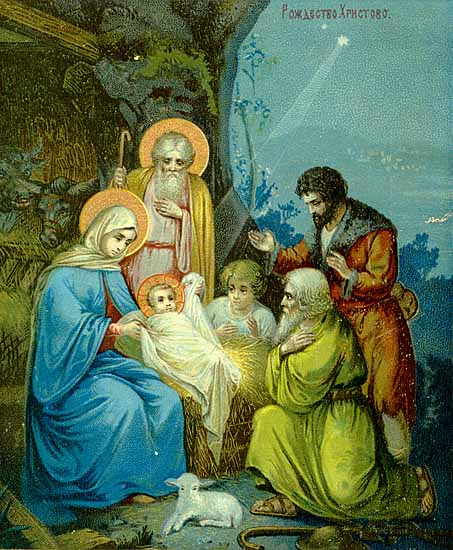
The pagans also, in misery from unbelief and a general dissipation of morals, expected a Deliverer with impatience. Men, having fallen away from God, began to deify earthly good things, wealth and worldly glory. The Son of God rejected these worthless idols as the fruit of sin and human passions and was pleased to come into the world under the most modest conditions.
Two Evangelists describe the events of the Nativity: Apostles Matthew (of the twelve) and Luke (of the seventy disciples). Since the Evangelist Matthew wrote his Gospel for the Hebrews, he set himself the aim of proving that the Messiah descended from the forefathers Abraham and King David, as had been foretold by the prophets. Therefore, the Evangelist Matthew begins his narrative of the Nativity of Christ with a genealogy (Matt. 1:1-17).
Knowing that Jesus was not the son of Joseph, the Evangelist does not say that Joseph begat Jesus, but says that Jacob begat Joseph, the husband of Mary, from whom was born Jesus, Who is called Christ. But why, then, does he adduce Joseph's genealogy and not Mary's? The Hebrews did not have the custom of reckoning genealogies according to the female line, but their Law commanded a man to take a wife without fail from the tribe to which he belonged. Therefore, the Evangelist, not deviating from custom, adduces Joseph's genealogy, to show that Mary, Joseph's wife, and consequently also Jesus, descend from the same tribe of Judah and clan of David.
The most holy Virgin, informed by the Archangel Gabriel that she had been chosen to become the mother of the Messiah, set out for a meeting with Elizabeth, being only the espoused bride of Joseph. Almost three months had already passed since the good tidings of the angel. Joseph, who had not been initiated into this mystery, noticed her condition; her outward appearance gave him cause to consider unfaithfulness. He could have publicly denounced her and subjected her to the severe punishment established by the Law of Moses, but, in accordance with his goodness, he did not want to resort to such a drastic measure. After long vacillations, he decided to put his bride away secretly, without making any publicity, having delivered to her a bill of divorcement.
But an angel appeared to Joseph in a dream and declared that the bride espoused to him would give birth from the Holy Spirit; therefore he advised Joseph, 'fear not to take unto thee Mary thy wife.' And he was further instructed to name the Son born of her Jesus (Ieshua), that is, Saviour, since He would save His people from their sins. Joseph recognized this dream as inspiration from on high and obeyed it, taking Mary as his wife, but knew her not, that is, he lived with her not as a husband with a wife, but as a brother with a sister (or, judging from the enormous difference in years, rather as a father with a daughter). In narrating this, the Evangelist adds for himself: Now all this was done, that it might be fulfilled which was spoken of the Lord by the prophet, saying, Behold, a virgin shall be with child, and shall bring forth a son, and they shall call his name Emmanuel (Isaiah 7:14). The name "Emmanuel" means "God with us." Here, Isaiah is not calling the One born of the Virgin Emmanuel: he is saying that men will call him such. Thus, this is not the proper name of the One born of the Virgin, but only a prophetic indication that God will be in His person.
The holy Evangelist Luke notes that the time of the Nativity of Christ coincided with a census of the inhabitants of the Roman Empire. This census was carried out in accordance with the command of Cæsar Augustus, that is, the Roman emperor Octavian, who had received the title Augustus ("sacred") from the Roman Senate. The edict on the census came out in the 746th year from the founding of Rome, but in Judæa the census began approximately in the 750th year, during the final years of the reign of Herod, who was surnamed the Great.
The Hebrews reckoned their genealogies according to tribes and clans. This custom was so strong that, having learned of the command of Augustus, they went to be registered each to the town of his clan. Joseph and the Virgin Mary descended, as is well known, from the clan of David. Therefore, they went to set out for Bethlehem, called the city of David because David was born there. Thus, by God's Providence, the ancient prophesy of the Prophet Micah was fulfilled, that Christ would be born precisely in Bethlehem: But thou, Bethlehem Ephratah, though thou be little among the thousands of Judah, yet out of thee shall come forth unto me that is to be a ruler in Israel; whose goings forth have been from of old, from everlasting (Micah 5:2, Matt. 2:6).
According to Roman laws, women were subject to the universal census equally with men. Therefore, Joseph went to Bethlehem not alone, but with the Most Holy Virgin. An unexpected journey to his native Bethlehem, a journey so close to the delivery of the Infant, must have convinced Joseph that Cæsar's decree was providential, directing events for the Son of Mary to be born precisely where the Messiah-Saviour ought to be born.
After an exhausting journey, the elderly Joseph and the Virgin Mary arrived in Bethlehem. There was no room in the inn for the mother of the Saviour of the world, and she, with her companion, was forced to lodge in a cave, where livestock were driven from pasture during bad weather. Here, during a winter night, under the most wretched conditions, the Saviour of the world - Christ - was born.
Having borne a Son, the Most Holy Virgin herself swaddled Him and laid Him in a manger. In these brief words, the Evangelist informs us that the Mother of God gave birth painlessly. The Evangelist's expression, brought forth her firstborn son, causes unbelievers to say that, after Jesus the first-born, the Most Holy Virgin had other children, since the Evangelists mention the "brethren" of Christ (Simon, Joses, Judas and James). However, according to the Law of Moses (Ex. 13:2), every infant of the male sex that openeth the womb was called the first-born, even if he were the last. The so-called "brethren" of Jesus in the Gospels are not His own brothers, but only relatives, the children of the aged Joseph by his first wife, Salome, and also the children of Mary the wife of Cleophas (whom the Evangelist John calls his mother's sister). In any case, they all were much older than Christ and therefore could not in any way be the children of the Virgin Mary.
Jesus Christ was born at night, when everyone in Bethlehem and its environs was sleeping. Only the shepherds, who were watching over the flock entrusted to them, were not sleeping. Unto these modest men, who labored and were heavy laden, an angel appeared with the joyous tidings of the birth of the Saviour of the world. The resplendent light surrounding the angel amidst the nocturnal darkness frightened the shepherds. But the angel at once calmed them, saying: Fear not: for, behold, I bring you good tidings of great joy, which shall be to all people. For unto you is born this day in the city of David a Saviour, which is Christ the Lord. By these words, the angel gave them to understand the true purpose of the Messiah, Who had come not for the Jews alone, but for all people, for joy would be to all people who would accept Him as the Saviour. The angel explained to the shepherds that they would find Christ, the Lord Who had been born, in swaddling clothes, lying in a manger.
Why did an angel not announce the birth of Christ to the Jewish elders, to the scribes and the Pharisees, calling them also to worship the Divine Infant? Because these blind leaders of the blind had ceased to understand the true meaning of the prophecies concerning the Messiah and, on account of their exclusiveness and haughtiness, they imagined that the Deliverer would appear in the full splendor of a majestic conqueror-king, to subjugate the whole world. The modest preacher of peace and love toward one's enemies was unacceptable to them.
The shepherds did not doubt that the angel had been sent to them from God, and therefore they were counted worthy to hear the triumphant heavenly hymn: Glory to God in the highest, and on earth peace, good will among men. The angels glorify God, Who had sent the Saviour to men, for from that time, the peace of the conscience has been restored and the enmity between heaven and earth, which arose as a consequence of sin, has been eliminated.
The angels withdrew, while the shepherds hastily set out for Bethlehem; they found the Infant lying in a manger and were the first to worship Him. They told Mary and Joseph about the event that had brought them to the cradle of Christ; they told the same to others also, and all that heard their story were astonished. But Mary kept all these things, and pondered them in her heart, i.e., she remembered all that she had heard. The Evangelist Luke, who describes many events in the life of the Virgin, such as the Annunciation and the details of the birth of Christ (Luke, Ch. 2), evidently wrote from her words. On the eighth day after his birth, the Infant was circumscribed as prescribed by the Law of Moses.
The Adoration of the Magi
A further Gospel story, concerning the adoration of the Magi (Matt., Ch. 2), is very edifying. This is, first of all, a story about the "epiphany" or manifestation of Christ to the pagans.
Joseph and the Most Holy Mother of God with the Infant Jesus were still in Bethlehem when Magi came to Jerusalem from a distant land to the east (Persia or Babylon). Learned men, engaged in observing and studying the stars, were called Magi or wise men. At that time, men believed that, at the birth of a great man, a new star appears in the sky. Many pagans within the confines of Persia, had learned from the dispersed Jews of the coming of the Messiah, the Great King of Israel. From the Jews, they could even have learned the following prophecy of Balaam relating to the Messiah: I shall see him, but not now: I shall behold him, but not nigh: there shall come a Star out of Jacob, and a Sceptre shall rise out of Israel, and shall smite the corners of Moab (Num. 24:17). ("Moab" is a personification of the enemies of the Messiah.) The Persian Magi thus expected that, when the promised King would be born, a new star would appear in the sky. The prophecy of Balaam spoke of a star in the spiritual sense; nevertheless, the Lord, in His mercy, to bring the pagans to faith, gave a sign in the sky in the form of the appearance of an extraordinary star. Having seen it, the Magi understood that the expected King had been born.
After a protracted and long journey, they finally reached Jerusalem, the capital of the Jewish kingdom, and began to ask: Where is he that is born King of the Jews? For we have seen his star in the east, and are come to worship him. These words from such conspicuous strangers, stirred up many of the inhabitants of Jerusalem, including King Herod, to whom the arrival of the exotic eastern scholars was immediately reported.
From the first days of his accession, Herod's throne had been shaky. The people hated him as a usurper of the Davidic throne and a tyrant, and they abhorred him as a pagan. The last years of Herod's life were complicated still more by personal adversities and bloody reprisals. He became extremely suspicious, and for the least cause executed enemies both real and imagined. Thus perished several of Herod's children and even his wife, whom earlier he had loved ardently. Ill and decrepit, Herod now resided in his new palace in Sion. Having heard of a King Who had been born, he became particularly agitated. Vulnerable in his old age, he feared that his rule would be overthrown and handed over to the new-born King.
In order to clear up just who this new pretender to the throne was, Herod gathered all the priests and scribes - men that knew the books of Sacred Scripture well - and he inquired of them where Christ should be born. They answered: In Bethlehem of Judæa: for thus it is written by the prophet Micah. Then Herod privately summoned the Magi, found out from them the time of the appearance of the star, and sent them on to Bethlehem. Feigning piety, the cunning Herod said to them: Go and search diligently for the young child; and when ye have found him, bring me word again, that I may come and worship him also. In fact, Herod was going to use their report to put the Infant to death.
The Magi listened to King Herod without suspecting anything, and went to Bethlehem. There again that star appeared, which they had seen before in the east. Moving across the sky, it went before them, indicating the way. In Bethlehem, the star stopped over that spot where the Infant Jesus was, Who had been born.
The Magi went into the house and saw the Infant Jesus with His mother. They bowed down to the ground before Him and presented to Him their gifts: gold, frankincense and myrrh (a precious aromatic oil). In the gifts of the Magi, one may see the following symbolic significance. They brought gold to Him, as to a King (as tribute or taxes); frankincense, as to God (incense is used at divine services); and myrrh, as to a Man Who must die (the dead were anointed with oils mixed with aromatic myrrh).
Having worshipped the King awaited by all, the Magi would have returned to Jerusalem and to King Herod. However, an angel appeared to them in a dream, revealing Herod's perfidious designs, and commanded them to return to their own country by another way, without passing through Jerusalem. Tradition has preserved the names of the Magi, who afterwards became Christians: Melchior, Gaspar and Balthasar.
Thus, the first to worship the Saviour Who had been born were shepherds, nature's true children, who could open up before Him only the treasure of their hearts, full of simplicity, faith and humility. Significantly later came the Magi from the East, imbued with erudite wisdom, who laid down gold, frankincense and myrrh, together with reverent joy, before the Divine Infant. They had had to make a long journey to reach Judæa, and even from Jerusalem, they were not immediately able to find the birthplace of the King of the Jews. Does this not indicate that both simplicity of heart and profound, conscientious erudition lead equally to Christ? But the first way is more direct, short and sure than the second. The shepherds were guided directly by angels, while the Magi were "taught" by an unreasoning star, and, through Herod, by the scribes and the Jewish elders. Not without difficulties and dangers did they attain their desired goal, and they did not hear the heavenly harmony that sounded over the earth - Glory to God in the highest, and on earth peace, good will among men. (Metropolitan Anastasy's thought).
and the Son of Man
"Great is the mystery of godliness [piety]: God was manifest in the flesh" (I Tim. 3:16). These words of the holy Apostle testify that the miracle of the incarnation of the Son of God exceeds the understanding of our limited mind. Indeed, we can believe, but cannot explain, the event that took place two thousand years ago in Bethlehem: that, in the one Person of Jesus Christ, two natures so different and contrary in essence were joined together: the superterrestrial, eternal and infinite divine nature with the material, limited and feeble human nature.
Nonetheless, the Gospels and the apostolic epistles reveal to us, to the extent of our abilities, certain aspects of the miracle of the incarnation of the Son of God. Saint John the Theologian, at the very beginning of his Gospel, elevates our thought to the pre-eternal existence of the Second Person of the Most Holy Trinity, Whom he calls the Word, saying: In the beginning was the Word, and the Word was with God, and the Word was God. The same was in the beginning with God. All things were made by him; and without him was not anything made that was made. And the Word was made flesh, and dwelt among us (John 1:1-3, 14).
The Son of God's name, the Word, indicates that one must not understand His birth from the Father in the sense of an ordinary birth: it occurred passionlessly and without separation. The Son of God is born from the Father like a word is born from a thought. A thought and a word are distinct from one another, and at the same time inseparable. There is no word without a thought, and a thought is without fail expressed in a word.
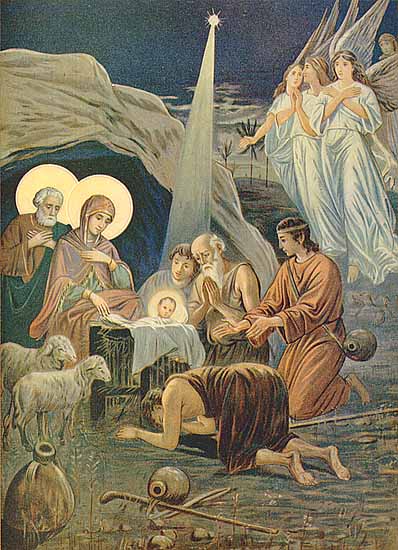
The subsequent apostolic preaching reveals all the more fully the truth of Christ's divine-human nature: He is the only begotten (the only) Son of God, Who was begotten of the Father before all ages, i.e., He is eternal, as God the Father is also eternal. The Son of God has the same divine nature that God the Father has, and is therefore omnipotent, omniscient and omnipresent. He is the Creator of the visible and invisible worlds, and of us men. In a word, He, being the Second Person of the Most Holy Trinity, true and perfect God. Faith in Jesus Christ as the incarnate Son of God represents the stronghold or rock upon which the Church is established, according to the word of the Lord: Upon this rock I will build my church; and the gates of hell shall not prevail against it (Matt. 16:18).
Being perfect God, Christ the Saviour is at the same time also perfect Man. He had a human body and soul with all its properties - reason, will and senses. As a man, He was born of the Virgin Mary. As the Son of Mary, He obeyed her and Joseph. As a man, He was baptized in the Jordan and went around the towns and villages with His salvific preaching. As a man, He experienced hunger, thirst, fatigue; he had a need for sleep and rest; he endured painful sensations and physical sufferings. Living the physical life inherent to a man, the Lord also lived a spiritual life as a man. He strengthened His spiritual powers by fasting and by prayer. He experienced human feelings - joy, wrath, sorrow; he shed tears. In this way, the Lord Jesus Christ, having taken on our human nature, was in all things like unto us, except for sin.
Having two natures, Jesus Christ also had two free wills. Jesus Christ's rational, conscious, human will invariably subordinates its human aspirations and desires to His divine will. But the human will in Christ is clearly visible during His difficult experiences in the garden of Gethsemane: O my Father, if it be possible, let this cup pass from me: nevertheless not as I will, but as thou wilt (Matt. 26:39).
Thus, by His obedience to God the Father, the Lord Jesus Christ corrected our disobedience and taught us to put God's will above our own desires.
The Purpose of the Incarnation
of the Son of God
The parable of the lost sheep speaks graphically and vividly of the purpose of the coming of the Son of God into the world. The good shepherd leaves the ninety-nine sheep, by which is meant the angelic world, and sets out for the mountains in order to seek out his lost sheep - the human race perishing in sins. The shepherd's great love for the perishing sheep is evident not only in the fact that he solicitously seeks it, but especially in the fact that after finding it, he takes it upon his shoulders and carries it back. In other words, God, by His power, returns to man the innocence, holiness and blessedness lost by him; having united Himself with our human nature, the Son of God, according to the word of the Prophet, hath borne our griefs, and carried our sorrows (Isaiah, Ch. 53).
Christ became man not only to teach us the true way and to show us a good example. He became man in order to unite us with Himself, to join our feeble, diseased human nature to His divinity. The Nativity of Christ testifies to the fact that we attain the ultimate aim of our life not only by faith and by striving for good, but chiefly by the regenerating power of the incarnate Son of God, with Whom we are united.
Delving deeply into the mystery of the incarnation of the Son of God, we see that it is closely bound up with the mystery of Holy Communion and with the Church, which, according to apostolic teaching, is the mystical Body of Christ. In the Holy Communion of the Body and Blood of Christ, a man is joined to the divine-human nature of Christ; he unites with Him and in this union is wholly transfigured. At the same time, in Holy Communion, a Christian unites also with other members of the Church - and thus the mystical Body of Christ grows.
Heterodox Christians who do not believe in Holy Communion understand union with Christ in an allegorical, metaphorical sense, or in the sense of only a spiritual communion with Him. But for spiritual communion, the incarnation of the Son of God is superfluous. After all, even before the Nativity of Christ, the prophets and the righteous were counted worthy of grace-filled communion with God.
One must understand that man is ill not only spiritually, but also physically: all of human nature has been harmed by sin. It is essential, therefore, to heal the whole man, not only his spiritual part. To remove any doubt in the necessity for total communion with Himself, the Lord Jesus Christ, in His discourse on the Bread of Life, speaks thus: Except ye eat the flesh of the Son of man, and drink his blood, ye have no life in you. Whoso eateth my flesh, and drinketh my blood, hath eternal life; and I will raise him up at the last day... He that eateth my flesh, and drinketh my blood, dwelleth in me, and I in him (John 6:53-54, 56). Later, Christ uses the metaphor of the grapevine to explain to His disciples that it is precisely in close union with Him that man receives the strength essential for spiritual development and perfection: As the branch cannot bear fruit of itself, except it abide in the vine; no more can ye, except ye abide in me. I am the vine, ye are the branches: He that abideth in me, and I in him, the same bringeth forth much fruit: for without me ye can do nothing (John 15:4-5).
Some holy Fathers have justly likened Holy Communion to the mystical tree of life, from which our primogenitors ate in Eden, and which afterwards St. John the Theologian saw in paradise (Gen. 2:9, Rev. 2:7, 22:2). In Holy Communion, a Christian is joined to the immortal life of the God-Man.
Thus, the purpose of the incarnation of the Son of God lies in the spiritual and physical regeneration of man. Spiritual renewal is accomplished throughout the course of a Christian's whole life. But the renewal of his physical nature is completed on the day of the general resurrection of the dead, when the righteous shall shine forth as the sun in the kingdom of their Father (Matt. 13:43).
on the Nativity of Christ
Next to Pascha, the Nativity of Christ is the most joyous festival, and may justly be called the "Winter Pascha." The celebration of the Nativity of Christ was established very early, possibly already in the first century. But until the end of the fourth century, the Nativity of Christ was celebrated with His Baptism on the 6th of January (the 19th according to the New Style) and was called Theophany. Beginning in the fourth century, the Nativity of Christ began to be celebrated on the 25th of December (on the day of the pagan festival in honor of the "Invincible Sun"). At present, this takes place on the 7th of January according to the Gregorian Calendar. The Church prepares the faithful for a worthy celebration of the Nativity of Christ by a forty-day fast, which begins on the 15 th/28th of November, on the day after the commemoration of the Apostle Philip (hence "Philip's Fast"). Orthodox Christians spend the Eve of the Nativity of Christ in strict fasting. According to the Typicon, on this day one may only eat sochivo (boiled wheat with honey), so this day is called Sochel'nik.
On the Eve of the Nativity of Christ, the "Royal Hours" are performed. This divine service differs from the usual "Hours" by the reading of special "paremias" (readings from the Bible, primarily from the Old Testament) corresponding to the feast. Furthermore, the Apostol and Gospel are read.
The Liturgy of St. Basil the Great is then performed with Vespers. At this Vespers, the stichera on "Lord, I have cried," depict both the inner significance and the outward picture of the Nativity of Christ. Thus, we hear how, with the Incarnation of the Son of God, the strife between God and men ceases, the fiery sword of the angel (blocking the entry to paradise) is turned back, and we receive access to paradise. We also hear of the doxology of the angels, of Herod's confusion, and of the unification of all men under the authority of the Roman emperor Augustus.
Additional paremias are read at Vespers. The first paremia (Gen. 1:1-13) speaks of the creation of man by God. The second (Num. 24:2-9, 17-18) speaks of the prophetic significance of the star out of Jacob and the birth of the Messiah, to whom all men will submit. The third (Micah 4:6-7, 5:2-4) speaks of the birth of Christ in Bethlehem. The fourth (Isaiah 11:1-10) speaks of the Rod (i.e., the Messiah) that would come forth from the root of Jesse and of the fact that the Spirit of God would rest upon Him. The fifth (Baruch 3:36-38; 4:1-4) speaks of the appearance of God on earth and of His life among men. The sixth (Dan. 2:31-36, 44-45) prophecies the restoration of the Heavenly Kingdom by God. After the conclusion of the Liturgy, the priests stand before the icon of the feast in the middle of the Church, and glorify Christ with the singing of the troparion and the kontakion of the feast.
In the evening, on the Eve of the Nativity of Christ, a solemn All-night Vigil is served. This begins with Great Compline and the triumphant singing of the verses: God is with us, containing a prophecy of the birth of the Messiah (see Isaiah 7:14, 8:8-15 and 9:6-7). The stichera at the Litia express the triumph of heaven and earth, of angels and men, who rejoice over the descent of God to the earth and the spiritual and moral change in men that followed. The stichera for the Aposticha proclaim that a most glorious miracle has been performed: the Word is born incorruptibly from a Virgin and is not separated from the Father. After "Now lettest Thou Thy servant depart," the following troparion is sung.
Troparion
Thy Nativity, O Christ our God, shined the light of knowledge upon the world: for therein they that adored the stars were taught by a star to worship Thee, the Sun of righteousness, and to know Thee, the Dayspring from on high: O Lord, glory be to Thee.
Before the reading of the Six Psalms at the beginning of Matins, the church choir joins with the heavenly choir to sing: Glory to God in the highest, and on earth, peace, good will among men.
In the Canon, the thought is expressed that He Who was born of the Virgin is not a simple man, but God, Who has appeared in the flesh on earth for the salvation of men, as was foretold concerning Him in the Old Testament. In the Canon, Jesus Christ is called the Benefactor Who has reconciled us with God, and the Father Who has freed us from the authority of the devil and saved us from sin, the curse and death (see the Canon of Matins below). After the sixth ode of the Canon and the Small Litany is sung the following kontakion.
Kontakion
Today the Virgin giveth birth to Him Who is beyond being, and the earth offereth a cave to Him Who is unapproachable; angels doxologize with shepherds, and Magi journey with a star; for a young Child, the pre-eternal God, is born for our sake.
On the very feast of the Nativity, at the beginning of the Liturgy, instead of the psalms "Bless the Lord, O my soul" and "Praise the Lord, O my soul," special antiphons are sung. The prokeimenon before the Apostol expresses the worship of Jesus Christ by all creation: Let all the earth worship Thee and chant unto Thee; let them chant unto Thy name, O Most High. The reading from the Apostol explains how, through the incarnation of Jesus Christ, we have become children of the Heavenly Father: But when the fullness of the time was come, God sent forth his Son, made of a woman, made under the law, to redeem them that were under the law, that we might receive the adoption of sons. And because ye are sons, God hath sent forth the Spirit of his Son into your hearts, crying, Abba, Father. Wherefore thou art no more a servant, but a son; and if a son, then an heir of God through Christ (Gal. 4:4-7). The Gospel reading tells of the adoration by the Magi of the Lord Who had been born.
Instead of "It is truly meet," the following zadostoinik is sung:
Zadostoinik
It would be easier for us, because free from all danger, to keep silence in fear: while it is hard indeed, O Virgin, in love to devise songs harmoniously put together. But do thou, O Mother, give us strength so that we may fulfill our good intent.
Canon for the Nativity
At the All-night Vigil for the Nativity of Christ, two canons are sung, written by the renowned hymnographers of the eighth century, St. Cosmas of Maiuma and St. John of Damascus. Both canons are saturated with sublime and profound thoughts, with beautiful images and majestic turns of speech: they are worthy of the solemnity of the feast.
The theme of the canon of St. Cosmas is that Christ, having become man, abides also as he was, as God. The writer of the canon, imbued with this event, glorifies with rapture and reverence the God-Man Who came down to earth, ascribing to him the names, properties and actions that were attributed to him by the ancient prophets. The inspired writer arouses others to joy and to a worthy meeting with the newborn King of glory, beginning the canon with the words of St. Gregory the Theologian: Christ is born, give ye glory (from a Nativity sermon by St. Gregory the Theologian), and at the end of the canon repeats the words of St. Chrysostom: A strange and most glorious mystery do I see. Saint John of Damascus, in his canon, depicts those salvific actions that took place for the human race because of the appearance of the Son of God in the flesh, events clearly revealed in the New Testament. We present here only the Canon of Cosmas of Maiuma. "Canons" always have nine "odes," but the second ode exists only in the canons of Great Lent.
Canon
Ode 1
First Canon. Tone 1
Irmos: Christ is born; glorify Him! Christ comes from heaven; go to meet Him! Christ is on earth; be exalted! Sing to the Lord, all the earth! And praise Him in gladness, O people, for He has been glorified!
Glory to Thee, our God, glory to Thee.
Man was made in the image of God, but he sinned, and lost immortality. He fell from the divine and better life, enslaved completely by corruption. Now the wise Creator fashions him again, for He has been glorified!
Glory to Thee, our God, glory to Thee.
The Creator shaped man with His own hands, but when He saw us perishing eternally, He bowed the heavens and came down to earth, and clothed Himself completely in our nature, truly incarnate from a pure and holy Virgin, for He has been glorified!
Glory to Thee, our God, glory to Thee.
Wisdom, and Word, and Power, Christ our God is the Father's Son, His Radiance. He was made man, a mystery concealed from every spirit above or on the earth. He has won us for Himself, for He has been glorified!
Glory to the Father, and to the Son, and to the Holy Spirit, now and ever, and unto ages of ages. Amen.
Katavasia: Christ is born, glorify Him. Christ is from heaven, receive Him. Christ is on earth, be lifted up; sing to the Lord, all the earth and praise Him with joy all people: For He has been glorified.
Second Canon (written originally in iambic verse). Tone 1
Irmos: Of old the Master that works wonders saved His people, making the watery wave of the sea into dry land; and now of His own will has He been born from a maiden, and so He established a path for us whereby we may mount to heaven. We glorify Him Who in essence is equal to the Father and to mortal men.
Glory to Thee, our God, glory to Thee.
Plainly foreshadowed by the burning bush that was not consumed, a hallowed womb has borne the Word. God is mingled with the form of mortal men, and so He looses the unhappy womb of Eve from the bitter curse of old. We men give Him glory.
Glory to Thee, our God, glory to Thee.
A star showed plainly to the Magi the Word that was before the sun, Who has come to make transgression cease. They saw Thee wrapped in swaddling clothes, within a poor and lowly cave, Who sharest all our sufferings, and in joy they gazed upon Thee, Who art at once both man and Lord.
Katavasia: Of old the Master that works wonders saved His people, making the watery wave of the sea into dry land; and now of His own will has He been born from a maiden, and so He established a path for us whereby we may mount to heaven. We glorify Him Who in essence is equal to the Father and to mortal men.
Ode 3
First Canon
Irmos: To the Son, begotten of the Father, before all ages and incarnate of the Virgin without seed in these latter days- To Christ our God, let us cry out: "Thou hast raised up our horn. Holy art Thou, O Lord!"
Glory to Thee, our God, glory to Thee.
Adam was made from dust, yet he shared God's life-giving breath. He was deceived by woman and fell, but from the dead, he saw Christ born of woman. He shouted, "For my sake Thou hast become like me. Holy art Thou, O Lord!"
Glory to Thee, our God, glory to Thee.
Thou hast assumed a body of lowly clay, O Christ. By sharing our humble flesh, Thou hast made our race partakers of divinity. By becoming mortal man yet remaining God, Thou hast raised us from death to life. Holy art Thou, O Lord!
Glory to Thee, our God, glory to Thee.
Make merry, O Bethlehem! Thou art the King of Judah's princes. Christ, the Shepherd of Israel, who rides on the shoulders of the cherubim, has come forth from thee for all to see. He has raised us from death to life, and reigns over all.
Glory to the Father, and to the Son, and to the Holy Spirit, now and ever, and unto ages of ages. Amen.
Katavasia: To the Son who before all times was born immortal of the Father, and in these latter days became incarnate without seed of the Virgin, let us cry out to Christ our God, Thou who hast raised our horn, Holy art Thou, O Lord.
Second Canon
Irmos: Graciously accept, O Benefactor, the praises of Thy servants, and bring down the despiteful and haughty looks of the enemy. O blessed Lord Who sees all, raise us up far above sin, and establish Thy singers firm and unshaken upon the foundation of the faith.
Glory to Thee, our God, glory to Thee.
The choir of shepherds abiding in the fields was overwhelmed by the strange sight they were counted worthy to behold: For they looked upon the all-blessed Offspring of an all-pure Bride; and they saw also the ranks of bodiless angels, who sang in praise of Christ the King, incarnate without seed.
Glory to Thee, our God, glory to Thee.
He Who rules the heights of heaven, in His compassion, has become such as we are, born of a Maiden who has not known man. The Word Who before was wholly outside matter, in these last times has assumed the material substance of the flesh so that He might draw unto Himself fallen Adam, the first-formed man.
Katavasia: Graciously accept, O Benefactor, the praises of Thy servants, and bring down the despiteful and haughty looks of the enemy. O blessed Lord Who sees all, raise us up far above sin, and establish Thy singers firm and unshaken upon the foundation of the faith.
Hypakoe. Tone 8
Heaven brought the first fruits of the Gentiles as a gift for Thee: A star summoned the wise men to the babe in the manger. They were amazed to see neither throne nor scepter, but only abject poverty. What is more humble than a cave? What is more lowly than swaddling clothes? Yet the riches of Thy divinity shone through all these. O Lord, glory to Thee!
Kathisma Hymn. Tone 8
Let the heavens rejoice and let the earth be glad! The Lamb of God has been born on earth, Granting redemption to the world. The Word, Who rests in the bosom of the Father, Has come forth without seed from the Virgin. The wise men were struck with amazement, Seeing Him born as an infant in Bethlehem. Let all creation glorify Him!
Glory to the Father, and to the Son, and to the Holy Spirit, now and ever, and unto ages of ages. Amen.
Let the heavens rejoice...
Ode 4
Irmos: Stem and flower of the root of Jesse, Thou hast blossomed from the virgin, O Christ. From the mountain overshadowed by the forest Thou art come, made flesh from her that knew no man. O God, not formed from matter - glory to Thy power, O Lord!
Glory to Thee, our God, glory to Thee.
Thou art the Expectation of the nations, O Christ, foretold by Jacob in days of old. Thou have sprung from Judah's tribe, to plunder the might of Damascus and the spoils of Samaria, replacing error with faith acceptable to God. Glory to Thy power, O Lord.
Glory to Thee, our God, glory to Thee.
Thou hast filled the star-gazers with joy, O Lord. They knew the hidden meaning of the prophet Balaam's words. Thou hast made the star of Jacob to rise. As the first-fruits of the Gentiles it led them unto Thee. Thou didst openly receive their precious gifts. Glory to Thy power, O Lord!
Glory to Thee, our God, glory to Thee.
Thou hast descended into the Virgin's womb, O Christ, like rain on the fleece and as raindrops watering the earth. All earth's rulers fall down before Thee: Ethiopia and the islands of Arabia, the kings of Tarshish, of Sheba, and the Medes. Glory to Thy power, O Lord!
Glory to the Father, and to the Son, and to the Holy Spirit, now and ever, and unto ages of ages. Amen.
Katavasia: Rod of the stem of Jesse, and flower that budded forth from a virgin, O most lauded Christ. From the mountain covered with darkness Thou art come, made flesh from Her that knew no wedlock, O God who art not formed from matter. Glory to Thy might, O Lord.
Second Canon
Irmos: Of old Habakkuk the Prophet was counted worthy to behold ineffably the figure and symbol of Christ's birth, and he foretold in song the renewal of mankind. For a young babe, even the Word, has now come forth from the Mountain that is the Virgin, unto the renewal of the peoples.
Glory to Thee, our God, glory to Thee.
Of Thine own will, O Most High, Thou hast come forth equal to mortal men, Taking flesh from the Virgin, to purge the poison of the serpent's head. God by nature, Thou hast lead all from the gates that know no sun to the life-giving light.
Glory to Thee, our God, glory to Thee.
O you people that before were sunk in corruption, but now have escaped wholly from the perdition of the adversary, lift up your hands and clap them in songs of praise, honoring Christ alone, our Benefactor, Who in His compassion is come into our midst.
Glory to Thee, our God, glory to Thee.
O Virgin, sprung from the root of Jesse, thou hast passed beyond the boundaries of human nature, for thou hast borne the pre-eternal Word of the Father. According to His good pleasure, by a strange self-empting, He passed through thy womb, yet kept it sealed.
Glory to the Father, and to the Son, and to the Holy Spirit, now and ever, and unto ages of ages. Amen.
Katavasia: Of old Habakkuk the Prophet was counted worthy to behold ineffably the figure and symbol of Christ's birth, and he foretold in song the renewal of mankind. For a young babe, even the Word, has now come forth from the Mountain that is the Virgin, unto the renewal of the peoples.
Ode 5
Irmos: O God of Peace, Father of Mercies, Thou hast sent Thine angel of great counsel to grant us peace. We are guided to the light of the knowledge of God, and keeping watch by night, we glorify Thee, O Lover of Man!
Glory to Thee, our God, glory to Thee.
Thou wast registered as Caesar's subject, O Christ, in obedience to his decree. We were slaves of sin, and subject to the hateful enemy; by Thy poverty Thou hast set us free! Thou wast united to our nature in every way. Though we were formed from dust, by this communion we are made divine!
Glory to Thee, our God, glory to Thee.
Behold, the Virgin, as foretold of old, has conceived and given birth to God made man. She remains a virgin still. Through her we are reconciled to God. Let us sinners faithfully sing her praise: she is truly Theotokos.
Glory to the Father, and to the Son, and to the Holy Spirit, now and ever, and unto ages of ages. Amen.
Katavasia: O God of Peace, Father of Mercies, Thou hast sent Thine angel of great counsel to grant us peace. We are guided to the light of the knowledge of God, and keeping watch by night, we glorify Thee, O Lover of Man!
Ode 6
Irmos: The sea monster cast forth Jonah as it had received him, like a babe from the womb. And when the Word came to dwell in the Virgin and was made flesh, He came forth preserving her uncorrupt, for as He Himself was not subject to decay, He kept His mother free from harm.
Glory to Thee, our God, glory to Thee.
Christ our God has come in the flesh. The Father begot Him from the womb before the morning star. He rules the heavenly hosts, yet now He lies in a manger of dumb beasts. He Who looses the tangled knots of sin now is wrapped in swaddling clothes.
Glory to Thee, our God, glory to Thee.
A Son is born and given to the faithful, a newborn child of Adam's race, yet He is Father and Ruler of the world to come. He is called the Angel of Great Counsel. He is the Mighty God; He rules all creation by His might.
Glory to the Father, and to the Son, and to the Holy Spirit, now and ever, and unto ages of ages. Amen.
Katavasia: The sea monster cast forth Jonah as it had received him, like a babe from the womb. And when the Word came to dwell in the Virgin and was made flesh, He came forth preserving her uncorrupt, for as He Himself was not subject to decay, He kept His mother free from harm.
Kontakion. Tone 3
Today the Virgin gives birth to the transcendent One, and the earth offers a cave to the unapproachable One. Angels, with shepherds, glorify Him. The wise men journey with the star, since for our sake the Eternal God was born as a little child!
Ikos
Bethlehem has opened Eden: come let us see! We have found joy in a secret place: come, let us seize Paradise hidden in the cave! There the unwatered Root has appeared, blossoming with forgiveness. There is found the undug Well, from which David longed to drink of old. There the Virgin has borne a child, quenching Adam's and David's thirst. Let us hurry to this place, where the Eternal God was born as a little child!
Ode 7
Irmos: The children brought up together in godliness scorned the impious decree of the tyrant. They were not afraid of the threat of fire, but standing in the midst of the flames, they sang: "Blessed art Thou, O God of our fathers!"
Glory to Thee, our God, glory to Thee.
The shepherds abiding in the fields were terrified by a dazzling sight. Around them shone the glory of the Lord. An angel shouted unto them, "Sing praises. The Messiah is born!" Blessed art thou, O God of our fathers!
Glory to Thee, our God, glory to Thee.
After the angel spoke, the hosts of heaven suddenly cried out: "Glory to God in the highest. Peace on earth, good will to men. Christ has shone forth." Blessed art Thou, O God of our fathers!
Glory to Thee, our God, glory to Thee.
"What news is this?" asked the shepherds. "Has God's Messiah truly come? Let us go to Bethlehem." They saw Thee there, and worshipped Thee. With Thy mother, they sang: "Blessed art Thou, O God of our fathers!"
Glory to the Father, and to the Son, and to the Holy Spirit, now and ever, and unto ages of ages. Amen.
Katavasia: The children brought up together in godliness scorned the impious decree of the tyrant. They were not afraid of the threat of fire, but standing in the midst of the flames, they sang: "Blessed art Thou, O God of our fathers!"
Ode 8
Irmos: The furnace moist with dew was an image prefiguring a wonder beyond nature, for it did not burn the children whom it had received, nor did the Fire of Divinity consume the Virgin's womb when it entered it. So let us raise the song: "Let all creation bless the Lord and exalt Him throughout all ages!"
Glory to Thee, our God, glory to Thee.
The daughter of Babylon drove David's children from Zion with sword and spear. Now she sends her sons, the wise men, bearing gifts, to worship in David's city, where God has come to dwell. So let us raise the song: "Let all creation bless the Lord, and exalt Him throughout all ages!"
Glory to Thee, our God, glory to Thee.
Grief had silenced the harps. Zion's children would not sing in a foreign land. But now Christ has shone forth in Bethlehem destroying the din of Babylon's idolatries. So let us raise the song: "Let all creation bless the Lord, and exalt Him throughout all ages!"
Glory to Thee, our God, glory to Thee.
Babylon plundered Zion, and captured all her royal wealth. But now, with a guiding star, Christ lures her treasure-laden wise men back to Zion. So let us raise the song: "Let all creation bless the Lord, and exalt Him throughout all ages!
Glory to the Father, and to the Son, and to the Holy Spirit, now and ever, and unto ages of ages. Amen.
We praise, bless and worship the Lord, singing and exalting Him throughout all ages.
Katavasia: The furnace moist with dew was an image prefiguring a wonder beyond nature, for it did not burn the children whom it had received, nor did the Fire of Divinity consume the virgin's womb when it entered it. So let us raise the song: "Let all creation bless the Lord and exalt Him throughout all ages!"
Ode 9
Magnify, O my soul, the most pure Virgin Theotokos, more honorable and more glorious than the heavenly hosts!
Irmos: I behold a strange, most glorious mystery! Heaven-the cave! The cherubic throne-the Virgin! The manger-the place where Christ lay, the uncontainable God, Whom we magnify in song!
Magnify, O my soul, God born in the flesh, from the virgin.
The wise men saw a new, uncharted star, following an unexpected course. Its brightness surpassed every star in heaven. It foretold the Messiah's birth: Christ, the King, born on earth in Bethlehem, for our salvation.
Magnify O my soul, The King born in the cave!
The wise men...
Magnify, O my soul, God, worshipped by the wise men!
The wise men...
Magnify, O my soul, God worshipped by the wise men!
"Where is the newborn Infant-King? We have seen His star," the wise men said. "We have come to worship Him." Godless Herod trembled with fury. In his raging madness he plotted to kill Christ.
Magnify, O my soul, the Lord Who revealed Himself to the wise men by a star!
Where is the newborn...
Magnify, O my soul, the pure virgin who gave birth to Christ the King!
Herod inquired where the star appeared which had led the wise men to Bethlehem, but after they worshipped Christ with gifts, that same star led them back to their own land, confounding their pursuer, that godless murderer of children.
Wise men and shepherds came to worship Christ, born in the City of Bethlehem.
Herod inquired...
Glory to the Father, and to the Son, and to the Holy Spirit, now and ever, and unto ages of ages. Amen.
Magnify, O my soul, the most pure Virgin Theotokos, more honorable and more glorious than the heavenly hosts!
Katavasia: I behold a strange, most glorious mystery! Heaven-the cave! The cherubic throne-the Virgin! The manger-the place where Christ lay, the uncontainable God, Whom we magnify in song!
The Exapostilarion
Our Savior, the dayspring from the East, has visited us from on high, and we, who were in darkness and shadow, have found the truth, for the Lord is born of the Virgin!
Conclusion
And so, the Nativity hymns remind those praying how, during this memorable night, each creature hastened to bring its gift to the Saviour-King: heaven - a star; the earth - a cave; the wilderness - a manger; the angels - singing; the shepherds - worship; the Magi - gifts. Therefore, we too should not come to Him "empty-handed," but should bring to Him what is more valuable than anything else - our pure, believing hearts. For the high God has appeared on earth, in order to raise us up to heaven!


