Translate

Mostrando entradas con la etiqueta Russia. Mostrar todas las entradas

domingo, 24 de mayo de 2020

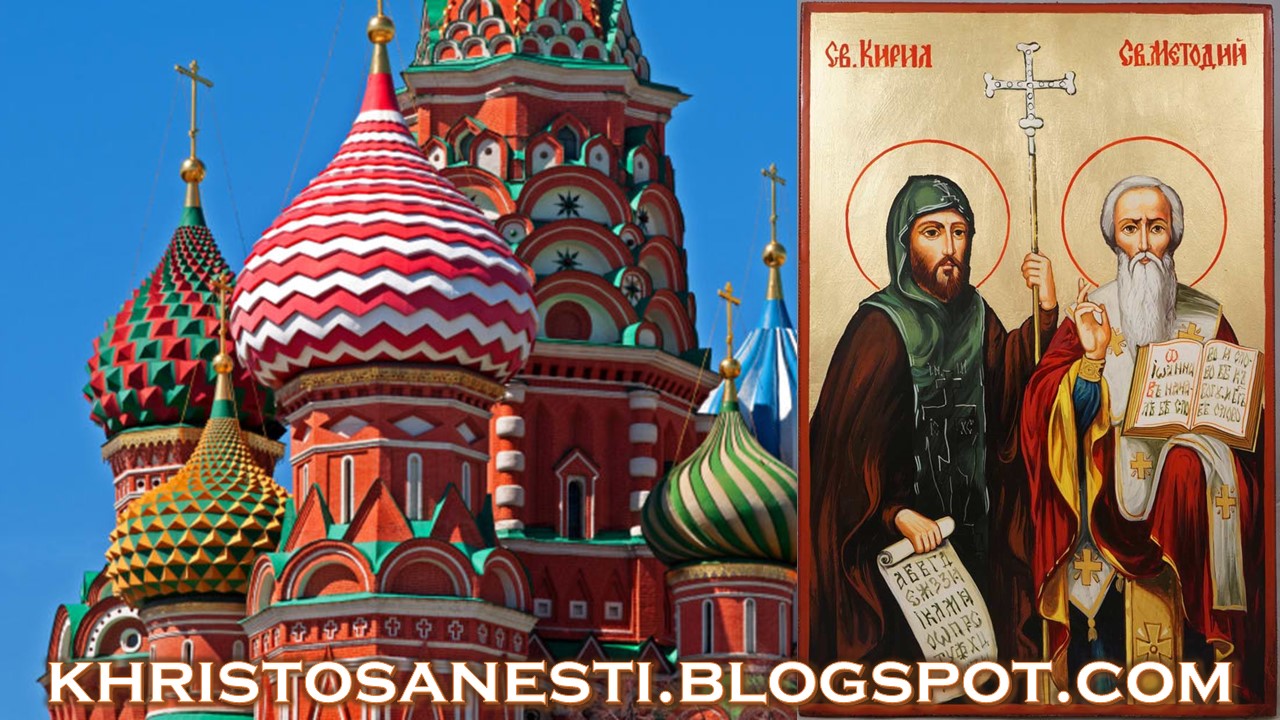
St. Cyril & St. Methodius - San Cirilo & San Metodio


ENGLISH:
Our fathers among the saints Cyril and Methodius were brothers who brought Orthodoxy to the Slavic peoples of central Europe in the ninth century. In preparation for their mission to the Slavs they devised the Glagolitic alphabet to translate the Holy Scriptures and other Christian writings into what is now called Old Church Slavonic. Glagolitic later developed into the Cyrillic alphabet which is now used in a number of Slavic languages. The two brothers have been recognized as saints, equals to the apostles, for their missionary work. Many details of their lives have been obscured by the legends that have arisen about them.


Lives
Constantine (later Cyril) and Michael (later Methodius) were born early in the 9th century in Thessalonika into a senatorial family. The years of their birth are uncertain. Constantine, the elder of the two, may have been born in 826, while Methodius is believed to have been born in 827. Their father, Leon, was Drungarios of the Byzantine Roman Thema of Thessalonika, whose jurisdiction included the Slavs of Macedonia. Their mother is believed to have been Slavic. Being raised in an area with both Greek and Slavic speakers endowed the brothers with a good knowledge of the two languages. As befitting their family's position, they were well educated.

At a young age the brothers lost their father and they were raised under the protection of their uncle Theoctistos, who was a powerful official in the Byzantine government, responsible for postal services and the diplomatic relations of the empire. In 843, he invited Constantine to Constantinople to continue his studies at the university there. He was ordained a deacon in Constantinopole. As Constantine was knowledgeable in theology and had a good command of the Arabic and Hebrew languages, his first state mission to the Abbasid Caliph Al-Mutawakkil was to discuss the principle of the Holy Trinity with Arab theologians and thus improve the Empire's diplomatic relations with the Abbasid Caliphate.

Theoctistos also arranged a position as an official in the Slavic administration of the empire for Michael. He soon went to the monastery at Mount Olympus where he was tonsured with the name Methodius.

In 860, Emperor Michael III and Photius, Patriarch of Constantinople, sent the brothers to the Khagan of the Khazars on a missionary expedition in an attempt to forestall the Khagan from embracing Judaism. The mission was unsuccessful as the Khagan chose Judaism for his people, but many people embraced Christianity. Upon their return, Constantine was appointed professor of philosophy in the university.

Then in 862 the two brothers were invited by Prince Rastislav of Great Moravia to preach Christianity in his domains. This request was a fallout of the efforts of the Slavic princes in central Europe attempting to maintain their independence from their Germanic neighbors. Rastislav was looking for Christian missionaries to replace those from the Germans. In the end this mission would continue for the rest of the brothers' lives, as the brothers were dedicated to the idea that Christianity should be presented to the people in their native languages as was the practice in the East. To accomplish their work they developed the Glagolitic alphabet, the precursor of the Cyrillic alphabet, and began the translation of the Scriptures and Christian literature into the Slavic language.

The German clergy had used their liturgical language, Latin, as a measure to maintain their influence in Moravia and therefore were unhappy with the work of Constantine and Methodius, and they used this difference to attack the brothers. After laboring for about four years, the brothers were called by Nicholas I to appear in Rome to defend their work. The area in which they worked was within the jurisdiction of Rome. However, before their arrival, in 869 Nicholas died and was succeeded by Adrian II. After Adrian was convinced of the orthodoxy of the brothers, he approved their use of Slavonic in their church services and commended their work. He then consecrated Methodius bishop. Constantine took monastic vows in a Greek monastery in Rome. He was given the name Cyril, the name by which he is now commonly known. Cyril was not to return to Moravia as he died shortly thereafter. The date of Cyril's death is uncertain, but appears to have been shortly after his consecration, both perhaps in February 869, with his death most probably on February 14.

Adrian II reestablished the old diocese of Panonia, as the first Slavonic diocese of Moravia and Pannonia, independent of the Germans, at the request of the Slavic princes Rastislav, Svatopluk, and Kocel. Here Methodius was appointed to the new diocese as archbishop. However, on returning to Moravia in 870, King Louis and the German bishops summoned Methodius to a synod at Radisbon, where they deposed him and sent him to prison. After the Germans suffered military defeats in Moravia, John VIII freed him three years later and restored Methodius as Archbishop of Moravia. Soon his orthodoxy was again under question by the Germans, particularly over the use of Slavonic. Once again John VIII sanctioned the use of Slavonic in the liturgy but with the stipulation that the Gospel must first be read in Latin before the reading in Slavonic. Also, Methodius' accuser, Wiching, was named a vicar bishop to Methodius, and from this position he continued to oppose him. With his health damaged during his long struggle with his opponents, Methodius died on April 6, 885, after having recommended as his successor his disciple, the Moravian Slav, Gorazd. The brothers are remembered on May 11. St. Cyril's repose is also commemorated on February 14, and St. Methodius' repose is also commemorated on April 6.

Works
The brothers Cyril and Methodius are most renowned for the development of the Glagolitic alphabet that was used to bring literacy and Christian literature to the Slavs in their own language. With further development by their disciples it became the Cyrillic alphabet, which is now used by many of the Slavic peoples. However, the work of the brothers in translating the Holy Scriptures, the services, Nomocanon, and other Christian literature into Slavonic has been the greatest example of Orthodox missionaries bringing Christianity to the peoples of the world.

While events only a few decades after the death of Methodius seemed to destroy their work in Moravia, their work became the foundation of Slavic civilization in eastern and south-eastern Europe and provided the language footings for the missionary efforts in the coming centuries. It is for this continuation of the practice of the Holy Apostles of speaking of Christianity in the languages of all the nations that Ss Cyril and Methodius are remembered as equal to the apostles. It is to this heritage that the revived Orthodox Church in the Czech Lands (Moravia) look as their origins.

Hymns
Troparion (Tone 4) O Cyril and Methodius, inspired by God,You became equal to the Apostles by your life.Since you were teachers of the Slavs,Intercede with the Master of allThat He may strengthen all Orthodox peoples in the True Faith,And that He may grant peace to the worldAnd great mercy to our souls.

Kontakion - Tone 3 Let us praise the two priests of God who enlightened us,And poured upon us the fount of the knowledge of God by translating the Holy Scripture.O Cyril and Methodius, as abundant learning has been drawn from this work,We exalt you who now stand before the Most High,Interceding with fervor for the salvation of our souls.
-----------------------------------

ESPAÑOL:

Nuestros padres, entre los santos Cirilo y Metodio, fueron hermanos que llevaron la Ortodoxia a los pueblos eslavos de Europa central en el siglo IX. En preparación para su misión a los eslavos, idearon el alfabeto glagolítico para traducir las Sagradas Escrituras y otros escritos cristianos a lo que ahora se llama eslavo de la Iglesia Vieja. Glagolitic más tarde se convirtió en el alfabeto cirílico que ahora se usa en varias lenguas eslavas. Los dos hermanos han sido reconocidos como santos, iguales a los apóstoles, por su trabajo misionero. Muchos detalles de sus vidas han sido oscurecidos por las leyendas que han surgido sobre ellos.

 
Biografía 
Constantino (más tarde Cirilo) y Miguel (más tarde Metodio) nacieron a principios del siglo IX en Tesalónica en una familia senatorial. Los años de su nacimiento son inciertos. Constantino, el mayor de los dos, pudo haber nacido en 826, mientras que se cree que Metodio nació en 827. Su padre, León, era Drungarios del Thema romano bizantino de Tesalónica, cuya jurisdicción incluía a los eslavos de Macedonia. Se cree que su madre fue eslava. Al criarse en un área con hablantes griegos y eslavos, los hermanos tenían un buen conocimiento de los dos idiomas. Como correspondía a la posición de su familia, estaban bien educados.
A temprana edad, los hermanos perdieron a su padre y fueron criados bajo la protección de su tío Theoctistos, que era un poderoso funcionario del gobierno bizantino, responsable de los servicios postales y las relaciones diplomáticas del imperio. En 843, invitó a Constantino a Constantinopla para continuar sus estudios en la universidad allí. Fue ordenado diácono en Constantinopole. Como Constantino tenía conocimientos de teología y tenía un buen dominio de los idiomas árabe y hebreo, su primera misión estatal al califa abasí Al-Mutawakkil fue discutir el principio de la Santísima Trinidad con los teólogos árabes y así mejorar las relaciones diplomáticas del Imperio con los Califato abasí.

Theoctistos también arregló un puesto como funcionario en la administración eslava del imperio para Michael. Pronto fue al monasterio en el Monte Olimpo, donde fue amonestado con el nombre de Metodio. 
En 860, el emperador Miguel III y Focio, patriarca de Constantinopla, enviaron a los hermanos al Khagan de los Khazars en una expedición misionera en un intento por evitar que Khagan abrazara el judaísmo. La misión no tuvo éxito ya que Khagan eligió el judaísmo para su pueblo, pero muchas personas abrazaron el cristianismo. A su regreso, Constantine fue nombrado profesor de filosofía en la universidad.
Luego, en 862, el príncipe Rastislav de Gran Moravia invitó a los dos hermanos a predicar el cristianismo en sus dominios. Esta solicitud fue consecuencia de los esfuerzos de los príncipes eslavos en Europa central que intentaban mantener su independencia de sus vecinos germánicos. Rastislav estaba buscando misioneros cristianos para reemplazar a los alemanes. Al final, esta misión continuaría por el resto de la vida de los hermanos, ya que los hermanos se dedicaron a la idea de que el cristianismo debería presentarse a las personas en sus idiomas nativos, como era la práctica en el Este. Para llevar a cabo su trabajo, desarrollaron el alfabeto glagolítico, el precursor del alfabeto cirílico, y comenzaron la traducción de las Escrituras y la literatura cristiana al idioma eslavo.

El clero alemán había usado su lengua litúrgica, el latín, como medida para mantener su influencia en Moravia y, por lo tanto, no estaban contentos con el trabajo de Constantino y Metodio, y usaron esta diferencia para atacar a los hermanos. Después de trabajar durante unos cuatro años, los hermanos fueron llamados por Nicolás I para aparecer en Roma para defender su trabajo. El área en la que trabajaban estaba dentro de la jurisdicción de Roma. Sin embargo, antes de su llegada, en 869 Nicolás murió y fue sucedido por Adrian II. Después de que Adrián se convenció de la Ortodoxia de los hermanos, aprobó su uso del eslavo en sus servicios religiosos y elogió su trabajo. Luego consagró al obispo Metodio. Constantino hizo votos monásticos en un monasterio griego en Roma. Se le dio el nombre de Cirilo, el nombre por el que ahora se le conoce comúnmente. Cyril no debía regresar a Moravia ya que murió poco después. La fecha de la muerte de Cyril es incierta, pero parece haber sido poco después de su consagración, quizás en febrero de 869, y su muerte probablemente el 14 de febrero.
Adrian II restableció la antigua diócesis de Panonia, como la primera diócesis eslava de Moravia y Pannonia, independiente de los alemanes, a petición de los príncipes eslavos Rastislav, Svatopluk y Kocel. Aquí Metodio fue nombrado a la nueva diócesis como arzobispo. Sin embargo, al regresar a Moravia en 870, el rey Louis y los obispos alemanes convocaron a Metodio a un sínodo en Radisbon, donde lo depusieron y lo enviaron a prisión. Después de que los alemanes sufrieran derrotas militares en Moravia, Juan VIII lo liberó tres años después y restauró a Metodio como arzobispo de Moravia. Pronto su ortodoxia fue nuevamente cuestionada por los alemanes, particularmente sobre el uso del eslavo. Una vez más, Juan VIII sancionó el uso del eslavo en la liturgia, pero con la estipulación de que el Evangelio primero debe leerse en latín antes de la lectura en eslavo. Además, el acusador de Metodio, Wiching, fue nombrado obispo vicario de Metodio, y desde esta posición continuó oponiéndose a él. Con su salud dañada durante su larga lucha con sus oponentes, Metodio murió el 6 de abril de 885, después de haber recomendado como su sucesor a su discípulo, el eslavo de Moravia, Gorazd. Los hermanos son recordados el 11 de mayo. El reposo de San Cirilo también se conmemora el 14 de febrero, y el reposo de San Metodio también se conmemora el 6 de abril.

Obras
Los hermanos Cirilo y Metodio son más conocidos por el desarrollo del alfabeto glagolítico que se utilizó para llevar la alfabetización y la literatura cristiana a los eslavos en su propio idioma. Con el desarrollo posterior de sus discípulos se convirtió en el alfabeto cirílico, que ahora es utilizado por muchos de los pueblos eslavos. Sin embargo, el trabajo de los hermanos al traducir las Sagradas Escrituras, los servicios, Nomocanon y otra literatura cristiana al eslavo ha sido el mejor ejemplo de misioneros ortodoxos que llevaron el cristianismo a los pueblos del mundo.
Si bien los acontecimientos solo unas décadas después de la muerte de Metodio parecían destruir su trabajo en Moravia, su trabajo se convirtió en la base de la civilización eslava en Europa oriental y sudoriental y proporcionó las bases lingüísticas para los esfuerzos misioneros en los siglos venideros. Es por esta continuación de la práctica de los santos apóstoles de hablar del cristianismo en los idiomas de todas las naciones que Ss. Cyril y Methodius son recordados como iguales a los apóstoles. Es a este patrimonio que la revitalizada Iglesia Ortodoxa en las tierras checas (Moravia) parece ser su origen.


Himnos
Troparion (Tono 4) Oh Cirilo y Metodio, inspirados por Dios, te volviste igual a los apóstoles con tu vida. Desde que eras maestro de los eslavos, intercede con el maestro de todo para que pueda fortalecer a todos los pueblos ortodoxos en la verdadera fe, y para que Él conceda paz al mundo y gran misericordia para nuestras almas. 
Kontakion - Tono 3 Elogiemos a los dos sacerdotes de Dios que nos iluminaron, y derramaron sobre nosotros la fuente del conocimiento de Dios al traducir la Sagrada Escritura. Oh Cirilo y Metodio, ya que se ha aprendido mucho de este trabajo, exaltamos ustedes que ahora están ante el Altísimo, intercediendo con fervor por la salvación de nuestras almas.

+++

miércoles, 15 de enero de 2020

Преподобный Серафим Саровский

Во имя Отца и Сына и Святаго Духа !

 «Среди лета запоют Пасху», — сказано было некогда в Сарове. Прошло 70 лет после смерти того, кем эти слова были произнесены, и 19 июля 1903 года вся Русь огласилась хвалебными песнями, прославляющими Бога и Его угодника. Действительно, вся Русь ликовала тогда, как в День Святой Пасхи, даже больше.

Он весь был занят достижением «единаго на потребу», работал над «своим духовным возрастанием». «Эгоист, замкнутый в себе», «невежда, не интересующийся ничем, кроме того, что лично его касается» — так сказали бы про него многие мыслители, не желающие видеть и малейшей пользы в подвигах самоусовершенствования. Но вот умирает инок Серафим. Казалось бы, совсем теперь должен изгладиться из людской памяти облик этого старца, так упорно убегавшего от мира. Но начинается целое паломничество к его гробу, во всех концах России прибегающие к нему получают помощь, утешение и назидание, а почитание его начинает распространяться и среди других народов.

В чем же сила преподобного Серафима? В чем его подвиг? Он стремился к осуществлению заповеди Христовой: Будите убо вы совершени, якоже Отец ваш Небесный совершен есть (Мф 5, 48); он трудился над тем, чтобы восстановить в себе первозданный образ человека, испорченный впоследствии грехом.

Преподобный Серафим достиг своей цели: он победил грех и стал преподобным, сделался воистину подобием Божиим. Мы не можем видеть невидимого Бога. Но Господь нам дает видеть Себя в Своих подобиях, в Своих угодниках. И вот одним из таких подобий стал преподобный Серафим. В нем мы видим восстановленную человеческую природу, освобожденную от рабства греху. Он есть воплощенное олицетворение победы вечного над преходящим, святости над грехом, добра над злом.

Преподобный Серафим всех призывает своим примером следовать по пути, указанному Христом. Он зовет бороться с грехом и своими недостатками, сам являясь маяком и светильником для всех ищущих спасения. Преподобный Серафим призывает искать высшего блага, плода духовного, о котором апостол Павел сказал: Плод же духовный есть любы, радость, мир, долготерпение, благость, милосердие, вера, кротость, воздержание. Но для сего нужно распять плоть со страстьми и похотьми (Гал 5, 22–24).

Тяжел путь к Небесному Царству, ибо грех овладел человеческой природой и испортил ее. Имеет каждый из нас грехи личные. Есть и грехи общественные, в которых грешен весь народ. Так, весь русский народ грешен в том, что оставил благочестивую жизнь и обычаи своих предков, начал принимать и искать чуждое ему, неправославное, что верил клеветам, распространяемым про помазанника Божия, и позволил сначала сорвать венец, а потом погубить со всей семьей своего благочестивого царя, первым припавшего к прославленным мощам преподобного Серафима. Преподобный Серафим зовет всех к покаянию и к исправлению жизни, и личной и общественной. Хоть и тяжел этот путь, но угодник Божий поможет идти им. Преподобный Серафим — маяк и светильник на этом пути; он же и помощник. Молитвами преподобного Твоего, отца нашего Серафима, Господи, даруй покаяние и победу над грехом нам, грешным, и введи нас в Твое Небесное Царство. Аминь.

Сербия, 1928 г.


St. Seraphim of Sarov - San Serafín de Sarov


ENGLISH:
On January 2, we commemorate the life of St. Seraphim of Sarov. This beloved saint’s humility and kindness to both people and animals provide an excellent example for all of us. His name day falls right after the beginning of the new calendar year. We are writing this blog post a whole month before his commemoration, in order to allow time for us to learn about him and teach our children about his life before any of us make our New Year’s resolutions. Emulating his life – even just one aspect of his holy way of living – would be an excellent New Year’s resolution for any Orthodox Christian.

St. Seraphim, first named Prochor Moshnin, was born in in Kursk, Russia, in 1759, to devout parents who took him to church and taught him the things of God. At an early age, miracles began to happen in Prochor’s life. For example, when he was only 7 years old, he once fell from the bell tower (which was 3 or 4 stories tall) of the Kursk Cathedral. He should have been seriously injured, but God worked a miracle, and he was unharmed. When he was 10, he became very ill. One night, the Mother of God appeared to him and told him that he would soon be healed. A few days later, a wonder-working icon of the Theotokos was processing through Kursk when rain suddenly began to pour down from the clouds. The procession took a shortcut through Prochor’s family’s yard. His mother carried her sick boy outside to venerate the icon as it passed, and he recovered from his illness that very day.

Throughout the early years of his life, Prochor studied the scriptures and attended church. At age 19, he went to live in a monastery so that he could become a monk. At the monastery, he worked hard and prayed hard. Years later, at age 27, he was tonsured as the monk “Seraphim,” and a few years after that, he was ordained to the priesthood.

After he became a priest, St. Seraphim served God in a variety of ways. He served as the priest for the monastery in Diveyevo; he lived for a while in solitude in the forest; he prayed on a rock for 1,000 days/nights; and much more. Throughout these experiences, he welcomed all visitors, whether they were children, adults, or animals. All the while, he worked at praying the Jesus Prayer. Sometimes when he prayed, he shone with holy light because of how close he was to God.

When the Abbot of Sarov asked St. Seraphim to go back to the monastery to help the pilgrims who came there, he obeyed. The pilgrims who came to see St. Seraphim were greeted with, “Christ is risen!” and he called everyone, “My Joy.” God often revealed to him what the pilgrims’ struggles were, even before they told him about the troubles they were having. Each pilgrim left their meeting with St. Seraphim feeling happy and full of the hope of the resurrection of Christ.

The Theotokos appeared to St. Seraphim 12 times over the course of his lifetime. One of the last times she appeared, he was working at the monastery when he saw her walking around the outskirts of the property. When he saw her, he understood that she was protecting the monastery, and that whoever followed her footsteps in that path would be blessed. He and the nuns spent years digging a canal where she had walked so that pilgrims could also walk there, praying to the Theotokos, and be blessed. To this day, they do. And they are. St. Seraphim reposed in the Lord a few days after the canal was completed. There are many accounts of miracles through his prayers, since his repose in the Lord.

St. Seraphim of Sarov, intercede for us and for our salvation!
-----------------------------

ESPAÑOL:
El 2 de enero, conmemoramos la vida de San Serafín de Sarov. La humildad y amabilidad de este santo amado con las personas y los animales son un excelente ejemplo para todos nosotros. El día de su nombre cae justo después del comienzo del nuevo año calendario. Estamos escribiendo esta publicación de blog un mes entero antes de su conmemoración, a fin de darnos tiempo para conocerlo y enseñarle a nuestros hijos sobre su vida antes de que ninguno de nosotros tome nuestras resoluciones de Año Nuevo. Emular su vida, incluso un solo aspecto de su sagrada forma de vida, sería una excelente resolución de Año Nuevo para cualquier cristiano ortodoxo.

San Serafín, primero llamado Prochor Moshnin, nació en Kursk, Rusia, en 1759, de padres devotos que lo llevaron a la iglesia y le enseñaron las cosas de Dios. A una edad temprana, los milagros comenzaron a suceder en la vida de Prochor. Por ejemplo, cuando tenía solo 7 años, una vez se cayó del campanario (que tenía 3 o 4 pisos de altura) de la Catedral de Kursk. Debería haber sido gravemente herido, pero Dios hizo un milagro y no sufrió daños. Cuando tenía 10 años, se puso muy enfermo. Una noche, la Madre de Dios se le apareció y le dijo que pronto sería sanado. Unos días más tarde, un ícono de Theotokos que trabajaba de maravilla se estaba procesando a través de Kursk cuando la lluvia comenzó a llover repentinamente de las nubes. La procesión tomó un atajo a través del patio de la familia de Prochor. Su madre llevó a su niño enfermo afuera para venerar el ícono cuando pasó, y él se recuperó de su enfermedad ese mismo día.

A lo largo de los primeros años de su vida, Prochor estudió las Escrituras y asistió a la iglesia. A los 19 años, se fue a vivir a un monasterio para poder convertirse en monje. En el monasterio, trabajó duro y rezó mucho. Años más tarde, a los 27 años, fue amonestado como el monje "Serafín", y unos años después, fue ordenado sacerdote. 

Después de convertirse en sacerdote, San Serafín sirvió a Dios de varias maneras. Sirvió como sacerdote del monasterio en Diveyevo; vivió un tiempo en soledad en el bosque; rezó en una roca por 1,000 días / noches; y mucho más. A lo largo de estas experiencias, dio la bienvenida a todos los visitantes, ya sean niños, adultos o animales. Todo el tiempo, trabajó en rezar la oración de Jesús. A veces, cuando rezaba, brillaba con luz sagrada por lo cerca que estaba de Dios.

Cuando el abad de Sarov le pidió a San Serafín que regresara al monasterio para ayudar a los peregrinos que vinieron allí, él obedeció. Los peregrinos que vinieron a ver a San Serafín fueron recibidos con “Cristo ha resucitado” y llamó a todos, “Mi alegría”. Dios a menudo le revelaba cuáles eran las luchas de los peregrinos, incluso antes de que le contaran los problemas que estaban teniendo. Cada peregrino dejó su reunión con San Serafín sintiéndose feliz y lleno de la esperanza de la resurrección de Cristo. 

Theotokos se apareció a San Serafín 12 veces en el transcurso de su vida. Una de las últimas veces que ella apareció, él estaba trabajando en el monasterio cuando la vio caminando por las afueras de la propiedad. Cuando la vio, entendió que ella estaba protegiendo el monasterio, y que quien siguiera sus pasos en ese camino sería bendecido. Él y las monjas pasaron años cavando un canal donde ella había caminado para que los peregrinos también pudieran caminar allí, rezando a los Theotokos y siendo bendecidos. Hasta el día de hoy lo hacen. Y estan. San Serafín reposó en el Señor unos días después de que se completara el canal. Hay muchos relatos de milagros a través de sus oraciones, desde su reposo en el Señor. 

San Serafín de Sarov, ¡intercede por nosotros y por nuestra salvación!

Lea también: Una Comparación: Francisco de Asís vs. San Serafín de Sarov

+++

domingo, 4 de agosto de 2019

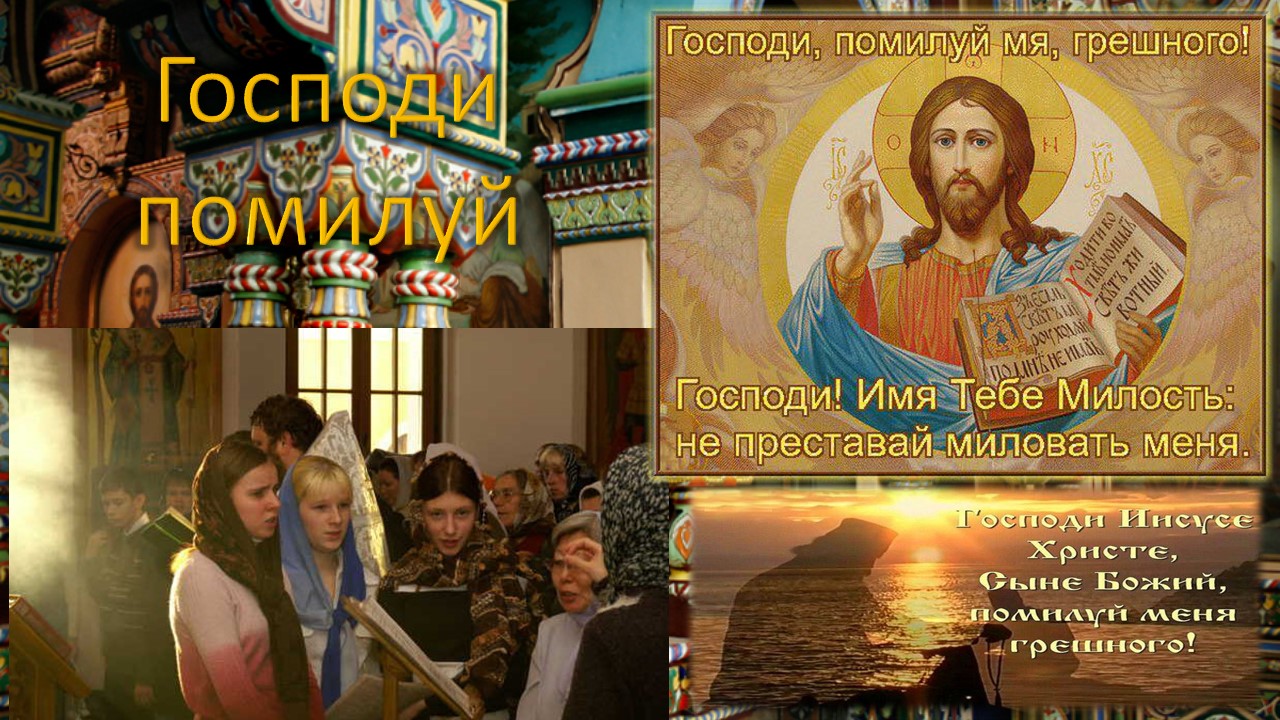
Господи помилуй Gospodi Pomiluj


Господи, помилуй, Господи, прости. Помоги мне, Боже, крест свой донести. Ты прошёл с любовью Свой тернистый путь, Ты нёс Крест безмолвно, надрывая грудь. И, за нас распятый, много Ты терпел, За врагов молился, за друзей скорбел. Я же слаб душою, телом так же слаб, И страстей греховных я преступный раб. Я – великий грешник на земном пути, Я ропщу, я плачусь… Господи! Прости. Помоги мне, Боже! Дай мне крепость сил, Чтоб свои я страсти в сердце погасил… Помоги мне, Боже! щедрою рукой, Ниспошли терпенье, радость и покой. Грешник я великий на земном пути… Господи, помилуй. Господи, прости!


+++

The World Cup: The Summit of Collective Hypnosis and the Disconnection with Nature

Versión en español  (click) We live in a hyper-connected society, yet we are profoundly disconnected from what truly matters. If you stop to...