Translate

Mostrando entradas con la etiqueta Papal Infallibility Heresy. Mostrar todas las entradas

jueves, 31 de octubre de 2024

Roman Catholicism vs The Holy Scriptures


Overview of how Catholic faith contradicts the Bible


1. Calling the Priests "Father" is forbidden

FACT: Catholics are taught to call their priest, "Father", as a religious title of respect. Christians in the first century never called their leaders, "father". This first happened hundreds of years later.

Click to View

Question #1: Does Jesus approve of calling the leaders of the church, "Father"?


Answer: Matthew 23:9 


"Do not call anyone on earth your father; for One is your Father, He who is in heaven. Matthew 23:9


2. Praying repetitive words using Rosary beads is forbidden.

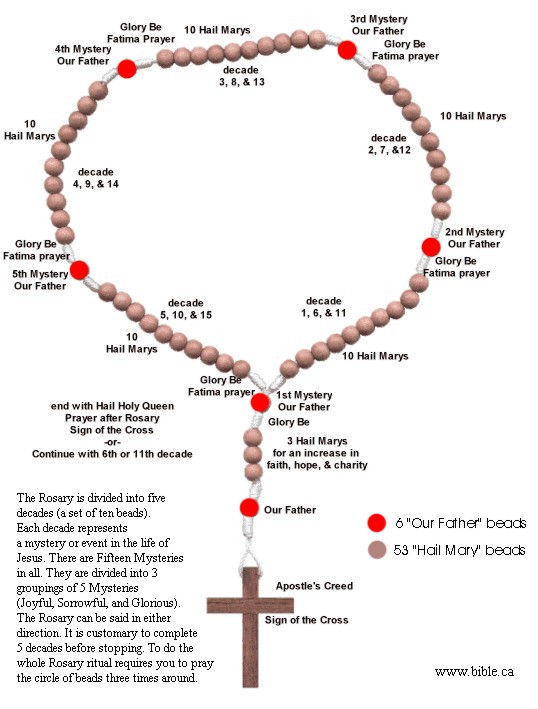
FACT: Catholics pray repetitive words with Rosary Beads that were first invented in 1090 AD, by "Peter the Hermit" and made popular by St. Dominic in 1208 AD. Catholics believe that Mary appeared to St. Dominic in 1208 AD, at the church of Prouille and revealed the Rosary Beads to him. From this time, Catholics prayed 15 sets of 10 consecutive "hail Marys" in a row (150 times), in the Rosary. However, in 2003 AD, Pope John Paul added a new set of Mysteries, so now it is 20 sets of 10 "Hail Marys", (200 times in the Rosary, in total.) Catholics will vainly appeal to Psalm 136 that alternates the same phrase 26 times with 26 different blessings God gives us. It is not 26 in a row as with the rosary! This is also a song, not a prayer. Revelation 4:8 has "angels singing" not "men praying".

Click to View

Click on photo for high resolution


Historical note: Roman Catholics borrowed the idea of praying with beads from the pagan religions who were already using them hundreds of years before: In 456 AD, Hindus are thought to have introduced the concept of praying with beads to the world. The earliest reference to a rosary (boberkhas) is in their "Jain Canon" (456 AD) These boberkhas had various numbers of beads 6,9,12,18,36 (any sub-multiple of 108) Islam (610 AD) uses a rosary of 99 beads, one for each of the names of God. Buddhists have 108 prayer beads on the string. The Rosary is of pagan origin and no Christian prior to 1000 AD used beads to pray.

Question #1: Did Jesus forbid repetitive prayer using Rosary Beads?


Answer: Matthew 6:7 

"And when you are praying, do not use meaningless repetition as the Gentiles do, for they suppose that they will be heard for their many words. Matthew 6:7


3. Virgin Mary

FACT: Roman Catholics are taught the virgin Mary never had sex after Jesus was born and that Jesus had no brothers and sisters. The Pope teaches that Mary is the mediator between God and man. Catholics also engage in more praising of Mary than Jesus Christ himself and actually pray to her to have their prayers answered. Rosary Beads graphically represent how Roman Catholics heap 10 times more praise upon Mary than God himself. Of the 59 total beads of the Rosary, 53 beads are "Hail Marys", but only 6 beads are "Our Father". The Rosary most often ends with a "Hail, Holy Queen" prayer to Mary, not God.


Question #1: Did Jesus have brothers and sisters from the womb of Mary?


Answer: Matthew 13:55-56 

"Is not this the carpenter's son? Is not His mother called Mary, and His brothers, James and Joseph and Simon and Judas? "And His sisters, are they not all with us? Where then did this man get all these things?" Matthew 13:55-56
.


Question #2: Did Joseph begin normal sexual relations with his wife after Jesus was born?


Answer: Matthew 1:24-25 

"And Joseph awoke from his sleep and did as the angel of the Lord commanded him, and took Mary as his wife, but kept her a virgin until she gave birth to a Son; and he called His name Jesus." Matthew 1:24-25

Question #3: The Bible says there is only one mediator between God and man. Is mary that one mediator?

Answer: 1 Timothy 2:5

"For there is one God, and one mediator also between God and men, the man Christ Jesus." 1 Timothy 2:5

Question #4: Catholics engage in endless praise of Mary. When a woman praised Jesus' mother to his face, did Jesus commend encourage this woman to continue praising Mary?


Answer: Luke 11:27-28 

"While Jesus was saying these things, one of the women in the crowd raised her voice and said to Him, "Blessed is the womb that bore You and the breasts at which You nursed." But He said, "On the contrary, blessed are those who hear the word of God and observe it."" Luke 11:27-28


4. Every Christian drinks of the communion cup

FACT: From 1200-1970 AD, Roman Catholics laity were forbidden to drink the blood. This is known as communion under one kind, or communion of one species. During this time, Roman Catholics are permitted to eat the bread (body) of the Lord's Supper, they are generally not allowed to drink the wine (blood) of the Lord's Supper, as any Catholic knows from his own experience from attending Mass. (Except on rare special occasions.) The laity (the people in the pews) are withheld the cup of the Lord and it is usually reserved for church leaders only. Yes there are denominations within the Roman Catholic "communion" where some RC sects actually offer the juice, but most Mass attending Catholics know they rarely drink the cup of wine.


Historical note: Two early popes condemned withholding the cup, (Pope Leo I [died 461 AD] and Pope Gelasius [died 496 Ad]; but in the 12th century the practice was begun, and formally approved by the Catholic Council of Constance in 1415 AD. So for the first 1000 years, the Catholics in the Pews drink the cup, then the Pope changed this apostolic tradition. Under the reforms of Vatican II, the laity were once again permitted to have "communion under both kinds/species". Today many Roman Catholics are unaware that for almost 900 years, the average members were forbidden to drink the blood. While Catholics have restored their practices back to the original first century tradition which they call, "communion under both kinds", it illustrates the ever shifting and changing doctrinal evolution that is present in the Roman Catholic church.


Question #1: Did Christ and the apostle Paul command that every Christian should drink of the communion cup?

Answer: Matthew 26:26-28; 1 Corinthians 11:23-28 

To the disciples: "Drink from it, all of you" Matthew 26:27

To the whole church in Corinth: "in so doing he is to eat of the bread and drink of the cup." 1 Corinthians 11:28

"While they were eating, Jesus took some bread, and after a blessing, He broke it and gave it to the disciples, and said, "Take, eat; this is My body." And when He had taken a cup and given thanks, He gave it to them, saying, "Drink from it, all of you; for this is My blood of the covenant, which is poured out for many for forgiveness of sins." Matthew 26:26-28

"For I received from the Lord that which I also delivered to you, that the Lord Jesus in the night in which He was betrayed took bread; and when He had given thanks, He broke it and said, "This is My body, which is for you; do this in remembrance of Me." In the same way He took the cup also after supper, saying, "This cup is the new covenant in My blood; do this, as often as you drink it, in remembrance of Me." For as often as you eat this bread and drink the cup, you proclaim the Lord's death until He comes. Therefore whoever eats the bread or drinks the cup of the Lord in an unworthy manner, shall be guilty of the body and the blood of the Lord. But a man must examine himself, and in so doing he is to eat of the bread and drink of the cup." 1 Corinthians 11:23-28


5. All Christians are saints


FACT: The Pope says only very special dead Catholic people qualify to be called "saints". For example, Pope John Paul II could not make Mother Teresa a saint (official canonization) until after she was dead. The average Catholic in the pew is never called a "saint" dead or alive! In fact if a pew dwelling Catholic started calling himself a "saint", he would be rebuked by the parish priest!


Question #1: Was every living Christian in the church in Corinth called a saint?


Answer: 1 Corinthians 1:2 

"To the church of God which is at Corinth, to those who have been sanctified in Christ Jesus, saints by calling, with all who in every place call on the name of our Lord Jesus Christ, their Lord and ours" 1 Corinthians 1:2

Question #2: Did Paul write the book of Ephesians to dead saints?


Answer: Ephesians 1:1 

"Paul, an apostle of Christ Jesus by the will of God, To the saints who are at Ephesus and who are faithful in Christ Jesus" Ephesians 1:1


Question #3: Was the average Christian in the church at Philippi called a saint, in distinction to bishops and deacons?

Answer: Philippians 1:1 

"Paul and Timothy, bond-servants of Christ Jesus, To all the saints in Christ Jesus who are in Philippi, including the overseers and deacons" Philippians 1:1


Question #4: Was every Christian living in Rome called to be a saint?


Answer: Romans 1:7 

"to all who are beloved of God in Rome, called as saints: Grace to you and peace from God our Father and the Lord Jesus Christ." Romans 1:7


6. All Christians are priests

FACT: The Pope decided to reserve the title of "priest" to worn by church leaders only. The average pew dwelling Catholic never refer to themselves as "priests". In fact if a lay Catholic started calling himself a "priest", he would be rebuked by "the parish Priest"!

Question #1: Did Jesus make all Christians to be priests, including the average member in the pew?


Answer: 1 Peter 2:5,9; Revelation 1:6; 5:10

"you (all Christians) also, as living stones, are being built up as a spiritual house for a holy priesthood, to offer up spiritual sacrifices acceptable to God through Jesus Christ. " 1 Peter 2:5

"But you (all Christians) are a chosen race, a royal priesthood, a holy nation, a people for God's own possession, so that you may proclaim the excellencies of Him who has called you out of darkness into His marvelous light; " 1 Peter 2:9

"Jesus has made us (all Christians) to be a kingdom, priests to His God and Father—to Him be the glory and the dominion forever and ever. Amen." Revelation 1:6

"You have made them (all Christians) to be a kingdom and priests to our God; and they will reign upon the earth." Revelation 5:10


7. Bishops must be Married.


FACT: In 1079 AD celibacy was first enforced for priests and bishops by Pope Gregory VII. Before this time, they were permitted to marry.


Question #1: Does the Bible teach that a bishop (overseer) must be married AND ALSO have children as one of the conditions of being qualified to be a bishop?


Answer: 1 Timothy 3:2-5

"A bishop, then, must be above reproach, the husband of one wife, temperate, prudent, respectable, hospitable, able to teach, not addicted to wine or pugnacious, but gentle, peaceable, free from the love of money. He must be one who manages his own household well, keeping his children under control with all dignity (but if a man does not know how to manage his own household, how will he take care of the church of God?)" 1 Timothy 3:2-5

Question #2: In the very next chapter of the Bible after bishops are told they must be married with children, does the Holy Spirit warn that "forbidding to marry" is a "doctrine of demons"?


Answer: 1 Timothy 4:1-3 

"But the Holy Spirit explicitly says that in later times some will fall away from the faith, paying attention to deceitful spirits and doctrines of demons, by means of the hypocrisy of liars seared in their own conscience as with a branding iron, men who forbid marriage and advocate abstaining from foods which God has created to be gratefully shared in by those who believe and know the truth." 1 Timothy 4:1-3


8. Peter was married

FACT: Most Catholics believe that Apostle Peter was the first Pope and was not married. As one Roman Catholic leader said, "if Peter had a wife when he first met Jesus, he got rid of her quick!"

Question #1: Did Peter have a wife?


Answer: Mark 1:30 

"Now Simon's mother-in-law was lying sick with a fever; and immediately they spoke to Jesus about her." Mark 1:30

Question #2: Did Paul say all the apostles including Peter had a right to be married?


Answer: 1 Corinthians 9:5 

"Do we not have a right to take along a believing wife, even as the rest of the apostles and the brothers of the Lord and Cephas?" 1 Corinthians 9:5


9. Latin Mass forbidden

FACT: For over 1000 years, the Roman Catholic church often conducts their mass services entirely in the Latin language, when no one sitting in the pews understands the Latin language. Most Roman Catholics who have sat through such a Latin Mass service have wondered what is going on. It was not until 1965 AD that the Pope finally understood 1 Cor 14:19 and allowed masses to conducted in the same vernacular language of the local people. (English in North America)

Question #1: Is Latin Mass forbidden in the Bible when no one in the pews understands Latin?


Answer: 1 Corinthians 14:19 

"in the church I desire to speak five words with my mind so that I may instruct others also, rather than ten thousand words in an unknown tongue." 1 Corinthians 14:19


10. Observance of special days condemned

FACT: The Roman Catholic church has invented an entire yearly calendar of non Biblical holy Days like Lent, Easter, Christmas.


Historical note: No one prior to 335 AD celebrated the birthday of Jesus. The word "Christmas" (Christ + Mass) was first used in 1038 AD. Before 335 AD, the pagan cult of Mithra, the Iranian "god of light", had long celebrated December 25 as Mithra's birthday. December 21, being the winter solace, marked the beginning of days with increasing amount of light, hence December 25 celebrated Mithra's triumph over darkness. Because the pagan festival that celebrated Mithra's birthday was so popular, the Roman Catholic church adopted the day, but changed the meaning from the birthday of Mithra, the "god of light", to Christ's birthday, God the son, "light of the world". The old meaning of December 25 was connected with Mithra's triumph over physical darkness. The new meaning celebrated Jesus triumph over spiritual darkness. Eventually Christmas became dominant, the Mithra cult went extinct and today this origin is not widely known among Roman Catholics. None of the apostles or the early church celebrated the birthday of Jesus.


Question #1: Did the early Christians celebrate Christmas, Lent and Easter?


Answer: Galatians 4:10-11 

"You observe days and months and seasons and years. I fear for you, that perhaps I have labored over you in vain." Galatians 4:10-11


Question #2: Are Christians told to remember the Lord's Death every Sunday?


Answer: Acts 20:7 

"On the first day of the week (Sunday), when we were gathered together to break bread, Paul began talking to them, intending to leave the next day, and he prolonged his message until midnight." Acts 20:7


11. Worshipping images violates the 2nd commandment.

FACT: Catholics regularly bow down to idols, icons and images of Jesus, Mary and the apostles, kissing the feet of the statues and praying to them. Now Catholics get very upset when you accuse them of worshipping Mary. They deny they are worshipping Mary with loud illogical and irrational protests. What these need to understand, is that the Bible teaches that WE ONLY PRAY TO DEITY and Christians considers it paganism and polytheism to pray to anyone EXCEPT the Father, Son or Holy Spirit. So while Catholics pray to Mary, they fail to comprehend that only deity is to be prayed to, and this is the underlying reason why non-Catholics correctly lay the charge they worship Mary AND ALL THE SAINT, they pray to. The Bible clearly teaches that all dead humans, though conscious in the spirit world, are unable to know anything, much less hear prayers addressed to them. Bowing down to icons and kissing them etc. so closely resemble idol worship it is actually shocking that any Roman Catholic would attempt to defend the practice. But again, they simply do the practice but deny it is worship. To illustrate the point, Muslim deny they are worshipping the moon god as their "Allah" as moon worship is even condemned in the Koran. But the fact of history is that Muhammad rid the Kaaba in Mecca of the 365 gods inside the cubical building, but retained the one on the roof known as the moon god "Hubal". Muhammad simply took the moon god from the roof, denied it was the moon god and called Hubal "Allah". The historical vestage of this origin is confirmed in that every mosque in the world has a crescent moon on the roof… just like the original Hubal moon god on the roof of the Kaaba. Muslims get mad when you point out that Allah is really the moon god and Catholics get mad when you point out they are worshipping the Mary and the saints when they pray to them. When a child stands in the middle of a room and puts his hand over his eyes and says, "you can't see me", that doesn't mean they are invisible, except in the mind of the child. Roman Catholics put their hands over their eyes and say, "We do no worship idols and we do not consider praying to Mary and act of worship". Saying so doesn't make it so. Roman Catholic apologists who harshly criticize protestants who accuse them of worshipping idols and Mary need to take a close look in the mirror and be honest with reality. At the very least, they could tone down their ranting against protestants "misrepresenting Catholic faith" with a bit of self-reflection and a good history lesson.


Historical note: The Pope deleted the 2nd of the 10 commandments so they could use statues & images in worship. They split the 10th commandment on coveting into two commandments so they could still have 10 in number. Don't believe this? Look at the list of 10 commandments published by the Roman Catholic church! The issue here is not how the Ten Commandments are numbered, rather the issue is that most published lists of the 10 commandments do not include the words, "you shall not for yourself an idol". Open your Catholic Bible and look for yourself!


Question #1: Does the 2nd commandment approve of bowing down and kissing idols?


Answer: Exodus 20:4 

"You shall not make for yourself an idol, or any likeness of what is in heaven above or on the earth beneath or in the water under the earth. You shall not worship them or serve them." Exodus 20:4-5


12. Baptism is full immersion in water, not sprinkling.

FACT: The Catholic church baptizes babies by sprinkling a little water on them.

Historical note: Greek work for baptism literally means immersion. There are separate words in Greek for sprinkling, pouring and immersion. Only the Greek word for immersion is ever used for Baptism in the Bible. The first recorded case of sprinkling was in 257 AD to someone on a sick-bed. It was then an exception to the rule and brought about fierce opposition from the whole church. Not until 757 AD did the church accept sprinkling in such sick-bed cases of necessity. It wasn't until 1311 AD, when the Catholic council of Ravenna, declared that sprinkling was and acceptable substitute for immersion and from that time forward sprinkling replaced immersion in the Roman Catholic church. The Orthodox church refused sprinkling and still immerses to this day.


Question #1: Was Jesus baptized by full immersion in the Jordan River?


Answer: Matthew 3:16 


"After being baptized, Jesus came up immediately from the water; and behold, the heavens were opened, and he saw the Spirit of God descending as a dove and lighting on Him" Matthew 3:16

Question #2: When Philip baptized the Eunuch, did both of them go into the water?


Answer: Acts 8:38-39 


"And he ordered the chariot to stop; and they both went down into the waterPhilip as well as the eunuch, and he baptized him. When they came up out of the water, the Spirit of the Lord snatched Philip away." Acts 8:38-39


Question #3: Can babies be baptized since they do not first believe?


Answer: Mark 16:16; Acts 8:36-37 

"He who has believed and has been baptized shall be saved; but he who has disbelieved shall be condemned. Mark 16:16

"As they went along the road they came to some water; and the eunuch said, "Look! Water! What prevents me from being baptized?" And Philip said, "If you believe with all your heart, you may." Acts 8:36-37

Question #4: Can babies be baptized since they do not first repent?


Answer: Acts 2:38 

"Brethren, what must we do?" Peter said to them, "Repent, and each of you be baptized in the name of Jesus Christ for the forgiveness of your sins; and you will receive the gift of the Holy Spirit. Acts 2:37-38


13. Original sin is false doctrine

FACT: Catholics say that infants inherit their parent's sin at conception and are therefore spiritually condemned and totally wicked.

Question #1: Is the doctrine of inherited original sin found in the Bible?


Answer: Ezekiel 18:20

"The person who sins will die. The son will not bear the punishment for the father's iniquity, nor will the father bear the punishment for the son's iniquity; the righteousness of the righteous will be upon himself, and the wickedness of the wicked will be upon himself." Ezekiel 18:20

Question #2: Did Jesus say little children are better models of purity and conduct than adults?


Answer: Matthew 18:2-3 

"And He called a child to Himself and set him before them, and said, "Truly I say to you, unless you are converted and become like children, you will not enter the kingdom of heaven." Matthew 18:2-3


14. Every Christian can understand the Bible by merely read it.

FACT: Catholics are taught that only the priests can understand the Bible and the common man in the pew cannot understand the Bible without the priests help.


Question #1: Do the scriptures say that when anyone reads the Bible, they can understand for themselves?

Answer: Ephesians 3:4 

"By referring to this, when you read you can understand my insight into the mystery of Christ" Ephesians 3:4


15. Catholics are unwilling to defend their faith

FACT: When Roman Catholics are challenged from the Bible to defend their faith, they are unwilling or unable to defend what they believe and say the priest has the answer and never search the truth out for themselves. Priests and Bishops never get permission to have open public Bible discussions with honest Bible students like ourselves. Imagine a local parish priest publicly defending infant baptism against a Christian who taught the practice contradicted the Bible! It never happens! Forget what the Bible says, just trust the priest!


Question #1: Should a Christian be unable to defend what they believe from the Bible without the help of priests?

Answer: 1 Peter 3:15 

"sanctify Christ as Lord in your hearts, always being ready to make a defense to everyone who asks you to give an account for the hope that is in you, yet with gentleness and reverence" 1 Peter 3:15


16. Human tradition and man made doctrine is apostasy

FACT: The Pope teaches that he can change what is in the Bible if he wants.

Question #1: Did Jesus say it was OK for man to change what the word of God teaches for man-made Catholic doctrine?

Answer: Mark 7:7-9 

"'But in vain do they worship Me, Teaching as doctrines the precepts of men.' "Neglecting the commandment of God, you hold to the tradition of men." He was also saying to them, "You are experts at setting aside the commandment of God in order to keep your tradition." Mark 7:7-9


Conclusion: How the Catholic church views the Bible

Below are the kinds of replies you can expect from a Roman Catholic priest if you ask him about the contents of this Bible study.

  1. Yes I know Matthew 23:9, seems to condemn calling me "Father", but you are not able to understand the Bible like I do.
  2. Yes I know is appears like Jesus condemned the repetitive prayer of the Rosary beads in Matthew 6:7, but Mary appeared to St. Dominic in 1208 AD and revealed to him the Rosary Beads herself!
  3. Yes Matthew 13:55-56 seems to indicate that Jesus had brothers and sisters, but these were the children of Joseph from a previous marriage or just cousins.
  4. Yes, I agree that 1 Timothy 2:5 sounds like Jesus is the only mediator between god and man, but the Pope decided she was indeed also a mediator between God and man


Summary:

  1. Yes Christ and Paul did command every Christian to drink of the communion cup in Matthew 26:26-28; 1 Corinthians 11:23-28. And Yes I know that two early popes condemned withholding the cup, (Pope Leo I [died 461 AD] and Pope Gelasius [died 496 Ad]; but in the 12th century the practice was begun, and formally approved by the Catholic Council of Constance in 1415 AD. Yes I know that in 1970 the pope restored the cup to the laity.
  2. Was every living Christian in the church in Corinth called a saint?
  3. Yes I know that in the Bible (1 Corinthians 1:2; Ephesians 1:1; Philippians 1:1; Romans 1:7) every Christian was a saint and every saint was a Christian. Yes I agree, the Bible uses the word saint as interchangeably synonymous with being a Christian, but the Roman Catholic church has the power to change the Bible.
  4. Yes I know that in the apostolic church (1 Peter 2:5,9; Revelation 1:6; 5:10), every Christian was a priest and the two terms are used interchangeably synonymous with being a Christian, but the Roman Catholic church decided that only leaders should be called priests.
  5. Yes I know that the Bible appears to teach that 1 Timothy 3:2-5 bishops must be married with believing children, but you can't even understand the Bible anyway, why do you ask? Just trust me because only Catholic priests can understand the Bible.
  6. Yes I have read 1 Timothy 4:1-3, and is seems to condemn forbidding the marriage of Catholic priests, but the Pope decided that unmarried men are more holy than married men.
  7. Yes I know that Mark 1:30; 1 Corinthians 9:5 say that Peter had a wife 23 years after Christ died on the cross (53 AD), but Pope Gregory VII decided in 1079 AD from that time onward, that church leaders cannot marry.
  8. Yes I know that sitting through a Latin Mass service can be very boring for many Catholics in the pews. And yes I know that 1 Corinthians 14:19 condemns conducting a church service in a language the average member does not understand, but the Pope decided that Latin sounds real holy and has both historical and mystical qualities.
  9. Yes I know the early church did not begin to celebrate Christmas until the 4th century. And yes I know that Galatians 4:10-11 condemns the keeping of such holy days not found in the Bible, but the church at Rome needed a way to convert the pagan worshippers of Mithra, the god of light... and it worked!
  10. Yes I know that Acts 20:7 commands Christians to have weekly communion services and that the early church did not celebrate Easter as is done today, but having a yearly communion service was something later church leaders wanted to add to worship.
  11. Yes I know that the Roman Catholic church deleted the 2nd commandment (Exodus 20:4) in order to hid from the masses God's condemnation of bowing down and kissing images of Mary and Peter, but Mary revealed herself to us in a vision.
  12. Yes I know that Jesus was baptized by full immersion in the Jordan River (Matthew 3:16), and that sprinkling was not officially approved until 1311 AD, but it sure is more convenient.
  13. Yes I know that babies have no faith and cannot repent, and are therefor not really valid candidates for baptism (Mark 16:16; Acts 8:36-37; Acts 2:38). But the Pope invented the idea of where the faith and repentance that the infant lacks, is exchanged for the faith and repentance of a "God Parent". Yes I know none of this is in the Bible, but the Pope is the "holy see" and he must know what he is doing!
  14. Yes I know Ezekiel 18:20 proves the doctrine of total hereditary depravity (inherited original sin) contradicts the Bible, but you cannot understand the Bible anyway, only the priest can correctly interpret it.
  15. Yes I know that Matthew 18:2-3 teaches that children are better models of purity and conduct than adults, but the Pope teaches that infants are wicked defiled sinners condemned to hell until a Catholic priest baptizes them and removes the curse of original sin.
  16. Yes I know Ephesians 3:4 plainly seems to say that when you read the Bible by yourself, you can have the same insight that the apostle Paul had into spiritual things, but we Catholic priests cannot teach all our false doctrines that contradict the Bible unless we convince you that you can't understand the Bible unless the priest helps you.
  17. Yes I know that 1 Peter 3:15 teaches every Christian should be able to defend from the Bible what they believe, but isn't that what us Roman Catholic priests are supposed to do? Do you want to put us out of job and rob us of all our power and control?
  18. Yes I know that human traditions that contradict the Bible are condemned in Mark 7:7-9, but all the doctrines that contradict the Bible which the Pope through up were revealed to him directly by Christ and therefore, although they contradict the Bible, they are divinely approved by Christ himself.
  19. You really shouldn't be reading the Bible anyway. And while we are talking about it, what else do you want me to teach you about what the Bible says?

 

lunes, 13 de diciembre de 2021

The Doctrine of The Antichrist - La Doctrina del Anticristo


ENGLISH:

Which is the doctrine of the Antichrist?

He Claims to be God and is Worshiped
“Don’t let anyone deceive you in any way, for that day will not come until the rebellion occurs and the man of lawlessness
is revealed, the man doomed to destruction. He will oppose and will exalt himself over everything that is called God or is
worshiped, so that he sets himself up in God’s temple, proclaiming himself to be God“
(2 Thes 2:3-4). 

What the Papists teach:  

Throughout the centuries of Rome's existence, the popes have regularly claimed to be divine. As the supposed successor of Peter, the Pope claims infallibility, the position of God on Earth, and ability to judge and excommunicate angels. 

Cardinal Sarto, who became Pope Pius X, said this:

The Pope represents Jesus Christ Himself... 

This belief has so assimilated into society's thinking that it is believed by many beyond Catholic circles. According to TIME, Pope John Paul II's assassination attempt prompted a young Jewish man to say, "shooting the Pope—It's like shooting God."
 

Further Quotes from Vatican Documents show the Papacy's belief in Papal Infallibility

In 1512 Christopher Marcellus said this to Pope Julius II:

Take care that we lose not that salvation, that life and breath which thou hast given us, for thou art our shepherd, thou art our physician, thou art our governor, thou art our husbandman, thou art finally another God on earth (emphasis added)

Just recently, in 2004, Bishop Patrick Dunn of Auckland said this:

"It seems that Pope John Paul II now presides over the universal Church from his place upon Christ's cross.

The Gloss of Extravagantes of Pope John XXII says this:

But to believe that our Lord God the Pope the establisher of said decretal, and of this, could not decree, as he did decree, should be accounted heretical (emphasis added).


Words from the Popes themselves:

In 1302 Pope Boniface said this in a letter to the Catholic Church:

Furthermore, we declare, we proclaim, we define that it is absolutely necessary for salvation that every human creature be subject to the Roman Pontiff.


Pope Leo XIII said these things about the role of the Papacy and the Roman Church:

Our thoughts went out towards the immense multitude of those who are strangers to the gladness that filled all Catholic hearts: some because they lie in absolute ignorance of the Gospel; others because they dissent from the Catholic belief, though they bear the name of Christians.

This thought has been, and is, a source of deep concern to Us; for it is impossible to think of such a large portion of mankind deviating, as it were, from the right path, as they move away from Us, and not experience a sentiment of innermost grief. But since We hold upon this earth the place of God Almighty...

But the supreme teacher in the Church is the Roman Pontiff. Union of minds, therefore, requires, together with a perfect accord in the one faith, complete submission and obedience of will to the Church and to the Roman Pontiff, as to God Himself.

And more recently, Pope John Paul II wrote that names like "Holy Father" are applicable to the Pope, even though calling him that is counter to the Gospel:

Have no fear when people call me the "Vicar of Christ," when they say to me "Holy Father," or "Your Holiness," or use titles similar to these, which seem even inimical to the Gospel.

In 1996 he also gave his ascent to calling the Pope "Lord" and "Christ on earth":

we readily understand the devotion of Saint Francis of Assisi for "the Lord Pope",the daughterly outspokenness of Saint Catherine of Siena towards the one whom she called "sweet Christ on earth", the apostolic obedience and the sentire cum Ecclesia of Saint Ignatius Loyola,and the joyful profession of faith made by Saint Teresa of Avila: "I am a daughter of the Church" (emphases added).


The Doctrine of Papal Infallibility is Heretical

It is clear that "the Popes have never reproved or rejected this title"of blasphemy and flattery, but the Bible does not support the belief of papal infallibility. It declares that "all of sinned and come short of the glory of God" (Roman 3:23). This includes the Pope. These boasts of the Papal State fulfill the Bible's prediction of what the Antichrist power would do:

And he shall speak great words against the most High, and shall wear out the saints of the most High, and think to change times and laws...(Daniel 7:25).

And there was given unto him a mouth speaking great things and blasphemies; and power was given unto him to continue forty and two months. And he opened his mouth in blasphemy against God, to blaspheme his name, and his tabernacle, and them that dwell in heaven (Revelation 13:5-6). 

--------

ESPAÑOL: 

¿Cuál es la doctrina del Anticristo?

 Él dice ser Dios y es adorado 

"No dejes que nadie te engañe de ninguna manera, porque ese día no llegará hasta que ocurra la rebelión y el hombre del desafuero se revela, el hombre condenado a la destrucción. Se opondrá y se exaltará sobre todo lo que se llama Dios o es adorado, de modo que se instala en el templo de Dios, proclamándose Dios ”(2 Ts 2, 3-4). 

Lo que enseñan los papistas

A lo largo de los siglos de la existencia de Roma, los papas han afirmado con regularidad ser divinos. Como supuesto sucesor de Pedro, el Papa afirma la infalibilidad, la posición de Dios en la Tierra y la capacidad de juzgar y excomulgar a los ángeles. 

El cardenal Sarto, que se convirtió en el Papa Pío X, dijo esto: 

El Papa representa a Jesucristo mismo ...

Esta creencia se ha asimilado tanto al pensamiento de la sociedad que muchos más allá de los círculos católicos la creen. Según TIME, el intento de asesinato del Papa Juan Pablo II llevó a un joven judío a decir: "disparar al Papa, es como disparar contra Dios."

Otras citas de documentos del Vaticano muestran la creencia del papado en la infalibilidad papal

En 1512, Cristóbal Marcelo le dijo esto al Papa Julio II: 

Cuida que no perdamos esa salvación, esa vida y ese aliento que nos has dado, porque tú eres nuestro pastor, tú eres nuestro médico, tú eres nuestro gobernador, tú eres nuestro labrador, finalmente eres otro Dios en la tierra (énfasis agregado ) 

Recientemente, en 2004, el obispo Patrick Dunn de Auckland dijo esto: 

“Parece que el Papa Juan Pablo II preside ahora la Iglesia universal desde su lugar sobre la cruz de Cristo. El brillo de las extravagantes del Papa Juan XXII dice esto: Pero creer que nuestro Señor Dios el Papa, el creador de dicha decretal, y de esto, no pudo decretar, como lo hizo, debe ser considerado herético (énfasis agregado).


Palabras de los mismos Papas: 

En 1302, el Papa Bonifacio dijo esto en una carta a la Iglesia Católica: 

Además, declaramos, proclamamos, definimos que es absolutamente necesario para la salvación que toda criatura humana esté sujeta al Romano Pontífice. 

El Papa León XIII dijo estas cosas sobre el papel del Papado y la Iglesia Romana: 

Nuestro pensamiento se dirigió hacia la inmensa multitud de quienes son ajenos a la alegría que llenaba todos los corazones católicos: algunos porque mienten en la ignorancia absoluta del Evangelio; otros porque disienten de la creencia católica, aunque llevan el nombre de cristianos. 

 Este pensamiento ha sido y es una fuente de profunda preocupación para Nosotros; porque es imposible pensar que una porción tan grande de la humanidad se desvíe, por así decirlo, del camino correcto, mientras se aleja de Nosotros, y no experimenta un sentimiento de dolor más íntimo. Pero puesto que ocupamos sobre esta tierra el lugar de Dios Todopoderoso ...


Pero el maestro supremo de la Iglesia es el Romano Pontífice. Por tanto, la unión de los espíritus requiere, junto con una perfecta armonía en una fe, la completa sumisión y obediencia de la voluntad a la Iglesia y al Romano Pontífice, como al mismo Dios. 

Y más recientemente, el Papa Juan Pablo II escribió que nombres como "Santo Padre" son aplicables al Papa, aunque llamarlo en contra del Evangelio: 

No temas cuando la gente me llame "Vicario de Cristo", cuando me digan "Santo Padre" o "Su Santidad", o usen títulos similares a estos, que incluso parecen contrarios al Evangelio. 

En 1996 también dio su ascenso a llamar al Papa "Señor" y "Cristo en la tierra": 

entendemos fácilmente la devoción de San Francisco de Asís por "el Señor Papa", la franqueza de hija de Santa Catalina de Siena hacia quien ella llamó "dulce Cristo en la tierra", la obediencia apostólica y el sentire cum Ecclesia de San Ignacio de Loyola , y la alegre profesión de fe de santa Teresa de Ávila: "Soy hija de la Iglesia" (énfasis añadido). 


La doctrina de la infalibilidad papal es herética 

Está claro que "los Papas nunca han reprobado o rechazado este título" de blasfemia y adulación, pero la Biblia no apoya la creencia de la infalibilidad papal. Declara que "todos pecaron y están destituidos de la gloria de Dios" (Romanos 3:23). Esto incluye al Papa. Estos alardes del Estado Papal cumplen la predicción de la Biblia de lo que haría el poder del Anticristo: 

Y hablará grandes palabras contra el Altísimo, y fatigará a los santos del Altísimo, y pensará en cambiar los tiempos y las leyes ... (Daniel 7:25). 

Y le fue dada boca que hablaba grandes cosas y blasfemias; y le fue dado poder para actuar cuarenta y dos meses. Y abrió su boca en blasfemia contra Dios, para blasfemar su nombre, y su tabernáculo, y los que moran en el cielo (Apocalipsis 13: 5-6).

+++


domingo, 12 de diciembre de 2021

About the Primacy and "Infallibility" of the Roman Pope Heresy - Sobre la Herejía de la Primacia y la "Infalibilidad" Papal


ENGLISH:

Orthodoxy is faith "in one, holy, catholic and apostolic Church". Outside of the Church, there is no salvation, just as there was no salvation outside of Noah’s ark in the days of the flood. Orthodoxy is firm faith in the fact that in the mysteries of the Church lies God’s saving grace.

The Orthodox Church, as "the pillar and ground of the truth" (I Timothy 3:15), as a living organism, against which even "the gates of hell shall not prevail" Matthew 16:18), and which has Christ Himself as its Head, abiding with it "always, even to the end of the age" (Matthew 28:20, NKJV)

Such a Church as a whole cannot err; for the whole Church to err would be tantamount to her spiritual death, but, by virtue of the Saviour’s promise, she cannot die. But if the Orthodox Church as a whole cannot err, her individual members, individual gatherings and groups and even large parts of her can fall into error. And since the opinion of the whole Church is made manifest at Ecumenical Councils, the Ecumenical Councils are the infallible custodians and interpreters of Divine Revelation - not because the members of the councils are individually infallible, but because the decisions of the councils are the voice of the whole Church, which is directed by the grace of the Holy Spirit (the decisions of the councils always begin with the words: "It seemed good to the Holy Spirit and to us" [see Acts 15:28]).

This view of the infallibility of the universal Church, which comes from Christ and His apostles, was common in Christianity during the course of the first centuries and remained unchanged in the Orthodox Church. But in the West, side by side with other deviations, this view of the infallibility of the Church also under-went distortion. The Roman bishop was always considered one of the members of the council, and he submitted to its decisions. But, in the course of time, the pope of Rome began to attribute the privilege of ecclesiastical infallibility to himself alone and, after long efforts, finally secured the recognition of his absurd pretension at the Vatican Council of 1870.

Besides the invisible Head, Jesus Christ, Papists recognize yet a visible head, the Roman bishop, the pope, and they consider him, and not the universal Church, infallible.

The teaching on the supremacy of the pope arose in the ninth century and is the main dogma of the Roman confession and its main difference with Orthodoxy. Catholics assert that Christ made one of His disciples, namely the Apostle Peter, His vicar on earth, the prince of the apostles, the head of the visible Church with plenipotentiary authority over the apostles and over the whole Church, and that only through him did all the remaining apostles receive their grace-filled rights. Catholics also assert that the Roman pope became the successor of the Apostle Peter and received all rights and privileges from him as well. He, the pope, is the head of the whole Church, the vicar of Christ, the sole bearer for the whole visible Church of all her grace-filled rights; his voice in matters of faith, speaking ex cathedra - "from the chair", that is, officially - is infallible and obligatory for each member of the Church individually and for all together.

In this dogma of the Roman Catholic Church, three elements stand out: 1) the teaching on the supremacy of the Apostle Peter, 2) on the supremacy of the pope and 3) on his infallibility.

Today we shall touch on the first two parts of the teaching on the papacy. Catholics base the teaching on the supremacy of the Apostle Peter on two passages of Sacred Scripture. The first pertains to the sixteenth chapter of the Gospel according to Matthew (verses 13-19):

"When Jesus came into the coasts of Cæsarea Philippi, he asked his disciples, saying, Whom do men say that I the Son of man am? And they said, Some say that thou art John the Baptist: some, Elias; and others, Jeremias, or one of the prophets. He saith unto them, But whom say ye that I am? And Simon Peter answered and said, Thou art the Christ, the Son of the living God. And Jesus answered and said unto him, Blessed art thou, Simon Bar-jona: for flesh and blood hath not revealed it unto thee, but my Father which is in heaven. And I say also unto thee, That thou art Peter, and upon this rock I will build my church; and the gates of hell shall not prevail against it. And I will give unto thee the keys of the kingdom of heaven: and whatsoever thou shalt bind on earth shall be bound in heaven: and whatsoever thou shalt loose on earth shall be loosed in heaven."

In the Saviour’s words quoted above, nothing is said about the supremacy of the Apostle Peter or in general about his relation-ship to the other apostles. Here, Christ is speaking about the founding of the Church. But the Church is founded not on Peter alone. In the Epistle to the Ephesians (2:20), the Apostle Paul, addressing the Christians, says: "[Ye] are built upon the foundation of the apostles and prophets, Jesus Christ himself being the chief corner stone"; while in the First Epistle to the Corinthians (3:10-11), the Apostle Paul, speaking about the creation of Christ’s Church, expresses it thus: "According to the grace of God which is given unto me, as a wise master-builder, I have laid the foundation, and another buildeth thereon. But let every man take heed how he buildeth thereupon. For other foundation can no may lay than that is laid, which is Jesus Christ." In the Apocalypse, where the Church is compared to a city, it says: "And the wall of the city had twelve foundations, and in them the names of the twelve apostles of the Lamb" (Revelation 21:14).

But let us return to the main passage of the Gospel according to Matthew, by which Catholics attempt to prove the supremacy of the Apostle Peter over the other apostles and, through him, of the pope of Rome over the whole Church. In this Gospel excerpt, the context clearly shows that the Apostle Peter’s confession of Christ as the Son of God did not contain his opinion alone, but that of all the apostles as well, and that is why, in actuality, the Saviour’s promise also pertains to them all. The Saviour’s question, "But whom say ye that I am?", was asked completely unexpectedly, and before the other disciples grasped it, the Apostle Peter, as the most impulsive, forestalled them, which happened not infrequently in other instances as well, and answered the Saviour first.

Further. In the Lord’s words, "Thou art Peter, and upon this rock I will build my church", Catholics regard the words "Peter" and "rock" as identical and draw the conclusion that allegedly the Saviour wanted to found the Church on Peter himself, as on an individual, and on him alone. But here is a confusion of terms - the proper name is confused with the appellative. The proper name of this apostle in Hebrew is Simon. The Saviour, seeing the firmness of his faith, gives him a new name, or, more precisely, a nickname (as He also did with regard to James and John, calling them "Boanerges", that is, "sons of thunder" [Mark 3:17]) - Cephas in Hebrew, Petros in Greek. Here is a kind of play on words, which Catholic scholasticism also utilizes.

As for the mention of the keys of the Kingdom of Heaven and the right to bind and loose, here, in the person of the Apostle Peter, the Lord is giving a promise to all the apostles - especially since He repeats the very same promise and in the same expressions with regard to all the disciples in the same Gospel according to Matthew, slightly later (8:18); and after His resurrection, Christ fulfilled this promise, having said to all the disciples: "Receive ye the Holy Ghost: whose soever sins ye remit, they are remitted unto them; and whose soever sins ye retain, they are retained" (John 20:22-23).

Now, let us turn to that passage in the Gospel according to John, which Catholics cite, attempting to prove that the supremacy of the Apostle Peter over the rest of the apostles was established by God. In the twenty-first chapter of this Gospel (verses 15-17) we read: Jesus saith to Simon Peter, Simon, son of Jonas, lovest thou me more than these? He saith unto him, Yea, Lord; thou knowest that I love thee. He saith unto him, Feed my lambs. He saith to him again the second time, Simon, son of Jonas, lovest thou me? He saith unto him, Yea, Lord; thou knowest that I love thee. He saith unto him, Feed my sheep. He saith unto him the third time, Simon, son of Jonas, lovest thou me? Peter was grieved because he said unto him the third time, Lovest thou me? And he said unto him, Lord, thou knowest all things; thou knowest that I love thee. Jesus saith unto him, Feed my sheep."

In these words, Papists see the fulfillment by the Lord of that promise which was given by Him before to the Apostle Peter, that is, the granting of authority and supremacy in the Church to Peter; moreover, by sheep they understand the apostles, while by lambs - the rest of the faithful.

The Saviour’s words, recorded in the Gospel according to John, were uttered shortly after the resurrection, that is, when the Apostle Peter was still found under the heavy oppression of his faintheartedness and renunciation of Christ. It was essential not only for him, but for the other disciples as well, to restore him to his previous apostolic dignity. This restoration was accomplished in this conversation. The words, "lovest thou me more than these?", serve as a reminder of Peter’s self-confident words, "Though all men shall be offended because of thee, yet will I never be offended" (Matthew 26:33-35), and, "Lord, I am ready to go with thee, both into prison, and to death" (Luke 22:33). The threefold question, "lovest thou me?", corresponds to the threefold renunciation by Peter, whom at this point the Lord no longer calls "Peter," but "Simon", his former name. The fact that Peter was grieved, was saddened after the Lord’s third question would be completely inexplicable if we are to allow that the discussion here is about granting the supremacy and vicariate to Peter. And, to the contrary, this sadness is fully under-standable if the Apostle Peter had seen in the Lord’s words a reminder of his renunciation. And it is hard to reconcile the Saviour’s further words with the supremacy of the Apostle Peter. While following after the Teacher, the Apostle Peter, having seen John, asked: "And what about this man?", and in reply he heard: "If I will that he tarry till I come, what is that to thee? follow thou me" (John 21:22). It is hard to suppose that the Saviour would speak thus to him whom He had assigned as His vicar and as the prince of the Apostles.

As for the Saviour’s words to Peter: "Feed my lambs; feed my sheep", the word "feed" does not at all signify the supreme authority of pastorship, as Catholic theologians assert, but simply the authority and responsibilities of pastorship proper to all the apostles and their successors. And there is no necessity to under-stand the words "sheep" and "lambs" in the sense of flock and pastors, understanding by the latter the very apostles themselves, as the Catholics would like, but more simply, following the Holy Fathers of the Church, to see in the sheep and the lambs two groups of the faithful - the less perfect and the more perfect, the infants in the faith and the adults.

The Orthodox Church teaches that the twelve apostles were completely equal among themselves according to their dignity, authority and grace. In a certain sense, it is possible to call the Apostle Peter the first, but the first among equals. This teaching is confirmed by the whole history of the apostles, as it is set forth in the books of the New Testament, where the full equality of the apostles among themselves is demonstrated indisputably (for example, Matthew 4:18-19; 10:1, 40; 19:28; 20:24-27; 23:8-11; Mark 10:35-37, 16:15; Luke 22:22-30 and many others); many passages demonstrate that the apostles received not only the grace of apostleship, but also the right to act by this grace in the Church, directly from Christ the Saviour, and not from the Apostle Peter (Matthew 4:18-22; Mark 1:16-20; Luke 9:1-6, John 20:21-23, and many others), and that all the apostles without exception are liable to a higher court - the Church (for example, Matthew 18:17).

The history of the Apostolic Council (Acts, Chapter 15) speaks especially clearly against the supremacy of the Apostle Peter. The Antiochian Christians appeal not to the Apostle Peter for the resolution of their perplexity, as should have occurred if we are to believe the Catholic dogma, but to all the apostles and pres-byters. We see in this excerpt from the book of the Acts of the Apostles that the question at the Council is subject to a general discussion by the Council and that the completion of the matter at the Council belongs to the Apostle James, and from his words the decision is written, and not from the words of the Apostle Peter.

The fact that Peter, according to the testimony of Sacred Scripture, is sent by the apostles (Acts 8:14), gives an account of his actions to the apostles and the faithful (Acts 11:4-18) and listens to their objections and even denunciations (Gal. 2:11-14), which of course, could not be if Peter were the prince of the apostles and head of the Church, also speaks against the Catholic teaching.

Orthodox theology strictly differentiates between the grace-filled service of the apostles and that of bishops. Bishop Alexander (Semenov-Tian-Shansky) writes of this: "The significance of the apostles was exceptional and in many ways exceeded the significance of bishops. Bishops head local churches, while the apostles were wandering preachers of the Gospel. An apostle, having founded a new local Church in some locale, would ordain a bishop for it and would himself go to another place to preach. In con-sequence of this, the Orthodox Church does not honor the Apostle Peter as the first bishop of Rome. Nonetheless, the Holy Church always allowed that among the bishops one is recognized as first in honor, but concerning his infallibility there is no discussion. "In the first ages, the primacy of honor belonged to the Roman bishop, while after his falling away into schism, it passed to the Patriarch of Constantinople" ("Orthodox Catechism", Paris, 181, page 160).

The teaching on the infallibility of the pope, which was completely unknown to the ancient, undivided Church, appeared in the Middle Ages, just like the teaching on the supremacy of the pope; but for a long time it met opposition on the part of the more enlightened, honest and independent members of the Catholic Church. Only in the year 1870, at the First Vatican Council, did Pope Pius IX succeed in turning this teaching into a dogma, in spite of the protest of many Catholics, who even preferred to leave this church and found their own community (of the Old Catholics) than to accept so absurd a dogma. By virtue of the definition of the Vatican Council, the pope is infallible when he, as the pastor and teacher of all Christians, defines or proclaims the truths of the faith ex cathedra, that is, officially, as the head of the Church. The nebulous expression ex cathedra is not understood in the same way by all Catholic theologians; but, no matter how one understands it, the Catholic dogma contradicts the whole spirit of Christ's teaching, which rejects the possibility of infallibility for an individual man, no matter what position he might occupy.

The dogma of the infallibility of the pope contradicts the whole history of the Church and of the papacy itself. History provides a whole series of indisputable facts concerning the errors of popes in dogmatic questions and the contradictions of popes among themselves in matters of faith. For example, Pope Sixtus V, in concert with the bishops, issued a Latin translation of the Bible corrected by him and, under threat of anathema, required it to be accepted as the most authentic. There proved to be major mistakes in this translation, and subsequent popes withdrew it from church use. Which of the popes was infallible, Sixtus or his successor? Pope Leo III not only refused to insert the filioque, the addition "and the Son," into the Symbol of Faith, but even commanded that the intact Symbol be engraved on tablets and set up in church. Within two hundred years, Pope Benedict VIII inserted this addition into the Symbol of Faith. Which of them was infallible? Out of the numerous instances of the dogmatic errors of the Roman bishops, it is sufficient to mention Pope Honorius (625-638), who fell into the Monothelite heresy (the false teaching, according to which Christ has only one will - the Divine) and was excommunicated from the Church by the Sixth Ecumenical Council. At this council, the delegates of the Roman bishop, Agathon, also were present and signed its decisions.
----

ESPAÑOL:

La ortodoxia es fe "en la Iglesia una, santa, católica y apostólica". Fuera de la Iglesia, no hay salvación, así como no hubo salvación fuera del arca de Noé en los días del diluvio. La ortodoxia es una fe firme en el hecho de que en los misterios de la Iglesia se encuentra la gracia salvadora de Dios. 

La Iglesia Ortodoxa, como "columna y baluarte de la verdad" (I Timoteo 3:15), como organismo vivo, contra el cual incluso "las puertas del infierno no prevalecerán" (Mateo 16:18), y que tiene a Cristo mismo como su Cabeza, permaneciendo con él "siempre, hasta el fin de los tiempos" (Mateo 28:20, NKJV) 

Tal Iglesia en su conjunto no puede errar; que toda la Iglesia se equivocara equivaldría a su muerte espiritual, pero, en virtud de la promesa del Salvador, no puede morir. Pero si la Iglesia Ortodoxa en su conjunto no puede equivocarse, sus miembros individuales, reuniones y grupos individuales e incluso una gran parte de ella pueden caer en el error. Y dado que la opinión de toda la Iglesia se manifiesta en los Concilios Ecuménicos, los Concilios Ecuménicos son los custodios e intérpretes infalibles de la Revelación Divina, no porque los miembros de los concilios sean individualmente infalibles, sino porque las decisiones de los concilios son la voz de toda la Iglesia, que está dirigida por la gracia del Espíritu Santo (las decisiones de los concilios siempre comienzan con las palabras: "Ha parecido bien al Espíritu Santo ya nosotros" [ver Hechos 15:28]).

Esta visión de la infalibilidad de la Iglesia universal, que proviene de Cristo y sus apóstoles, fue común en el cristianismo durante el transcurso de los primeros siglos y permaneció inalterada en la Iglesia ortodoxa. Pero en Occidente, al lado de otras desviaciones, esta visión de la infalibilidad de la Iglesia también sufrió distorsiones. El obispo romano siempre fue considerado uno de los miembros del consejo y se sometió a sus decisiones. Pero, con el paso del tiempo, el Papa de Roma comenzó a atribuirse el privilegio de la infalibilidad eclesiástica solo a sí mismo y, después de largos esfuerzos, finalmente logró el reconocimiento de su absurda pretensión en el Concilio Vaticano de 1870

Además de la Cabeza invisible, Jesucristo, los papistas reconocen aún una cabeza visible, el obispo romano, el Papa, y lo consideran infalible, y no la Iglesia universal. 

La enseñanza sobre la supremacía del papa surgió en el siglo IX y es el principal dogma de la confesión romana y su principal diferencia con la ortodoxia. Los católicos afirman que Cristo hizo uno de sus discípulos, a saber, el apóstol Pedro, su vicario en la tierra, el príncipe de los apóstoles, la cabeza de la Iglesia visible con autoridad plenipotenciaria sobre los apóstoles y sobre toda la Iglesia, y que solo a través de él lo hizo. todos los apóstoles restantes reciben sus derechos llenos de gracia. Los católicos también afirman que el Papa romano se convirtió en el sucesor del apóstol Pedro y también recibió de él todos los derechos y privilegios. Él, el Papa, es la cabeza de toda la Iglesia, el vicario de Cristo, el único portador para toda la Iglesia visible de todos sus derechos llenos de gracia; su voz en materia de fe, hablando ex cathedra - "desde la silla", es decir, oficialmente - es infalible y obligatoria para cada miembro de la Iglesia individualmente y para todos juntos.

En este dogma de la Iglesia Católica Romana destacan tres elementos: 1) la enseñanza sobre la supremacía del apóstol Pedro, 2) sobre la supremacía del Papa y 3) sobre su infalibilidad. 

Hoy tocaremos las dos primeras partes de la enseñanza sobre el papado. Los católicos basan la enseñanza en la supremacía del apóstol Pedro en dos pasajes de la Sagrada Escritura. El primero pertenece al capítulo dieciséis del Evangelio según Mateo (versículos 13-19): 

"Cuando Jesús llegó a los límites de Cesarea de Filipo, preguntó a sus discípulos, diciendo: ¿Quién dicen los hombres que soy el Hijo del Hombre? Y ellos dijeron: Algunos dicen que eres Juan el Bautista; otros, Elías; y otros, Jeremías, o uno de los profetas. Él les dijo: ¿Pero quién decís que soy yo? Y Simón Pedro respondió y dijo: Tú eres el Cristo, el Hijo del Dios viviente. Y Jesús respondió y le dijo: Bendito eres. tú, Simón, hijo de Jonás, porque no te lo reveló carne ni sangre, sino mi Padre que está en los cielos. las puertas del infierno no prevalecerán contra ella. Y a ti te daré las llaves del reino de los cielos; y todo lo que atares en la tierra será atado en los cielos; y todo lo que desatares en la tierra será desatado en los cielos."

En las palabras del Salvador citadas anteriormente, no se dice nada sobre la supremacía del apóstol Pedro o, en general, sobre su relación con los demás apóstoles. Aquí, Cristo habla de la fundación de la Iglesia. Pero la Iglesia no se basa solo en Pedro. En la Epístola a los Efesios (2:20), el apóstol Pablo, dirigiéndose a los cristianos, dice: "[Vosotros] sois edificados sobre el fundamento de los apóstoles y profetas, siendo la principal piedra del ángulo Jesucristo mismo"; mientras que en la Primera Epístola a los Corintios (3: 10-11), el Apóstol Pablo, hablando de la creación de la Iglesia de Cristo, lo expresa así: "Según la gracia de Dios que me ha sido dada, como maestro sabio- Edificador, yo puse el fundamento, y otro edifica sobre él. Pero cada uno mire cómo edifica sobre él. Porque no se puede poner otro fundamento que el que está puesto, el cual es Jesucristo ". En el Apocalipsis, donde la Iglesia se compara con una ciudad, dice: "Y el muro de la ciudad tenía doce cimientos, y en ellos los nombres de los doce apóstoles del Cordero" (Apocalipsis 21:14). 

Pero volvamos al pasaje principal del Evangelio según Mateo, mediante el cual los católicos intentan demostrar la supremacía del apóstol Pedro sobre los demás apóstoles y, a través de él, del papa de Roma sobre toda la Iglesia. En este extracto del Evangelio, el contexto muestra claramente que la confesión del apóstol Pedro de Cristo como el Hijo de Dios no contenía solo su opinión, sino también la de todos los apóstoles, y por eso, en realidad, la promesa del Salvador también se aplica al centro comercial. La pregunta del Salvador, "¿Pero quién decís que soy yo?", Fue formulada de manera completamente inesperada, y antes de que los otros discípulos la entendieran, el apóstol Pedro, como el más impulsivo, se anticipó a ellos, lo que sucedió no pocas veces en otros casos también, y respondió al Salvador primero. 

En las palabras del Señor, "Tú eres Pedro, y sobre esta roca edificaré mi iglesia", los católicos consideran que las palabras "Pedro" y "roca" son idénticas y llegan a la conclusión de que supuestamente el Salvador quería fundar la Iglesia en el mismo Pedro. , como en un individuo, y solo en él. Pero aquí hay una confusión de términos: el nombre propio se confunde con el apelativo. El nombre propio de este apóstol en hebreo es Simón. El Salvador, al ver la firmeza de su fe, le da un nuevo nombre, o, más precisamente, un apodo (como también lo hizo con respecto a Santiago y Juan, llamándolos "Boanerges", es decir, "hijos del trueno" [ Marcos 3:17]) - Cefas en hebreo, Petros en griego. He aquí una especie de juego de palabras, que también utiliza la escolástica católica.

En cuanto a la mención de las llaves del Reino de los Cielos y el derecho de atar y desatar, aquí, en la persona del apóstol Pedro, el Señor está dando una promesa a todos los apóstoles, especialmente porque repite la misma promesa y en las mismas expresiones con respecto a todos los discípulos en el mismo Evangelio según Mateo, un poco más tarde (8, 18); y después de Su resurrección, Cristo cumplió esta promesa, habiendo dicho a todos los discípulos: "Recibid el Espíritu Santo; a quienes remitáis los pecados, les son remitidos; y a quienes retengáis, les quedan retenidos" (Juan 20 : 22-23). 

Ahora, vayamos a ese pasaje del Evangelio según Juan, que los católicos citan, intentando probar que la supremacía del apóstol Pedro sobre el resto de los apóstoles fue establecida por Dios. En el capítulo veintiuno de este evangelio (versículos 15-17) leemos: Jesús dice a Simón Pedro: Simón, hijo de Jonás, ¿me amas más que éstos? Él le dijo: Sí, Señor; sabes que te amo. Le dijo: Apacienta mis corderos. Le volvió a decir la segunda vez: Simón, hijo de Jonás, ¿me amas? Él le dijo: Sí, Señor; sabes que te amo. Le dijo: Apacienta mis ovejas. Le dijo la tercera vez: Simón, hijo de Jonás, ¿me amas? Pedro se entristeció porque le dijo por tercera vez: ¿Me amas? Y él le dijo: Señor, tú sabes todas las cosas; sabes que te amo. Jesús le dijo: Apacienta mis ovejas.". 

En estas palabras, los papistas ven el cumplimiento por parte del Señor de esa promesa que le fue dada antes al apóstol Pedro, es decir, el otorgamiento de autoridad y supremacía en la Iglesia a Pedro; además, por ovejas entienden a los apóstoles, mientras que por corderos, el resto de los fieles.

Las palabras del Salvador, registradas en el Evangelio según Juan, fueron pronunciadas poco después de la resurrección, es decir, cuando el apóstol Pedro aún se encontraba bajo la fuerte opresión de su desgana y renuncia a Cristo. Era esencial, no solo para él, sino también para los demás discípulos, devolverle su anterior dignidad apostólica. Esta restauración se logró en esta conversación. Las palabras, "¿me amas más que éstos?", Sirven como recordatorio de las palabras seguras de sí mismo de Pedro: "Aunque todos se escandalicen por tu causa, yo nunca seré ofendido" (Mateo 26: 33-35). , y, "Señor, estoy dispuesto a ir contigo, tanto a la cárcel como a la muerte" (Lucas 22:33). La triple pregunta "¿me amas?", Corresponde a la triple renuncia de Pedro, a quien en este punto el Señor ya no llama "Pedro", sino "Simón", su nombre anterior. El hecho de que Pedro se entristeciera, se entristeciera después de la tercera pregunta del Señor sería completamente inexplicable si permitimos que la discusión aquí se trata de otorgar la supremacía y el vicariato a Pedro. Y, por el contrario, esta tristeza es perfectamente comprensible si el apóstol Pedro hubiera visto en las palabras del Señor un recordatorio de su renuncia. Y es difícil reconciliar las siguientes palabras del Salvador con la supremacía del apóstol Pedro. Mientras seguía al Maestro, el apóstol Pedro, habiendo visto a Juan, preguntó: "¿Y este hombre?", Y en respuesta oyó: "Si quiero que se quede hasta que yo venga, ¿qué te importa? yo "(Juan 21:22). Es difícil suponer que el Salvador le hablaría así a aquel a quien había asignado como Su vicario y príncipe de los Apóstoles.

En cuanto a las palabras del Salvador a Pedro: "Apacienta mis corderos, apacienta mis ovejas", la palabra "apacienta" no significa en absoluto la autoridad suprema del pastoreo, como afirman los teólogos católicos, sino simplemente la autoridad y las responsabilidades del pastoreo propias de todos. los apóstoles y sus sucesores. Y no hay necesidad de entender las palabras "ovejas" y "corderos" en el sentido de rebaño y pastores, entendiendo por estos últimos a los mismos apóstoles, como quisieran los católicos, pero más simplemente, siguiendo a los Santos Padres de la Iglesia, para ver en las ovejas y los corderos dos grupos de fieles: el menos perfecto y el más perfecto, los niños en la fe y los adultos. 

La Iglesia Ortodoxa enseña que los doce apóstoles eran completamente iguales entre ellos según su dignidad, autoridad y gracia. En cierto sentido, es posible llamar al apóstol Pedro el primero, pero el primero entre iguales. Esta enseñanza es confirmada por toda la historia de los apóstoles, como se expone en los libros del Nuevo Testamento, donde se demuestra indiscutiblemente la plena igualdad de los apóstoles entre sí (por ejemplo, Mateo 4: 18-19; 10: 1, 40; 19:28; 20: 24-27; 23: 8-11; Marcos 10: 35-37, 16:15; Lucas 22: 22-30 y muchos otros); Muchos pasajes demuestran que los apóstoles recibieron no solo la gracia del apostolado, sino también el derecho de actuar por esta gracia en la Iglesia, directamente de Cristo el Salvador, y no del apóstol Pedro (Mateo 4: 18-22; Marcos 1: 16-20; Lucas 9: 1-6, Juan 20: 21-23 y muchos otros), y que todos los apóstoles sin excepción están sujetos a un tribunal superior: la Iglesia (por ejemplo, Mateo 18:17). 

La historia del Concilio Apostólico (Hechos, Capítulo 15) habla con especial claridad contra la supremacía del apóstol Pedro. Los cristianos de Antioquía no apelan al apóstol Pedro para que resuelva su perplejidad, como debería haber ocurrido si hemos de creer en el dogma católico, sino a todos los apóstoles y presbíteros. Vemos en este extracto del libro de los Hechos de los Apóstoles que la cuestión en el Concilio está sujeta a una discusión general por parte del Concilio y que la terminación del asunto en el Concilio pertenece al Apóstol Santiago, y de sus palabras el La decisión está escrita y no de las palabras del apóstol Pedro.

El hecho de que Pedro, según el testimonio de la Sagrada Escritura, sea enviado por los apóstoles (Hch 8, 14), da cuenta de sus acciones a los apóstoles y a los fieles (Hch 11, 4-18) y escucha sus objeciones. e incluso denuncias (Gá. 2: 11-14), que por supuesto, no podría ser si Pedro fuera el príncipe de los apóstoles y cabeza de la Iglesia, también habla en contra de la enseñanza católica. 

La teología ortodoxa diferencia estrictamente entre el servicio lleno de gracia de los apóstoles y el de los obispos. El obispo Alexander (Semenov-Tian-Shansky) escribe sobre esto: "El significado de los apóstoles fue excepcional y en muchos sentidos excedió el significado de los obispos. Los obispos encabezan las iglesias locales, mientras que los apóstoles eran predicadores errantes del Evangelio. Un apóstol, habiendo fundó una nueva Iglesia local en algún lugar, ordenaría un obispo para ella y él mismo iría a otro lugar a predicar. En consecuencia, la Iglesia Ortodoxa no honra al Apóstol Pedro como el primer obispo de Roma. No obstante, la Santa Iglesia siempre permitió que entre los obispos uno sea reconocido como el primero en honor, pero sobre su infalibilidad no hay discusión. "En las primeras edades, el primado del honor pertenecía al obispo romano, mientras que después de su caída en el cisma, pasó al Patriarca de Constantinopla "(" Catecismo Ortodoxo ", París, 181, página 160). 

La enseñanza sobre la infalibilidad del Papa, que era completamente desconocida para la Iglesia antigua e indivisa, apareció en la Edad Media, al igual que la enseñanza sobre la supremacía del Papa; pero durante mucho tiempo encontró oposición por parte de los miembros más ilustrados, honestos e independientes de la Iglesia Católica. Recién en el año 1870, en el Concilio Vaticano I, el Papa Pío IX logró convertir esta enseñanza en dogma, a pesar de la protesta de muchos católicos, que incluso prefirieron dejar esta iglesia y fundar su propia comunidad (de la Antigua Católicos) que aceptar un dogma tan absurdo. En virtud de la definición del Concilio Vaticano, el Papa es infalible cuando él, como pastor y maestro de todos los cristianos, define o proclama las verdades de la fe ex cathedra, es decir, oficialmente, como cabeza de la Iglesia. La nebulosa expresión ex cathedra no es entendida de la misma manera por todos los teólogos católicos; pero, no importa cómo se entienda, el dogma católico contradice todo el espíritu de la enseñanza de Cristo, que rechaza la posibilidad de infalibilidad para un hombre individual, sin importar la posición que ocupe.

El dogma de la infalibilidad del Papa contradice toda la historia de la Iglesia y del papado mismo. La historia proporciona toda una serie de hechos indiscutibles sobre los errores de los papas en cuestiones dogmáticas y las contradicciones de los papas entre ellos en materia de fe. Por ejemplo, el Papa Sixto V, en concierto con los obispos, publicó una traducción latina de la Biblia corregida por él y, bajo amenaza de anatema, requirió que fuera aceptada como la más auténtica. Resultó que había errores importantes en esta traducción, y los papas posteriores la retiraron del uso de la iglesia. ¿Cuál de los papas fue infalible, Sixto o su sucesor? El Papa León III no solo se negó a insertar el filioque, la adición "y el Hijo", en el Símbolo de la Fe, sino que incluso ordenó que el Símbolo intacto fuera grabado en tablas y colocado en la iglesia. En doscientos años, el Papa Benedicto VIII insertó esta adición en el Símbolo de la fe. ¿Cuál de ellos fue infalible? De los numerosos casos de errores dogmáticos de los obispos romanos, es suficiente mencionar al Papa Honorio (625-638), quien cayó en la herejía monotelita (la falsa enseñanza, según la cual Cristo tiene una sola voluntad: la Divina). y fue excomulgado de la Iglesia por el Sexto Concilio Ecuménico. En este concilio, los delegados del obispo romano Agatón también estuvieron presentes y firmaron sus decisiones.


+++

Alá No Tuvo Hijo

  English Version:   Allah Had No Son Fuente:  https://www.chick.com/products/tract?stk=572&ue=d