Translate

domingo, 4 de agosto de 2019

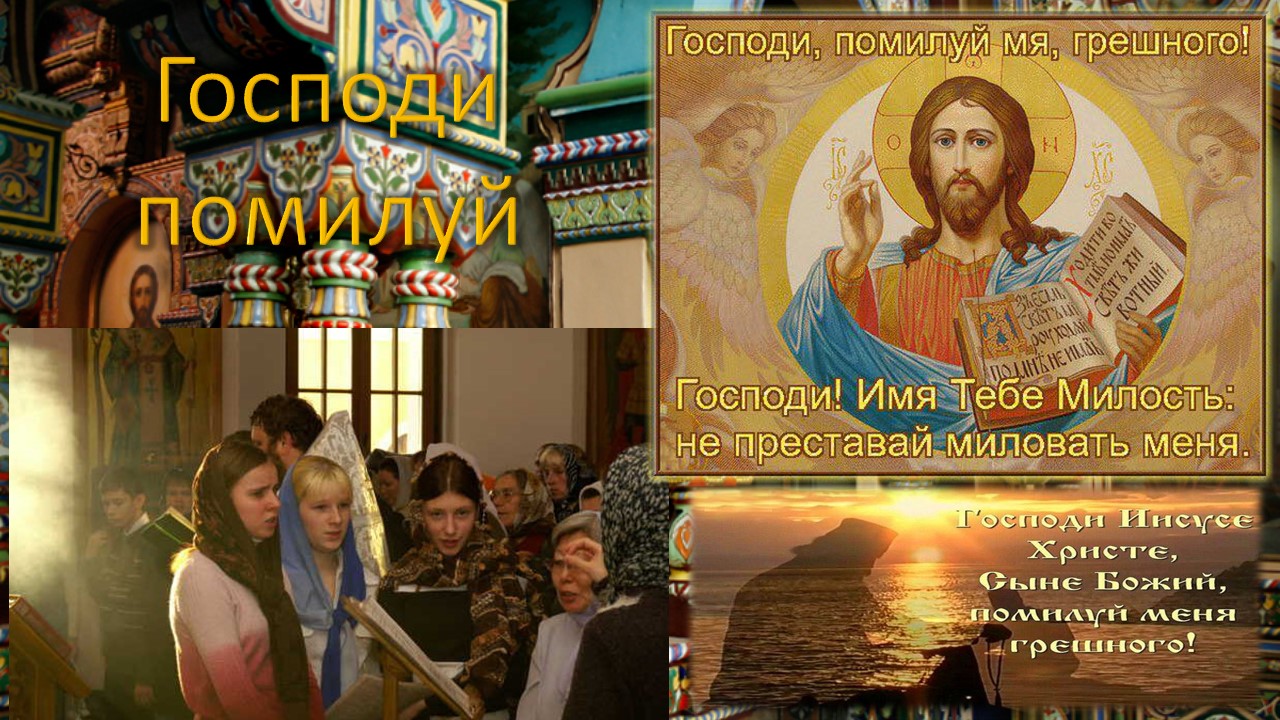
Господи помилуй Gospodi Pomiluj


Господи, помилуй, Господи, прости. Помоги мне, Боже, крест свой донести. Ты прошёл с любовью Свой тернистый путь, Ты нёс Крест безмолвно, надрывая грудь. И, за нас распятый, много Ты терпел, За врагов молился, за друзей скорбел. Я же слаб душою, телом так же слаб, И страстей греховных я преступный раб. Я – великий грешник на земном пути, Я ропщу, я плачусь… Господи! Прости. Помоги мне, Боже! Дай мне крепость сил, Чтоб свои я страсти в сердце погасил… Помоги мне, Боже! щедрою рукой, Ниспошли терпенье, радость и покой. Грешник я великий на земном пути… Господи, помилуй. Господи, прости!


+++

domingo, 28 de julio de 2019

さまざまな言語でのイエスの祈り - Jesus Prayer in Different Languages - La Oración de Jesús en Diferentes Idiomas


Arabic: Ayyuha-r-Rabbu Yasū` al-Masīħ, Ibnu-l-Lāh, irħamnī ana-l-khāti’ (ana-l-khāti’a if prayed by a female).
Bulgarian: Господи Иисусе Христе, Сине Божий, помилвай мен грешника.
Chinese: 主耶穌基督,上帝之子,憐憫我罪人。
Church Slavonic: Господи Ісусе Христе Сыне Божїй помилѹй мѧ грѣшнаго. (грѣшнѹю if prayed by a female)
Czech: Pane Ježíši Kriste, Syne Boží, smiluj se nade mnou hříšným.
Dutch: Heer Jezus Christus, Zoon van God, ontferm U over mij, zondaar.
English: Lord Jesus Christ, Son of God, have mercy on me, a sinner.
Filipino: Panginoong Hesukristo, Anak ng Diyos, maawa sa akin ang isang makasalanan.
Finnish: Herra Jeesus Kristus, Jumalan Poika, armahda minua syntistä.
Georgian: უფალო იესუ ქრისტე, ძეო ღმრთისაო, შემიწყალე მე ცოდვილი.
German: Herr Jesus Christus, Sohn Gottes, erbarme dich meiner, eines Sünders. (einer Sünderin if prayed by a female)
Greek: Κύριε Ἰησοῦ Χριστέ, Υἱέ τοῦ Θεοῦ, ἐλέησόν με τὸν ἁμαρτωλόν (τὴν ἁμαρτωλόν if prayed by a female)
Hungarian: Uram Jézus Krisztus, Isten Fia, könyörülj rajtam, bűnösön!
Japanese: 主イイスス・ハリストス、神の子よ、我、罪人を憐れみ給え。
Korean: 하느님의 아들 주 예수 그리스도님, 죄 많은 저를 불쌍히 여기소서
Maltese: Mulej Ġesù Kristu, Iben ta’ Alla l-ħaj, ikollok ħniena minni, midneb.
Norwegian: Herre Jesus Kristus, forbarm deg over meg.
Polish: Panie Jezu Chryste, Synu Boga, zmiłuj się nade mną, grzesznikiem.
Portuguese: Senhor Jesus Cristo, Filho de Deus, tende piedade de mim pecador.
Romanian: Doamne Iisuse Hristoase, Fiul lui Dumnezeu, miluieşte-mă pe mine păcătosul. (păcătoasa if prayed by a female)
Russian: Господи Иисусе Христе, Сыне Божий, помилуй мя грешнаго.(грешную if prayed by a female)
Variants: Господи, помилуй (The shortest form).
Serbian: Господе Исусе Христе, Сине Божји, помилуј ме грешног. / Gospode Isuse Hriste, Sine Božiji, pomiluj me grešnog.
Slovak: Pane Ježišu Kriste, Synu Boží, zmiluj sa nado mnou hriešnym.
Spanish: Señor Jesucristo, Hijo de Dios, ten piedad de mí, pecador.
Swedish: Herre (hara) (Y)Jesus Kristus, Guds Son, förbarma (furbarma) dig (day) över (uver) mig (may) syndare (sindara).
Thai: Xngkh̒ phra yesū khris̄t̒ phra butr k̄hxng phracêā mī khwām mettā kạb c̄hạn khn bāp!
องค์พระเยซูคริสต์พระบุตรของพระเจ้ามีความเมตตากับฉันคนบาป
Turkish: Rab İsa Mesih, Tanrı’nın Oğlu, beni bir günahkar rahmet.
Ukrainian: Господи Ісусе Христе, Сину Божий, помилуй мене грішного. (грішну if prayed by a female)/Господи, помилуй (The shortest form).
Vietnamese: Lay Chua Giesu Kito, xin thuong xot!


+++

domingo, 16 de junio de 2019

Pentecostés


Pentecostés , del griego πεντηκοστή [ἡμέρα]
Pentecostés (también llamado Día de la Trinidad o Descenso del Espíritu Santo) es una de las Grandes Fiestas de la Iglesia Ortodoxa, celebrada cincuenta días después de la Pascua. Se celebra el quincuagésimo día después de Pascua, conmemora el descenso del Espíritu Santo sobre los Apóstoles y otros seguidores de Jesucristo mientras estaban en Jerusalén celebrando la Fiesta de las Semanas, como se describe en los Hechos de los Apóstoles (Hechos 2: 1 –31). Este evento representa el nacimiento de la Iglesia. 

El término Pentecostés proviene del griego Πεντηκοστή (Pentēkostē) que significa "quincuagésimo". Se refiere al festival celebrado en el quincuagésimo día después de la Pascua, también conocido como la "Fiesta de las Semanas"

Día de Pentecostés 
Cincuenta días después de la Resurrección, en la excitante fiesta judía de Pentecostés, mientras los discípulos y muchos otros seguidores de Jesucristo se reunieron para orar, el Espíritu Santo descendió sobre ellos en forma de "lenguas de fuego", con el sonido de un viento fuerte y fuerte, y comenzaron a hablar en idiomas que no sabían. Hubo muchos visitantes de la diáspora judía a Jerusalén en ese momento para la celebración judía de la fiesta, y se asombraron al escuchar a estos pescadores no enseñados que alababan a Dios en sus lenguas extrañas. Este relato se detalla en Hechos de los Apóstoles, capítulo 2. 

El número cincuenta, como en el quincuagésimo día después de Pascha, representa el cumplimiento eterno y celestial, siete veces siete, más uno.

Fiesta de Pentecostés 
La Iglesia Ortodoxa ve a Pentecostés como el cumplimiento final de la misión de Jesucristo y el primer comienzo de la era mesiánica del Reino de Dios, místicamente presente en su Iglesia. Tradicionalmente se le llama el comienzo de la Iglesia. 

Además de celebrar la venida del Espíritu Santo, la fiesta también celebra la revelación completa de la divina Trinidad, Padre, Hijo y Espíritu Santo. Himnos de la Iglesia, celebran el signo del acto final de la revelación de Dios al mundo de su creación.
La fiesta de Pentecostés no es solo una celebración de un evento en la historia. También es una celebración su membresía en la Iglesia. Han vivido Pentecostés y han recibido "el sello del don del Espíritu Santo" en el sacramento de la crismación. Para la fiesta de Pentecostés, el icono de la Santísima Trinidad, las tres figuras angelicales que se le aparecieron a Abraham, se coloca en el centro de la iglesia para su veneración. Este ícono se usa con el ícono tradicional de Pentecostés. El edificio de la iglesia está decorado con flores y las hojas verdes del verano para mostrar que el aliento divino de Dios viene a renovar toda la creación. También se usan vestimentas y revestimientos verdes.
En muchas parroquias, la fiesta se celebra comenzando la noche anterior con las Grandes Vísperas. Algunas parroquias también sirven Matines en la mañana de la fiesta antes de la Divina Liturgia. 

La Liturgia de San Juan Crisóstomo con himnos especiales que reemplazan a las Antífonas estándar. Los himnos Oh Rey celestial y Hemos visto la verdadera luz se cantan por primera vez desde Pascua, llamando al Espíritu Santo a "venir y permanecer en nosotros", y proclamando que "hemos recibido el Espíritu celestial."

Un servicio extraordinario llamado las Vísperas arrodilladas, se observa en la noche de Pentecostés. Este es un servicio de Vísperas al que se agregan tres conjuntos de largas oraciones poéticas, la composición de San Basilio el Grande, durante el cual todos hacen una postración completa, tocando sus frentes al piso (las postraciones en la iglesia han sido prohibidas desde el día de Pascha (Pascua) hasta este punto). En muchas parroquias, este servicio se realiza inmediatamente después de la Liturgia.

Himnos 
Troparion (Tono 8) Bendito arte Tú, oh Cristo, nuestro Dios. Has revelado a los pescadores como los más sabios. Al enviarles sobre ellos el Espíritu Santo, atrajiste al mundo a tu red. ¡Oh, amante del hombre, gloria para ti! 

Kontakion (tono 8) Cuando el Altísimo bajó y confundió las lenguas, dividió las naciones; Pero cuando distribuyó las lenguas de fuego, llamó a todos a la unidad. ¡Por lo tanto, con una sola voz, glorificamos al Espíritu Santo!

Read in English: Pentecost

Pentecost


Pentecost , Greek πεντηκοστή [ἡμέρα]

Pentecost (also called Trinity Day or Descent of the Holy Spirit) is one of the Great Feasts of the Orthodox Church, celebrated fifty days after Pascha. It is celebrated on the fiftieth day after Easter, commemorates the descent of the Holy Ghost upon the Apostles and other followers of Jesus Christ while they were in Jerusalem celebrating the Feast of Weeks, as described in the Acts of the Apostles (Acts 2:1–31). This event represents the birth of the Church.
The term Pentecost comes from the Greek Πεντηκοστή (Pentēkostē) meaning "fiftieth". It refers to the festival celebrated on the fiftieth day after Passover, also known as the "Feast of Weeks" 
 
Day of Pentecost 
Fifty days after the Resurrection, on the excising Jewish feast of Pentecost, while the disciples and many other followers of Jesus Christ were gathered together to pray, the Holy Spirit descended upon them in the form of "cloven tongues of fire," with the sound of a mighty rushing wind, and they began to speak in languages that they did not know. There were many visitors from the Jewish diaspora to Jerusalem at that time for the Jewish observance of the feast, and they were astonished to hear these untaught fisherman speaking praises to God in their alien tongues. This account is detailed in the Acts of the Apostles, chapter 2.

The number fifty, as in the fiftieth day after Pascha, stands for eternal and heavenly fulfillment, seven times seven, plus one. 

Feast of Pentecost
The Orthodox Church sees Pentecost as the final fulfillment of the mission of Jesus Christ and the first beginning of the messianic age of the Kingdom of God, mystically present in his Church. It is traditionally called the beginning of the Church.

Besides celebrating the coming of the Holy Spirit, the feast also celebrates the full revelation of the divine Trinity, Father, Son, and Holy Spirit. Hymns of the Church, celebrate the sign of the final act of God's self-disclosure to the world of His creation.

The feast of Pentecost is not just a celebration of an event in history. It is also a celebration their membership in the Church. They have lived Pentecost and received "the seal of the gift of the Holy Spirit" in the sacrament of chrismation.

For the feast of Pentecost the icon of the Holy Trinity, the three angelic figures who appeared to Abraham, is placed in the center of the church for veneration. This icon is used with the traditional Pentecost icon. The church building is decorated with flowers and the green leaves of the summer to show that God's divine breath comes to renew all creation. Green vestments and coverings are also used.

In many parishes the feast is celebrated starting the evening before with Great Vespers. Some parishes also serve Matins on the morning of the feast before the Divine Liturgy.

The Liturgy of Saint John Chrysostom with special hymns replacing the standard Antiphons. The hymns O Heavenly King and We have seen the True Light are sung for the first time since Easter, calling the Holy Spirit to "come and abide in us," and proclaiming that "we have received the heavenly Spirit."

An extraordinary service called the Kneeling Vespers, is observed on the evening of Pentecost. This is a Vespers service to which are added three sets of long poetical prayers, the composition of Saint Basil the Great, during which everyone makes a full prostration, touching their foreheads to the floor (prostrations in church having been forbidden from the day of Pascha (Easter) up to this point). In many parishes, this service is done immediately after the Liturgy.

HymnsTroparion (Tone 8)  Blessed art You O Christ Our God You have revealed the fishermen as most wise By sending down upon them the Holy Spirit Through them You drew the world into Your net O Lover of Man, Glory to You!

Kontakion (Tone 8) When the most High came down and confused the tongues, He divided the nations; But when he distributed the tongues of fire He called all to unity. Therefore, with one voice, we glorify the All-holy Spirit!
 
Lea en Español: Pentecostés

sábado, 15 de junio de 2019

ペンテコステ


ペンテコステは、聖霊降臨(せいれいこうりん)と呼ばれる新約聖書にあるエピソードの1つ。イエスの復活・昇天後、集まって祈っていた120人の信徒たちの上に、神からの聖霊が降ったという出来事のこと、およびその出来事を記念するキリスト教の祝祭日。教派により訳語は異なり、聖霊降臨祭(せいれいこうりんさい)、五旬節(ごじゅんせつ)、五旬祭(ごじゅんさい)ともいう。

聖霊降臨に関する記事は新約聖書の『使徒言行録』2章1節 - 42節にみられる。それによれば、復活したイエスは弟子たちに「近いうちに聖霊が降る」ことを告げて(使徒言行録1章8節)、天に昇っていく(キリストの昇天)。それから10日後、ユダヤ教の五旬祭の日に使徒とイエスの母や兄弟たち、イエスに従った女たちが集まって祈っていると、激しい風のような音が聞こえ、天から炎のような舌が一人ひとりの上に分かれて降った。集まって祈っていた信徒たちは聖霊に満たされ、さまざまな国の言葉(普通の人に理解できない「異言」ではなく、「外国語」のことである)で語り始めた。地中海世界全域に離散していたディアスポラのユダヤ人たちが、五旬祭のためにエルサレムに集まっていたが、(パレスチナ出身の)信徒たちが地中海世界各地の言葉で語っているのを聞いて驚いた。ペトロが中心になってイエスの死と復活の意味について語ると、多くの人が信じて洗礼を受け、使徒たちのグループに加わった。これが聖書が語る聖霊降臨の出来事である。

歴史的には、ペンテコステという名前はギリシア語で「50番目(の日)」を意味するペンテーコステー(・ヘーメラ) "πεντηκοστή [ἡμέρα]" に由来している。これはユダヤ教において過越祭の50日後に祝われる祭日シャブオット(シャヴーオート) "שבועות"(「週」を表すシャヴーア "שבוע" の特殊な複数形。通常の複数形はシャヴーイーム "שבועים")のギリシャ語訳であり、もともとは春に得られる最初の収穫に感謝する農業祭であった。
後にキリスト教徒によって聖霊降臨の出来事と結び付けられ、そちらが重視されたことから、宗教上は収穫感謝の意味は失われた。しかし農業祭としての色彩は、ドイツ、ギリシアなどの民俗に残っている。


+++

lunes, 27 de mayo de 2019

Khristós Anésti!

The Paschal Greeting, also known as the Paschal Acclamation, is a Paschal custom. In place of "hello" or its equivalent, one is to greet another person with "Christ is Risen!" or "The Lord is Risen!", and the response is "Truly, He is Risen," "Indeed, He is Risen," or "He is Risen Indeed" (compare Matthew 27:64, Matthew 28:6–7, Mark 16:6, Luke 24:6, Luke 24:34).


The Paschal Greeting in various languages

Indo-European languages

Greek – Χριστὸς ἀνέστη! Ἀληθῶς ἀνέστη! (Khristós Anésti! Alithós Anésti!)

Slavic languages

Church Slavonic – Хрїсто́съ воскре́се! Вои́стинꙋ воскре́се! (Xristósŭ voskrése! Voístinu voskrése!)
Belarusian – Хрыстос уваскрос! Сапраўды ўваскрос! (Chrystos uvaskros! Sapraŭdy ŭvaskros!)
Bulgarian – as if in Church Slavonic Христос воскресе! Воистина воскресе! (Hristos voskrese! Voistina voskrese!) or in Modern Bulgarian: Христос възкресе! Наистина възкресе! (Hristos vâzkrese! Naistina vâzkrese!)
Croatian – Krist uskrsnu! Uistinu uskrsnu!
Czech – Kristus vstal z mrtvých! Vpravdě vstal z mrtvých!

Macedonian

Traditional (as per Church Slavonic) – Христос воскресе! Навистина воскресе! (Hristos voskrese! Navistina voskrese!)
Vernacular – Христос воскресна! Навистина воскресна! (Hristos voskresna! Navistina voskresna!)
Polish – Chrystus zmartwychwstał! Prawdziwie zmartwychwstał!
Russian – Христос воскрес(-е)! Воистину воскрес(-е)! (Christos voskres(-е)! Voistinu voskres(-е)!) (the version with -e is in Church Slavonic, one without it is in modern Russian; both are widely used)
Rusyn – Хрістос воскрес! Воістину воскрес! (Hristos voskres! Voistynu voskres!)
Serbian – Христос васкрсе! Ваистину васкрсе! / Hristos vaskrse! Vaistinu vaskrse! or Христос воскресе! Ваистину воскресе! / Hristos voskrese! Vaistinu voskrese!
Slovak – Kristus vstal z mŕtvych! Skutočne vstal (z mŕtvych)! (although the Church Slavonic version is more often used: Christos voskrese! Voistinu voskrese!)
Slovenian – Kristus je vstal! Zares je vstal!
Ukrainian – Христос воскрес! Воістину воскрес! (Khrystos voskres! Voistynu voskres!)
Albanian (Tosk) – Krishti u ngjall! Vërtet u ngjall!
Armenian – Քրիստոս յարեա՜ւ ի մեռելոց: Օրհնեա՜լ է Յարութիւնն Քրիստոսի: (western dialect: Krisdos haryav i merelotz! Orhnyal e Haroutyunen Krisdosi!) Քրիստոս հարյա՜վ ի մեռելոց: Օրհնյա՜լ է Հարությունը Քրիստոսի: (eastern dialect: Khristos haryav i merelotz! Orhnyal e Harouthyoune Khristosi!) – (Lit: Christ is risen! Blessed is the resurrection of Christ!)

Germanic languages

English – "Christ is risen! Truly, He is risen!" or "Christ is risen! Indeed, He is risen!" or "He [or 'The LORD'] is risen! He [or 'The LORD'] is risen indeed!" or "Christ has risen! Indeed, He has!" or "Christ is risen! He is risen, indeed!"
Anglo-Saxon – Crist is ārisen! Hē is sōþlīċe ārisen!
Middle English – Crist is arisen! Arisen he sothe!
Scots – Christ has ryssyn! Hech aye, he his ain sel!
Danish – Kristus er opstanden! Sandelig Han er Opstanden!
West Frisian – Kristus is opstien! Wis is er opstien!
German – Christus (or: Der Herr) ist auferstanden! Er ist wahrhaft (or: wahrhaftig) auferstanden!
Icelandic – Kristur er upprisinn! Hann er sannarlega upprisinn!
Faroese – Kristus er upprisin! Hann er sanniliga upprisin!
Low Franconian languages
Dutch – Christus is opgestaan! Hij is waarlijk opgestaan! (Netherlands) or Christus is verrezen! Hij is waarlijk verrezen! (Belgium)
Afrikaans – Christus het opgestaan! Hy het waarlik opgestaan!
Norwegian
Norwegian Bokmål – Kristus er oppstanden! Han er sannelig oppstanden!
Norwegian Nynorsk – Kristus er oppstaden! Han er sanneleg oppstaden!
Swedish – Kristus är uppstånden! Han är sannerligen uppstånden!

Romance languages

Aromanian – Hristolu anyie! Di alihea anyie!
Catalan – Crist ha ressuscitat! Veritablement ha ressuscitat!
French – Le Christ est ressuscité ! En vérité il est ressuscité ! or Le Christ est ressuscité ! Vraiment il est ressuscité !
Galician -Cristo resucitou! De verdade resucitou!
Italian – Cristo è risorto! È veramente risorto!
Portuguese – Cristo ressuscitou! Em verdade ressuscitou! or Cristo ressuscitou! Ressuscitou verdadeiramente!
Provençal – Lo Crist es ressuscitat! En veritat es ressuscitat!
Romanian – Hristos a înviat! Adevărat a înviat!
Spanish – ¡Cristo resucitó! ¡En verdad resucitó!
Walloon – Li Crist a raviké! Il a raviké podbon!

Baltic languages

Latvian – Kristus (ir) augšāmcēlies! Patiesi viņš ir augšāmcēlies!
Lithuanian – Kristus prisikėlė! Tikrai prisikėlė!

Celtic languages

Irish – Tá Críost éirithe! Go deimhin, tá sé éirithe!
Manx – Taw Creest Ereen! Taw Shay Ereen Guhdyne!
Scottish – Tha Crìosd air èiridh! Gu dearbh, tha e air èiridh!

Brythonic languages

Breton – Dassoret eo Krist! E wirionez dassoret eo!
Cornish – Thew Creest dassorez! En weer thewa dassorez!
Welsh – Atgyfododd Crist! Yn wir atgyfododd!

Indo-Iranian languages

Ossetian - Чырысти райгас! Æцæгæй райгас or бæлвырд райгас! (Ḱyrysti rajgas! Æcægæj rajgas or bælvyrd rajgas!)
Persian – مسیح برخاسته است! به راستی برخاسته است! (Masih barkhaste ast! Be rasti barkhaste ast!)
Hindustani – येसु मसीह ज़िन्दा हो गया है! हाँ यक़ीनन, वोह ज़िन्दा हो गया है! – یسوع مسیح زندہ ہو گیا ہے! ہاں یقیناً، وہ زندہ ہو گیا ہے! (Yesu Masīh zindā ho gayā hai! Hā̃ yaqīnan, voh zindā ho gayā hai!)
Marathi – Yeshu Khrist uthla ahe! Kharokhar uthla ahe!

Semitic languages

Arabic (standard) – المسيح قام! حقا قام! (al-Masīḥ qām! Ḥaqqan qām!) or المسيح قام! بالحقيقة قام! (al-Masīḥ qām! Bi-l-ḥaqīqati qām!)
Aramaic languages
Syriac – ܡܫܝܚܐ ܩܡ! ܫܪܝܪܐܝܬ ܩܡ!‎ (Mshiḥa qām! sharīrāīth qām! or Mshiḥo Qom! Shariroith Qom!)
Neo-Syriac – ܡܫܝܚܐ ܩܡܠܗ! ܒܗܩܘܬܐ ܩܡܠܗ!‎ (Mshikha qimlih! bhāqota qimlih!)
Turoyo-Syriac – ܡܫܝܚܐ ܩܝܡ! ܫܪܥܪܐܝܬ ܩܝܡ!‎ (Mshiḥo qāyem! Shariroith qāyem!)

East African languages

Tigrigna – (Christos tensiou! Bahake tensiou!)
Amharic – (Kristos Tenestwal! Bergit Tenestwal!)
Hebrew (modern) – המשיח קם! באמת קם!‎ (Hameshiach qam! Be'emet qam!)
Maltese – Kristu qam! Huwa qam tassew! or Kristu qam mill-mewt! Huwa qam tassew!
Egyptian
Coptic (Bohairic) – ⲠⲓⲬⲣⲓⲥⲧⲟⲥ ⲁϥⲧⲱⲛϥ! Ϧⲉⲛ ⲟⲩⲙⲉⲑⲙⲏⲓ ⲁϥⲧⲱⲛϥ! (Pi'Christos aftonf! Khen oumetmi aftonf!)
Berber language - (Lmasih yahye-d ger lmeytin! Stidet yahye-d ger lmeytin!)

Kartvelian languages

Georgian – ქრისტე აღსდგა! ჭეშმარიტად აღსდგა! (Kriste aghsdga! Cheshmaritad aghsdga!)
Mengrelian ქირსექ გეთანდჷ! ღორონთუმე (ემეთო ეთანდჷ)! (Kirsek genthand'! Ghoronthume (emetho gethand')!)
Northwest Caucasian languages
Abkhazian – Kyrsa Dybzaheit! Itzzabyrgny Dybzaheit!
Dravidian languages
Tamil - கிறிஸ்து உயிர்த்தெழுந்தார், மெய்யாகவே அவர் உயிர்த்தெழுந்தார்.
Malayalam – ക്രിസ്തു ഉയിര്ത്തെഴുന്നേറ്റു! തീര്ച്ചയായും ഉയിര്ത്തെഴുന്നേറ്റു! (Christu uyirthezhunnettu! Theerchayayum uyirthezhunnettu!)

Eskimo–Aleut languages

Aleut - Kristusaaq Aglagikuk! Angangulakan Aglagikuk!
Alutiq – Kristusaq ungwektaq! Pichinuq ungwektaq!
Central Alaskan Yup'ik – Kristuussaaq unguirtuq! Ilumun unguirtuq!

Austronesian languages 

Malayo-Polynesian
Batak - Tuhan nunga hehe! Tutu do ibana hehe!
Carolinian – Lios a melau sefal! Meipung, a mahan sefal!
Cebuano – Nabanhaw Si Kristo! Nabanhaw gayud!
Waray – Hi Kristo nabanwaw! Matuod nga Hiya nabanhaw!
Chamorro – La'la'i i Kristo! Magahet na luma'la' i Kristo!
Fijian – Na Karisito tucake tale! Io sa tucake tale!
Filipino – Nabuhay muli Si Kristo! Nabuhay talaga!
Hawaiian – Ua ala hou ʻo Kristo! Ua ala ʻiʻo nō ʻo Ia!
Indonesian/Malaysian – Kristus telah bangkit! Dia benar-benar telah bangkit!
Kapampangan – I Kristu sinubli yang mebie! Sinubli ya pin mebie!
Malagasy – Nitsangana tamin'ny maty i Kristy! Nitsangana marina tokoa izy!


Austroasiatic languages 

Mon-Khmer
Khmer - Preah Christ mean preah choan rous leong vinh! trung mean preah choan rous leong vinh men!
Vietnamese
Vietnamese - Chúa Ki-tô đã sống lại! Ngài đã sống lại thật!
Thai
Thai - พระคริสต์เป็นขึ้นจากความตาย! or พระคริสต์ทรงกลับคืนพระชนม์ชีพ!


Basque 


Basque – Cristo Berbiztua! Benetan Berbiztua!


Japanese 


Japanese – ハリストス復活!実に復活! (Harisutosu fukkatsu! Jitsu ni fukkatsu!)


Korean 


Korean – 그리스도 부활하셨네! 참으로 부활하셨네! (Geuriseudo buhwalhasyeonne! Chameuro buhwalhasyeonne!)


Mongolic languages 


Mongolian – Есүс дахин амилсан, Тэр үнэхээр амилсан! (Yesus dahin amilsan, ter uneheer amilsan)


Turkic languages
Turkish – Mesih dirildi! Hakikaten dirildi!
Uyghur – ‫ئەيسا تىرىلدى! ھەقىقەتىنلا تىرىلدى!‬ (Əysa tirildi! Ⱨəⱪiⱪətinla tirildi!)
Azeri – Məsih dirildi! Həqiqətən dirildi!
Chuvash – Христос чĕрĕлнĕ! Чăн чĕрĕлнĕ! (Khristós chərəlnə! Chæn chərəlnə!)
Uzbek – Масих тирилди! Хақиқатдан тирилди! (Masih tirildi! Haqiqatdan tirildi!)

Sino-Tibetan languages 


Mandarin – 基督復活了!他確實復活了!(Jīdū fùhuó-le! Tā quèshí fùhuó-le!) or 耶穌復活了,真的他復活了!(Yēsū fùhuó-le, Zhēnde tā fùhuó-le!)


Uralic languages 


Estonian – Kristus on üles tõusnud! Tõesti on üles tõusnud!
Finnish – Kristus nousi kuolleista! Totisesti nousi!
Hungarian – Krisztus feltámadt! Valóban feltámadt!
Karelian - Hristos nouzi kuollielois! Tovessah nouzi! 

El Origen Pagano del Día de San Patricio

English Version:  The Pagan Origin of St. Patrick's Day El Día de San Patricio se celebra en todo el mundo cada año el 17 de marzo. Est...